












2018 Sankranthi Sambaralu by Telugu Association of Maryland ( TAM)

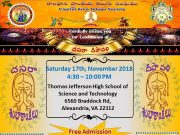
2018 Sankranthi Sambaralu by Telugu Association of Maryland ( TAM)
When: 01/13/2018
Where: Centennial ELementary School, Ellicott City, Maryland
*** OPEN TO PUBLIC ****


2018 Sankranthi Sambaralu by Telugu Association of Maryland ( TAM)
When: 01/13/2018
Where: Centennial ELementary School, Ellicott City, Maryland
*** OPEN TO PUBLIC ****

Last October, Harvard Medical School released yet another article with a study that has suggested that the practice of yoga can be used to actively slow down the potentially harmful effects of stress and inflammation on the body.
In the article, it is claimed that between 60-80% of all primary health care visits to a doctor in the US are stress-related, which is a huge cause for concern. Stress is not something that any of us want. The effects of stress, including increased signs of ageing, are in no way helpful to our bodies.
Additionally, the article describes that chronic inflammation and oxidative stress are two other common medical problems that can even cause damage to our bodies at a cellular and genetic level. A mild form of inflammation is known to scientists as ‘inflammaging’ and is commonly linked with conditions like heart disease, depression and diabetes.
Before I continue, I quickly want to jump into what stress actually is. Scientifically, our bodies produce a chemical named Cortisol, which is more commonly referred to as the stress hormone.
Cortisol is responsible for regulating blood sugar levels, managing metabolism, actively reducing inflammation and even affects your memory functions. However, if your body is subject to large, if not excessive, amounts of cortisol, there are many symptoms you can suffer including fatigue, weakness of the muscles, lack of emotional control, headaches and even bone loss.
As you can see, the more regulated we can keep our cortisol levels, the much better our bodies will be.
The study that was published in Oxidative Medicine and Cellular Longevity was carried out over a 12-week period where researchers found that yoga actively slowed the signs and effects of cellular ageing.
Within this study, the participants engaged in 90 minutes of yoga, including a variety of poses, as well as breathing and meditation practices, over the course of five days during the 12 weeks. As a result, the researchers found the individuals to have lower levels of inflammation in the body and lower cortisol production rates.
Another study that was published in the Frontiers in Human Neuroscience publication was conducted over another 12-week period in a yoga retreat found similar results that yoga actively reduces the effects of inflammation and stress in the human body.
These are just two studies out of now hundreds of available studies which highlight the benefits that yoga can have on the human body and for our minds. Even a little practice of just ten minutes a day is enough to start building a habit that can change and improve your life.
After all, who doesn’t want to live a happier and healthier life where we’re free from the constraints of stress and anxiety?

Meditation apps are nothing new and have become extremely popular in societies all over the world. We’ve even reported on a vast collection of them on this blog. However, as we enter a new year, along comes another year of innovation and development.
Meditation apps have a love-hate relationship with many people. Me myself, I love the fact that the apps can introduce the concept and practice of meditation to people in an easy and approachable way that can help guide them.
On the other hand, to me, it’s another way that technology is taking over a practice that doesn’t require it in the first place. But that’s just a personal opinion, and the benefits definitely outweigh the cons.
So, with the new year in full flow, here is a list of five of the top meditation and mindfulness apps that are being downloaded to our smartphones and tablets as well as the lowdown on each.
#1 – Trixie
Our first app that you’ll want to keep your eyes on is Trixie. The app is available for both iOS and Android devices and is home to a collection of guided meditations created by mindfulness experts. One of the biggest features is the implemented AI assistant that can help you analyse your current mood and match suitable practices for that time.
Available free on iOS devices, Oak is a complete mindfulness program app that covers everything you could want in an app. There are meditation practices to enjoy, dedicated breathing exercises and daily quotes and inspirational notifications.
The leading feature of this app is that you can customise your own experiences to do what suits you. There are 10 – 30-minute exercises available with both female and male instructors to suit exactly what you want.
Aura is one of my favourite new meditation apps and is one that I recommend to friends and family who want to start a practice of their own. Similar to Trixie, Aura has a comprehensive AI instructor built in to help you enjoy a personalised experience.
The app tracks your mood using a series of quick questions and mood settings that help you to find the best meditation available that suits you in the present moment. There’s even a dedicated section on breathing, gratitude and unguided meditations.
Despite only being available on iOS devices, Sonus Island is all about finding zen in your everyday life. Within the app, you’ll find a vast collection of high-quality animations, a tonne of 3D sounds and soundtracks and a selection of guided meditations.
This makes this the ideal app to enjoy when you’re feeling stressed or if things are getting a bit too much and you need to sit back and relax.
Finally, to conclude our list is MindFi. Available for both iOS and Android devices, MindFi is ideal for aspiring meditators who are looking for to start or enhance their practice. Whether you’re a beginner or an expert, MindFi gives you the ability to learn how to meditate everywhere and anywhere.
The app is ideal for forming a meditation habit and includes a professional virtual assistant that can help to guide you through the process.

Dandruff is one of the most common ailments we human beings suffer from, especially during this winter time of the year. In Ayurveda terms, dandruff is produced when the Pitta and Vata doshas are imbalanced. In short, Pitta is renowned for heat properties whereas Vata is renowned for being dry and rough.
When these imbalances are brought together, ‘ama’ is created. These are impurities that gather deep in the scalp which causes an itching sensation. This then creates a larger number of dead cells on the scalp which leads to dandruff.
However, this doesn’t have to be a problem that leaves you ‘pulling your hair out’. Here is a selection of Ayurveda remedies you can try in the comfort of your own home.
There are many home remedies you can try when trying to combat dandruff. Feel free to try them all individually to see which one works for you!
Simply mix 2-3 teaspoons of coconut oil with one teaspoon of gooseberry juice. Massage this mixture into your scalp daily until your dandruff disappears.
Lemon juice is also a highly effective remedy for curing dandruff. All you need to do is add ten drops to 1 egg white and mix together well. Apply this mixture to your scalp once a week and massage in.
Before washing your hair, add and massage this mixture into your hair and onto your scalp. Create a mixture of 1 teaspoon of lemon juice, a tablespoon of mustard oil as well as one cup of yoghurt. Leave this mixture in your hair for half an hour before washing.
One of the other most effective remedies is chewing on leaves early in the morning. Create a leaf mixture using ten holy basil leaves, 10 bael leaves and 10 margosa leaves. Chew them on an empty stomach first thing in the morning, and you’ll be amazed at what it can achieve.

Despite the new year being in full force, many of us are trying to achieve our new year’s resolutions. Whether you’re trying to quit smoking, lose weight or travel more, our minds might be set but actually getting up and doing it is a whole other ball game.
When talking about the benefits of yoga to friends and family (and strangers), one of the most common ‘excuses’ I hear is not that people don’t want to practice, they do, but that they’re too lazy to do so.
In all fairness, you have to admit at least they’re honest. However, it’s worth remembering that yoga has a vast collection of poses and routines that can be adopted, regardless of how lazy you think you are.
To get you started, here are three yoga poses you can practice if you fall into this bracket of people, guaranteeing to make you feel alive and full of energy afterwards.
Known as a single-nostril breath, all you need to do to achieve this pose is to sit in a comfortable position where you feel relaxed. Simply close your eye and place your left hand on your knee with your thumb and forefinger together.
With your other hand, bend your index and middle finger and apply a gentle amount of pressure to your right nostril. Inhale through your left nostril and hold your breath for a moment. Release the pressure from your nostril and exhale through it. Repeat on the other side and keep changing for two minutes.
More commonly referred to as the ‘Diamond Pose’, this is an incredible simply pose you can practice wherever and whenever you feel like it. Simply sit in an upright rested position where your legs are tucked underneath your body. This is so your bottom is seated on your feet.
Close your knees together and sit upright, so your spine is as straight as possible. You’ll be surprised at how straight you can make it and how hunched you feel in everyday life. Sit like this for one minute with steady and consistent breathing.
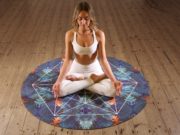
Referred to as the ‘Lotus Pose’, be sure to sit up nice and straight so you’re comfortable and relaxed. Extend your legs out in front of you.
Now, bend your right knee, so your right foot is next to your left thigh. Turn the sole of your foot upwards and gently push your heel into your abdomen.
Cross your legs and adopt and meditating position where your thumbs and index finger come together. Close your eyes and breath steadily in and out of your nose. Do this for several minutes to calm your mind and hold the position.

I’m a firm believer in the fact that there is no better time investment you can have in your life that practising yoga. A free exercise that requires nothing but the floor that fully vitalising, refreshes and energizes your mind and body is a very rare thing.
I harp on and on about the benefits that yoga can have on your life day in and day out, but there are still some people out there who still need some convincing. So, since a new year has come and gone and many of us may not have made up our resolutions yet, here are five ways in which yoga will positively change your life.
How often do you actually listen to what your body needs apart from the obvious ‘I’m tired, I’m hungry, and I’m thirsty’? Thanks to the meditative properties that yoga has, you really give yourself the opportunity to tune into what your body is saying to you, whether it’s part of you that’s stressed out or the emotions you’re actually feeling in your mind.
There’s no reason why we can’t love ourselves for who we are. Through yoga, you can help yourself to become aware that you’re a completely unique individual and there’s nobody like you in the entire universe.
Through yoga, you become very aware that you’re in your own space where you’re free from judgements, criticisms and rules. With consistent practice, you start to bring these thoughts and feelings into your everyday life, which can have dramatically positive effects on your wellbeing.
As mentioned above, yoga has some very meditative properties, especially if you’re practising breathing technique and focusing on your body. When was the last time you think you were living in the present moment and now thinking about anything in the past or the future?
Likewise, when was the last time you were focused solely on an activity without distractions? I’m talking about scrolling through your social media account, messaging on WhatsApp or even just mindlessly scrolling through funny cat videos. How comfortable do you feel with just the sound of your own breath?
What is happiness?
In short, it’s a collection of chemicals that are released into our brains and bodies once triggered by certain events or situations. These chemicals are known as Dopamine, Endorphins, Oxytocin and Serotonin, all of which come together to affect our mood and feelings, and overall, our happiness.
Yoga has been scientifically proven time and time again to boost the production of these chemicals, making us happier and healthier in our everyday lives.
Let’s say you’re aiming to achieve a certain pose and it’s a goal you’re aiming towards. As you know, being able to touch your toes or achieve the perfect downward dog isn’t something that’s going to happen overnight. It takes time and practice.
This helps us to instil patience and awareness of our actions into our everyday lives. Obviously, we can apply these feelings into our work and careers, our relationships and our family life, we will find much more inner-peace in everything we do while developing deeper and more connected bonds with the people in our lives.

With Christmas and New Year out of the way, many of us are taking a breather that trying to release all the stresses that came with this festive time of the year. While many of us were trying to cook and accommodate our family and guests, we had very little time to breath before we’re heading back to work and back to our routine.
However, you’ll want to make sure things don’t get on top of you without realising and that you start the new year in the best way possible. Here to help you out is a simple and super-effective one-minute meditation to release all that unwanted stress.
This is such a simple yet such an effective meditation session that can-do wonders for your day. If you can make yourself and others feel this positive, there’s nothing in your day that can hold you back.
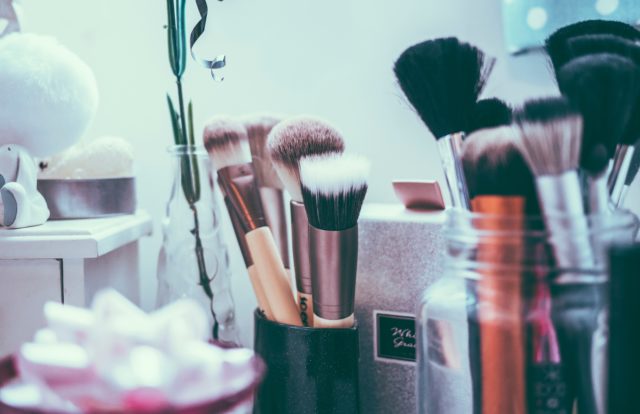
Ayurveda is a practice that dates back over 5,000 years and has been a part of some cultures ever since. However, as we enter 2018, the practice of Ayurveda is set to explode in the mainstream society, especially in the beauty industry.
In some cases, Ayurveda is already making its way into our everyday lives. Starbucks has recently released their renowned turmeric lattes, marketed as part of a health trend. However, the health properties of turmeric have been known since Ayurveda started over five millenniums ago.
But with lattes to the side, how else is Ayurveda set to revolutionise the health industry this year? Let’s find out!
One of the biggest health factors in 2017 was health supplements. These were game-changing since so many people are living fast-paced lifestyles making it nearly impossible to consume the vitamins and nutrients they need from the diet they were eating.
However, with health supplements, it became much easier to reach the recommended RDA levels, so you could live a healthier lifestyle. While the specifics of what Ayurveda-friendly supplements are yet to be released, global health companies, such as Unilever, have already hinted that they are coming.
More and more people are turning away from traditional creams and ointments that are full of chemicals and potential toxins. Consumers simply don’t want to slap creams on their faces that can dry out your skin or cause more harm than good.
In fact, more people are turning towards ‘wellness’ products that cure you of the inside out, rather than just aesthetically. This means we’re starting to see more burning oils, more candles and more crystal-infused products. These are typically based on Ayurveda practices that can help us easily unwind and destress, helping us stay beautiful.
The problem with most of these problems is that makeup, beauty products and skin-care routines can become very expensive. However, it’s worth remembering that much of Ayurveda information is free and a lot of the things you want to achieve with your body can be practised at home.
Let’s say you’re suffering from an acne outbreak, or your skin has gone dry. By simply searching online ‘dry skin Ayurveda remedy’, or words to that effect, you’ll be able to find a tonne of information that can help you relieve the negative symptoms. This will help you feel far more confident in yourself, without having to spend a fortune on products.

There’s many of us that know the benefits of meditating, in fact, I talk about them quite a lot. That’s because I believe it is so beneficial to the body and can help us all live much happier and healthier lives.
However, if you’ve not got the time to read through a full article of benefits, I’ve devised this quick-fire list of benefits that meditation has been proven to have. So, if you’re ever feeling unmotivated to meditate, bookmark and check out this list to put you back on track.
Meditation physically encourages your brain to grow. In both thickness and volume.
Meditation enhances your memory functions.
Meditation encourages self-awareness.
Meditation improves your self-control.
Meditation increases your blood circulation, especially to your brain.
Meditation reduces stress by reducing cortisol, the stress-related hormone.
Meditation lowers your blood pressure and heart rate.
Meditation increases the production levels of dopamine and serotonin, useful chemicals for being happy.
Meditation enhances your immune system.
Meditation helps your muscles to relax.
Meditation can reduce stress, anxiety and depression.
Meditation makes you more positive.
Meditation increases your focus and productivity.
Meditation encourages intelligence and controls emotions.
Meditation allows you to learn more.
Meditation makes you more compassionate.
Meditation makes you more empathetic.
Meditation makes you more sociable.
The list goes on and on and on. Each one of the points above has endless proof and studies online, recently and in the past.
Meditation is simply so beneficial, whether you’re practising for five minutes or an hour a day. Meditation is also renowned for being an extremely low-risk activity, meaning you won’t get hurt and it costs nothing to practice.
You can practice anytime, anywhere, no matter what you’re doing or what time of day it is. So, what are you waiting for? Get meditating!
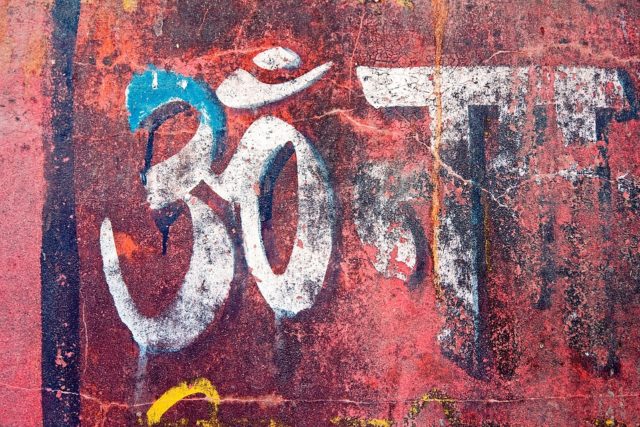
What Is The Actual Meaning Of Patala Loka In Hindu Myth
Like all cultures, Hindu mythology is rich in symbolism. The devas and asuras are also very colourful characters and can teach us a lot about our psychological and physical connection and how we can work with energy.
In essence, Hindu mythology reveals the True secrets of the Universe, Earth and mankind. But only when the symbolism is interpreted in relation to The Self.
When the symbolism of any culture is misinterpreted, the information becomes misleading and is no use to anybody. The explanations of the Hindu lokas are a prime example. Because of that, we find many people today living in the Patalas that the Vedas describe as the lower worlds.
The lowest of these realms is Patala loka, a state of consciousness whereby an individual is ruled by angry demons. Not actual demons, but the demons of the mind. These asuras conjure impure and hurtful thoughts and manifest unforgiving attitudes.
If you find yourself living in Patala loka, you are only one step away from living in “Hell”.
What are Lokas?
In Sanskrit, the world loka corresponds to the English word, “world” or “Underworld”. More precisely lokas represent your inner world.
Hindu mythology describes 14 worlds; the upper worlds inhabited by devas (gods), the earthly realm where humans reside and the lower worlds which is the home of the asuras (demons).
For some, these 14 worlds actually exist. The cosmology in Vedic texts have been interpreted to represent our solar system and beyond. Whilst it is true that modern astronomy confirms the ancients had a profound knowledge of the planets, the wise sages that created symbolism also used this knowledge to reflect consciousness.
The “Hari-vamsa”, a Vedic text of some distinction, gives us a symbolic view of the cosmos:
“Above the planetary systems where humans live is the sky. Above the sky is the orbiting sun, which is the entrance point of the heavenly planetary systems. This is the middle of the universe where begins the planets of those elevated by great austerities and penances. The planets above these, up to Satya-loka are the residences of those advanced in spiritual knowledge. All these planets are within the material world and under the control of Devi, and therefore called Devi-dharma.”
The reference to “planets” in the above text is often taken literally. Planets are actually a symbolic tool used to describe chakras, the energy centres of the body. A study of the chakras will determine that our personality, mood and well-being is governed by these energy centres.
As you will note, the Satya-loka, (upper worlds) are inhabited by “those advanced in spiritual knowledge.” In mythology, these are the gods of Mount Meru, Olympus and Asgaard etc.
You will also note the text refers to these realms being “within the material world and under the control of Devi, and therefore called Devi-Dharma.”
The material world is Earth. But Earth is only a material world to individuals that have emotional attachments to possessions and physical needs that gratify your emotions. “Devi” is a female goddess such as Saraswati, Lakshmi and Shakti.
In essence, Devi is the female energy of the male god Deva. But depending on the level of consciousness you live in, these energies can change for purity and goodness to evil and demonic – in other words, bad deeds. Hence we find Shakti, the consort of Shiva (the destroyer), incarnating as the avatar Kali, the demon queen.
The symbolic meaning of Patala loka
Although modern science cannot provide an explanation for consciousness, they are aware that it comes from outside the body. Our subconscious appears to be wired to an electro-magnetic field to which we are all connected. Furthermore, our conscious status is either heightened or lowered in relation to how we think, feel and behave.
The concept of the lokas explain this flitting between conscious states which we explained in a previous article. In Hindu cosmology, the planetary system references both the spiritual world and the material world and the connection between the two.
The human mind can transcend the material realm and access information from the astral realm. When you raise your consciousness to the realm of Svar-loka, you are guided by your higher conscious mind and see the “Truth” in everything. In other words, you know exactly what to do in every situation.
In contrast, the material dimensions of the lower worlds leaves us confused, angry and frustrated. The reason why we experience these emotions is because we have attachments to what we think is right and fail to see the world from the point of view of others.
Individuals living in the lower realms, or patalas, are deluded and ignorant.
For the most part, living in the lower realms breeds fear-based emotions which misguide us. We become lost and life is a struggle. Although the residents of the patalas are described as bathing in “herbal elixirs” surrounded by jewels and living in opulence, these merely describe the beauty you feel in moments of self-gratification generated by outside influences.
The experiences individuals encounter in the patala loka, are malice, hatred and anger. These individuals show contempt towards others and are not happy with the world. In reality, they are unhappy within themselves.
Individuals living in the state of base consciousness are controlled by their emotions and only think of themselves. If they only learnt to act with goodwill and compassion, they would raise consciousness. And improve their life.
Beneath Patalaloka are the Naralokas, realms of the “hellish planets”. Here we experience even more suffering. It is in these realms where individuals hit rock bottom. The Naraloka are said to be a place for redemption whereby we come to a moment of realisation that we have to change our behaviours in order to turn life around.
When you understand the symbolism in Hindu myth relates to how we experience being human, the concepts make much more sense. The lokas are not only planets, but planets that explain which realm of consciousness you are living in. Use the lokas as a measure to determine where you are and where you want to be.