












Home Blog Page 15

Study Shows Mindfulness Meditation Reduces Stress Better than Gardening
0

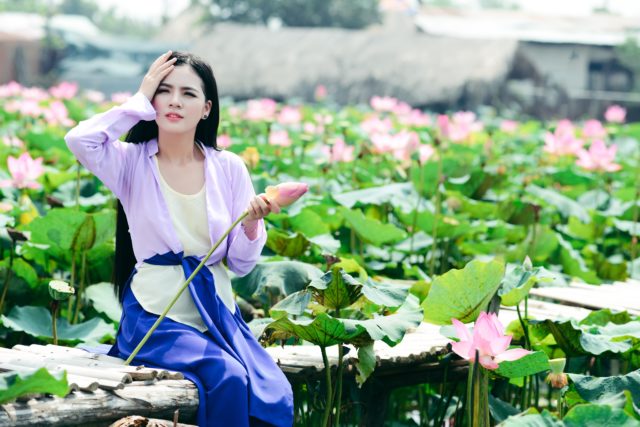
Many of us love to escape to our back gardens to enjoy some well-deserved time off from everyday life. Getting our fingers green has long been the pastime of many to relax, breath in some fresh air and forget about the worries from daily living.

In fact, in the UK, it was even recommended by the National Health Service (NHS) as an official way to reduce stress and anxiety.

However, a recent 8-week survey carried out by the BBC and the University of Westminster has proven that mindfulness meditation is in fact far better in reducing stress levels that gardening and even yoga.

The study was carried out for the hit UK television series ‘Trust Me; I’m a Doctor’ in which 69 individuals were included to test the effects. The group was divided into three groups. One group partook in a Saturday gardening club and were involved in conservation activities in their local area.

Another third of the group was told to attend weekly yoga sessions whereas the final group practised just ten minutes of mindfulness meditation every single day.

The Results

The results of the study were scientifically confirmed by measuring the cortisol levels (the stress hormone) in each individual. Typically, a human being will generate a huge burst of cortisol in the morning, and the levels will decrease throughout the day.

The group involved in yoga saw a slight decrease in these figures whereas the gardening group witness a huge 20% increase in their CAR (cortisol awakening response). However, the mindfulness group saw an average leap of a 52 percent increase, and those who actually enjoyed meditating saw an incredible 78% increase!

As you can see, the figures are clear. However, it is worth noting that the individuals actually had to enjoy what they were doing to reap the benefits. Those that didn’t enjoy their activity saw very little change in their CAR levels.

This is just yet another study that proves the outstanding benefits that mindfulness meditation has. There was even a study last year in the US that proves that mindfulness can even positively affect and reduce the levels of inflammatory hormones in your body.

So, if you’re feeling stressed and it’s a rainy day, why not give mindfulness meditation a go?
3 Yoga Poses to Calm Your Stress & Anxiety

0

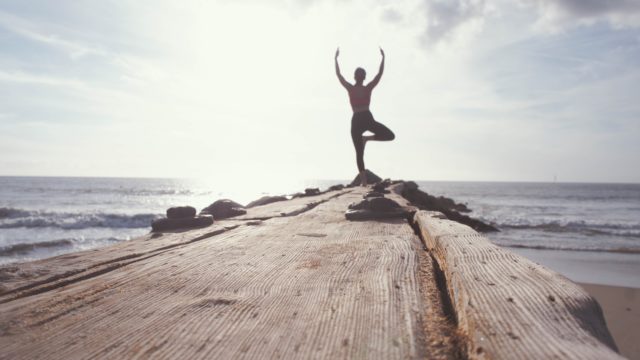
Stress and anxiety shroud a lot of aspects of our lives. Whether you’re stalking someone’s social media account, or someone says something to you that bums you out, anything can make us feel like we’re not good enough.

These feelings almost always lead us to feel stressed out and anxious which can have disastrous consequences to our well-being. These feelings are not uncommon, but not many people know that yoga can help you through these feelings.

With regular practice, you can be sure that you’ll start feeling like your typical happy self in no time at all! Here are three routines you can start using straight away to get you started!

Half-Pigeon Pose

Much of the stress that we get throughout the day is stored in our hips. This is why they can regularly feel tight and stiff and leave us feeling very inflexible.

The half-pigeon pose is designed to open up our hips into a deep stretch that is sure to loosen them up. And, it doesn’t just stretch out your hips. This is a full body pose.

Here’s a video from Yoga with Adriene to show you how to do it.

Reclining Bound Angle Pose

Also known as Supta Baddha Konasana, this is one of my personal favourite poses. This is because it’s so relaxing and it’s a great way to unwind and release any stress that you might be feeling.

All you need to do is place your feet together in butterfly pose, hold your elbows with your hands and put them behind your head. Then, sit in this position for as long or as little time as you like until you feel stretched out and relaxed!

Here’s a video from Yoga Anytime to show you exactly how to do it!

Put Your Legs Up Against the Wall

No, this isn’t the name of a heavy metal rock anthem, it is, in fact, a yoga pose. More commonly, it’s known as Viparita Karani, and it’s a great way to release stress and anxiety out of your system as well as improving your flexibility.

As the name suggests, you simply need to find a clear wall, lay on your back and then stretch your legs out with your bum touching the wall. This pose works fantastically because it allows you to decompress your lower back and gives you the benefits of flexing your hips. Remember, your hips are where all your stress is stored!

There are many other poses out there which can help you to release stress. However, all you need to do is find the one that works best for you. Try a couple of these to get you started and see how you feel. You’ll soon notice the stress and anxiety slipping away like it wasn’t even there in the first place!

3 Ways to improve Your breathing This Autumn

0

Many of us believe that is lungs are fixed into position, and there’s nothing we can do about it. I mean, who’s ever heard of flexing their lungs? However, as the days draw shorter throughout winter and autumn, the air gets colder, and it’s wise to give your lungs an extra bit of affection.

Consider this; this time of year, we’re renowned for catching a cold or developing breathing problems so it’s essential that we prepare our bodies, so we can stay fit and healthy.

Through yoga, we can actively expand our lungs, helping us to breathe deeper, clear our airways out and flush out any negative toxins. This is all through creating shapes with our bodies. To get you started, here are three yoga poses you can try right now at home!

Bend to the Side

A classic yoga pose and by far one of the easiest you can practice anytime and anywhere. All you need to do is to stand upright with a straight back. Then, entwine your hands above your head, keeping your arms as close to your ears as possible.

Then, lean off to one side, imagining that you’re in two panes of glass, so there’s no twisting in your body. When you’ve lent a comfortable distance, take three deep inhales and exhales. Then slowly inhale on your way up to neutral and exhale over to the other side.

Then repeat the first step on the other side. You should feel the stretch all the way down your lungs as you breathe.

Upward Facing Dog

This is another classic pose with many variations, so you can find the version that best suits you. Simply start in a plank position. If this is enough for you, then simply hold it here, making sure that you breathe deeply and slowly. Push your belly button to your spine, and you should feel your chest wider quite dramatically.

If you want to take it a step further, you can. Make sure that you’re on your toes, and your shoulders are directly above your wrists. Then, push your chest up, so you’re looking up gently towards the roof. Only stretch yourself as far as you are comfortable. You want to be relaxed, not in any kind of pain.

Finally, if you want to take it another step further, drop your toes, so you’re balancing on the top of your feet. Only the tops of your feet and your hands should be on the floor.

Sphinx Pose

Okay granted, for those of you who aren’t too flexible and maybe haven’t practised yoga in a long time, the pose above can leave our arms shaking and our breathing irregular. However, there is another similar pose which is a lot easier and will help you expand and care for your lungs.

All you need to do is to lie on your stomach and place your hands level with your chest. Now move your hands so your elbows are level with your chest and your arms and hands are flat out on the floor in front of you. Use this motion to push your head and your chest upright, and you should feel the stretch in your lower back.

You’ll also feel your chest expand and breathing will fill your body with air.

This is just scratching the surface when it comes to chest-expansion poses, but it’s enough to get you started. Make sure you breathe nice and deep in every pose for maximum benefit. Practice every day, and you’ll be sure to feel the benefits this winter season!

How Hindu Gods Help Us Fight Fear

0

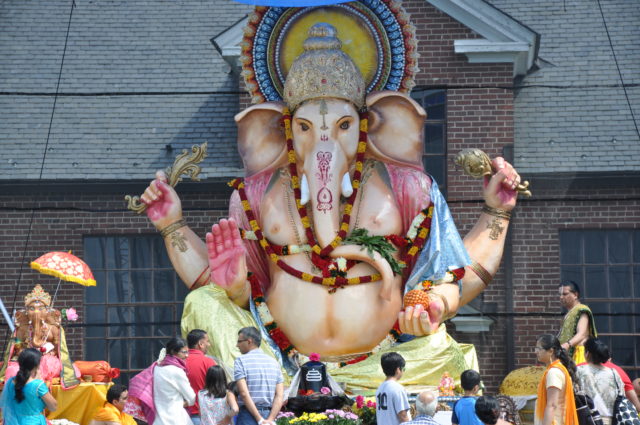
At some point in our lives, we experience fear. Some people live in fear on a daily basis, manifest as anxiety and depression. Yet fear is a product of the mind. And what can be created by the mind can be cured by the mind by evoking the universal energies we find in the personifcation of hindu gods.

Many people believe that fear can be defeated by invoking the energies of specific Hindu gods. There are countless stories that reveal the power in overcoming fear and three are over 10 deities that can be invoked to help people overcome problems that cause them anxiety. The Hindu gods that are typically invoked are Vishnu, Balaji, Radha, Rama, Lakshmi, Hanuman, Narasimha, Shaligrama, Shiva, Shakti, Surya, Ganesha and Kumara.

In Sanskrit, the word for fear is Bhaya, personified by the son of the demon goddess, Kali. But Kali is merely an aspect of the divine feminine, Shakti, a Hindu god that represents Universal energy in her form as destroyer. In Hindu myth, Kali turns into a demon tiger and shreds the bodies of her victims.

The way to overcome fear is to fortify the mind and realise fear is a product of the mind. Sometimes you need to find courage and patience, other times you have to reframe the situation and find positives in what may otherwise appear negative situations. Also turn off the TV and the fear that is being pumped n your subconscious on a daily basis.

Hindu philosophy

Everyone needs protecting from fear. Hindu philosophy attempts to explain that every experience we have in our lives is the result of an action performed in a past life. In reality, our experiences are a result of action we perform in this life too.

Science shows us that for every action is a reaction. Whatever we do or say will impact our immediate environment and can have consequences further down the line. Therefore when we take responsibility for our actions in this life, we have more control over the experiences we encounter.

Distress and misfortune are usually the result of negative energies we have projected through fear-based thoughts, emotions and actions. They are not a punishment from God, but the fruits of our endeavours. The quality of the fruits you produce depends on the dedication and care you give towards nurturing your energy.

The law of duality also teaches us that the outcome of events can be measured on a scale of polar opposites and everything in between. We can experience joy or sorrow, success and failure, good health or illness, peace or anger and so on.

It is in the law of duality that we recognise the emanations of the feminine principle, Shakti. In one aspect, the Hindu God, Shakti is the graceful Parvati that nurtures and cares for her family, whilst on the other end of the spectrum she is the destructive Kali. Kali is not evil, but an energy that contains destructive energies that ultimately produce fear, Bhaya, her son.

The divine beings of Hindu myth reside in the deep realms of the subconscious mind. They are there to assist your soul, the atman, on its journey through Samsara back to the divine Brahman. By understanding what the Hindu gods in ancient myths represent, it is possible to evoke the spirit of these divine energies to help guide you through the difficult times and overcome fear.

Liberating the mind

To purify the mind is known a Moksha in Hindu. It is a process devotees practice through rituals, hymns, prayers and the way in which they live their lives. Many Indians will tell you that Hinduism is not a religion, but a way of life.

Rituals and prayers are used to help protect the mind against negative energies. With dedication and great effort, it is possible to liberate the mind from the trappings of the material world. Learned yogis teach initiates that the best way to guard against negative energies is to create a spiritual force field of divine light around our bodies.

This idea is also recited in Jewish mysticism and known as the Merkabah. However, it is probable that the ancient Sanskrit writers of India knew about this energy field around the human body, commonly known today as an ‘aura.’ It is believed that when we live in harmony and have a clean aura, negative energies cannot penetrate the protective force and cause us to suffer with fear or fear-based emotions.

Have Yoga Trends Gone Too Far?

0

We all love yoga and the benefits that it brings our body. It’s safe to say that the art of yoga itself has stood the test of time, dating back almost 5,000 years and is still extremely common in today’s modern age.

However, as with absolutely everything else in the modern age, yoga has been manipulated and transformed in so many ways. Whether this is to make it more fun, quirkier, to earn more money or to simply make it more accessible to people, the question remains to be answered.

We’ve already covered a couple of yoga trends on this blog, having seen practices from Goat Yoga to Naked Yoga. However, I was recently made aware of a practice known as ‘Drunk Yoga.

Now, to me, having a few drinks every now and then, maybe at the weekend with some friends or a glass of wine in the week might be already for some. Personally, I drink a couple of times a year maximum.

But then actually going into something and calling it Drunk Yoga? This left me a little confused and, quite frankly, a little bit shocked.

Of course, don’t get me wrong, I know a tonne of people that love to go out and get drunk but, as surveys have proven time and time again, getting drunk is by far one of the healthiest things you can. It even ranks higher in terms of body damage that heroin, cocaine and smoking.

In the UK, the National Health Service spends over £3.5 billion a year just on alcohol-related health problems. And now studios are promoting it in their yoga classes? Something doesn’t seem right.

So, I investigated.

It turns out that these classes were being held by Grey Lady, a studio in New York City. The class is run by an Eli Walker and costs around $30 for a basic yoga class. However, within the studio, there is also an open bar which can provide you with unlimited wine.

You’re encouraged to take as much wine or booze as you like and take it with you to your mat for consuming throughout your session.

Walker states in an interview to Refinery29 that she has spoken to many people in the past about the benefits of yoga. In return, they stated that they were too inflexible for yoga and it made them embarrassed.

Walker then thought if she turned the practice into a party-like situation, people would feel more comfortable and therefore willing to practice. She also went on to claim that one of her students finds it impossible to touch their toes unless they are drunk.

While this doesn’t really make any sense, she exclaims that her students feel empowered by the alcohol, especially the less abled.

The Dangers of Drunk Yoga

Now, I’ve already mentioned how unsafe drinking alone is. So, what about in a yoga environment?  Firstly, as we all know, drinking can do crazy things to your brain, especially when it comes to your judgement. When practising something like yoga, there becomes a very high risk that you could severely injure yourself.

Additionally, alcohol is known for being a diuretic. This means that it’s going to make you want to urinate, a lot. This means you’ll be expelling a tonne of liquid and bodily fluids after drinking, leaving you dehydrated.

If you’ve just completed an hour session, the last thing you’re going to want is to feel dehydrated and thirsty. It’s an essential fact that you need to stay hydrated throughout your workouts.

All in all, it’s easy to see that although booze might make a class interesting, it’s definitely not the safest thing to do. Whether it’s a trend gone too far, I’ll leave that up to you to decide.

Meditation: A Personality Guide

0

Everybody is different. We each have our own personalities, our own beliefs and our own way of doing things. It’s true, what’s good for person A may not be the best for person B. This is the case for all kinds of aspects of life, meditation included. When meditating, some people may like to sit in silence while others prefer to have a guided voice telling them what to do. Some may just present reminders or bells and some like using timers.

There is, however, a vast range of meditations available, so it can be difficult to know which one is best for you. Whether you’re just starting out or looking for a more suitable form of meditation for you, use my guide below to match up your personality to the variation of meditation that will best suit you.

Meticulous Personality

If you would class yourself as meticulous, I’m referring to the fact that you’re well organised. You’re planned and disciplined. You always arrive somewhere on time, sometimes early and rarely forget anything. If this best describes you, it’s highly recommended that you opt for a Mantra meditation.

For example, sit with your legs crossed on a cushion or the floor. Close your eyes and hum as your breath in and out, following your breath and your hum. This will help you to maintain concentration during your sessions.

Outgoing Personality

If you were to describe yourself as extroverted or outgoing, one of the most common problems you’ll encounter is getting distracted. You may want to talk a lot to the people around you, and your character may feel a lot more energetic, rendering you restless. For you, try a breath work meditation.

With this, you’ll want to breathe very deeply while listening to some kind of meditation music. With continuous deep, steady breathing, you’re effectively wearing yourself out. Once you start to reach the end of your session, you’ll have used a lot of energy, allowing your mind settle. Then, you can help your mind to become present.

Emotional Personality

This may also be referred to as a tad neurotic. If this is you, you may not like the idea of meditation, or you may have tried it and not got along with it If this is the case, why not give tapping a try.

In this exercise, you’re, in essence, hypnotising your mind by tapping at certain points on your face and head. As you tap your body, you’re distracting yourself while replacing any negative thoughts with the parts that you tap. This can also be used to break habits and form more positive attributes.

Compassionate Personality

On the other hand, if you would class yourself as a loving, friendly and genuinely caring person, there’s a form of meditation for you. It’s known as Loving Kindness. During these sessions, you’ll simply close your eyes and become present. Then, in your head, you ask yourself a series of questions.

These questions could include ‘May I be happy?’, or ‘May I be relaxed?’ or even ‘May I love myself?’. Compassionate people also tend to put others before themselves, so this form of meditation is great to turn some of that kindness inwards towards ourselves.

Conclusion

There is a vast number of different variations when it comes to meditating. Trying to find the right form of you is essential if you want to enjoy the maximum benefits. Take your time and experiment with what works for you and you’ll soon find a greater sense of being.

Did you find a kind of meditation to suit you? Maybe you’ve found a different type that you’d like to share with us? Let us know your thoughts in the comment section below and don’t forget to share this article with your family and friends!


5 Essential Tips to Meditate Successfully

0

It doesn’t matter whether you’re just starting out in the practice of meditation or you’ve been practising for years. Clearing your mind is difficult. During these last couple of months since I’ve been practising meditation on a strictly daily basis when you’ve noticed your mind has wandered off, it’s hard not to judge yourself in a negative light. Anyone I speak to who has tried a session or practices regularly have complained about the same thing. To give anyone else out there a helping hand, here is a handful of tips to help you achieve a state of concentrated awareness.

Follow Your Breath

One of the first successful tips I found to work was by following your breathing. When you’re meditating, mentally follow your breathing from the very beginning of the inhale to the very end of the exhale. Notice each of the three points. These are; when your inhale starts, when your inhale becomes the exhale and the end of the exhale. By following your breath, you’re leaving minimal room for your mind to wander off.

Don’t Judge Yourself

When you finally realise that your mind has wandered off onto other thoughts of the day, it’s easy to get angry or irritated at yourself. This also results in another lapse of concentration, and you don’t want to increase stress by meditating. Instead, when you’ve realised your mind has wandered off, simply accept that it’s happened and carry on. You don’t have to judge yourself, and this wandering mind will become clearer the more you practice. As we’ve discussed in previous articles, the brain is a muscle that needs exercising.

Mentally Count Your Breathing

Another fantastic way I found to keep focused while meditating is by mentally counting your breaths. I first discovered this technique using the Calm app, and it helps no end. When you inhale, as you take in as much air as you can, in your head, count one. Then proceed to exhale. When you reach the very end of your exhale, count two. Breath in again and repeat the process. This is a great way of stopping your mind from wandering off.

Add a Focal Point

When meditating, if you’re finding it hard to concentrate, add a focal point to concentrate on. This could be the point you feel the air entering and exiting your nose. It could be the tip of your nose. It could be by really staring into the darkness of your closed eyes. This is a very simple yet effective technique to training your body to stay focus during a session.

Listen to Ambient Music

In the first few months where I started meditating, I found it much easier to listen to ambient background music than the silence or slight noise of day to day life. Listen to it out loud, or through headphones, it really doesn’t matter. It’s just a great way to block out any distractions that may be happening around you. Some personal favourites include jungle music, waves crashing on a beach, rainfall and even binaural audio.

Let Us Know Your Thoughts

Did any of these tips help you to concentrate? Maybe you’ve got some tips of your own that could help others? We’d love to hear from you! Let us know your opinions in the comment section below! Don’t forget to share this article with your friends and family to help them!

3 Common Myths About Yoga You Can Stop Believing

0

The industry is full of myths. These are reasons that people are avoiding practising it or simply have misunderstood something that someone has said in the past.

However, you’re not practising yoga to try and get that Instagram-worthy post; it’s for your own wellbeing. Today, we’ll explore three common myths that people have about yoga and the truth behind them.

#1 – You Need to be Flexible to Practice

One of the most common misconceptions is that you need to be flexible to start practising yoga. However, one of the key aspects of yoga is to make yourself flexible. That means no more ‘I’m not practising yoga, I’m not flexible enough’.

It’s worth remembering that there are so many different types of yoga that you can practice suiting your ability. Additionally, if your muscles feel tight or you feel stressed out, doing yoga can help loosen those muscles to help you feel more relaxed and can reduce your levels of stress.

#2 – Yoga is all Physical

Obviously, when you’re practising yoga, you’ll be putting your body into certain physical positions that will help to stretch you out. However, there’s an equal importance on your mental state. In truth, yoga is all about your attention which is why it’s commonly linked with meditation.

Every stretch you do and every pose you put yourself in draws your focus, and you need to make yourself aware of the poses that you’re in.

You can also concentrate on your breathing and when you inhale and when you exhale, as well as regulating it as you go. It’s all about bringing awareness and purpose to what you’re doing.

#3 – Yoga Only Happens in a Studio

This is easily the most common misconception about yoga and that you can only practice it if you’re standing on a mat. However, unlike most other exercises, yoga is all about taking what you learn and how you feel with you into everyday life.

In yoga, if you’re practising a pose and it feels uncomfortable or even starts to hurt, you need to guide yourself through it, so you are comfortable and then move onto the next pose. You never try and force a pose. It’s all about doing what your abilities allow you to do.

However, this mindset can be taken, with practice, into everyday life. If you’re in a difficult environment or a stressful situation, simply breath, relax and try and guide yourself through it in a non-stressful manner, much like you would a pose.

Final Thoughts

Yoga is easily one of the most overlooked yet most beneficial exercises you can partake in. Whether you’re practising it as a sole exercise or using it to warm up and cool down at the end of an actual workout, remember all the points above. If you haven’t started practice, what’s your reason not to?

Can Meditation Actively Prevent Heart Disease?

0

Over in the U.S, claims are being made that meditation can actively help to prevent heart disease, one of the most increasingly common conditions in the U.S and the rest of the world. The claims are being made that meditative practices should be adopted alongside necessary lifestyle changes and any medication currently taken.

However, how true are these claims?

The American Heart Association (AHA) initially posted on their guidelines that there wasn’t enough information on meditation for them to advise it as an active treatment towards anything medical, especially related to the heart.

However, the research review that the AHA has conducted has seen an update in these guidelines and state that meditation may have some positive benefits, and that’s not just talking about reducing stress.

According to Dr Glenn Levine, the head of the AHA task force stated;

“Meditation can be considered as an adjunctive lifestyle intervention in those interested in this practice.”

He continued by saying that;

“We do not believe meditation should be undertaken as a substitute for well-established and recommend lifestyle and medicinal interventions.”

During this latest release from the AHA, the release focuses on sitting meditation, not so much yoga or tai-chi. However, a variety of meditative types were included such as Samatha, Vipassana, Mindfulness and Zen meditation.

The AHA made this release due to the fact that meditation has now been proven so many times with enough substantial evidence that it actively reduces stress, anxiety as well as depression.

It can also help to improve sleep and the individual’s overall well-being. This is all related to heart disease, and so meditation can reduce this.

All in all, this can help to reduce blood pressure. However, there isn’t enough evidence to support how much it can reduce this per individual.

It’s highly recommended that you start meditation and try and get into the habit of doing it every day. Meditation is generally regarded as safe and low-risk which is why the AHA has recommended this as part of their guidelines.

There is a tonne of resources online that can get you started, as well as on this blog. Once you’ve mastered the basics, you can practice anytime, anywhere. This allows you to better yourself, anytime of the day or week.

How to Meditate While Travelling

0

For most of us, the summer is in all full swing. This means fun, BBQs and travel adventures with friends and families. This is despite me looking out my window now to see raining continuously pouring down, hour after hour. It’s because of this that thousands of people, individuals and couples flock to foreign countries. There’s nothing better than getting away from it all and soaking up some sun.However, just because you’re escaping the day to day stresses of your life, this doesn’t mean that you can stop meditating. Meditation is an exercise for the brain. Similar to going to a gym, if you stop, you’re going to lose what you’ve gained. That being said, the average time a family goes away on holiday is around ten days. This is the average period a package holiday will get you abroad, so it’s understandable that habits can slip.

I’m not saying you need to run around your hotel telling everyone to shut up so you can meditate. However, the chances are that you may find it very difficult to find somewhere undisturbed to mediate. So, I’ve been brainstorming ways for people to meditate while they travel and I’ve come up with some interesting ideas.

On the Plane

This may only be possible at the start and the end of your holiday but what a way to do so! I frequently use the meditating app, Calm, that has a variety of session durations. I rarely have time to complete a session over half an hour, but there’s the option to complete two-hour sessions. During my last trip to Portugal, there was no better way than to stick some headphones in and complete it. It actually worked surprisingly well as most passengers were asleep!

Bathroom Time

If you’re staying in a hotel, a hostel or any form of accommodation, the chances are that it has a bathroom. A five-minute meditation session is better than no meditation session at all.  So, if you can lock yourself away in the bathroom for a couple of minutes, this is a great way to become present.

Venture Out

However, you’re on holiday so why not venture down to the beach during the early hours of the morning. I understand this idea is flawed as you’re on holiday and may want the lay in. The beach may also be full of distractions at any time of day. However, opening your eyes to a gorgeous sunset is the perfect way to end a session and start your travels.

Venture Out – Part Two

And who says you’re restricted to the beach! A mountain top, a landmark or an empty square or park. Wherever you fancy meditating in your chosen destination, root around for the best place!

Be Present All the Time

Okay, it’s nearly impossible to stay present all the time, especially if you’re surrounded by screaming kids and other distractions. However, if you’re looking out at a captivating view from your balcony or excursion, take a deep breath. Hold that breath, close your eyes, if only for a couple of seconds. Release that breath slowly and really appreciate where you are and what you’re doing.

This will help you to become more and more present and will definitely enable you to enjoy your holiday so much more! By staying present throughout your holiday or travels, you can easily ensure you make the most of your time while you travel.

Are you going away anywhere nice this year? Are you in desperate need of a holiday? Do you have any tips for fellow travellers on how to stay present during their holidays? Let us know in the comment section below and don’t forget to share this article with your travelling friends!