















A Brief Guide to Family and Meditation

Life is busy. We’re always running around trying to achieve our dreams all while trying to complete our daily tasks. It’s easy to get overwhelmed. You may have already tried or regularly practice mindfulness meditation, but have you tried with your family?
Getting your children into meditation from a young age can be hugely beneficial to their development, especially if they can master the techniques before reaching the most stressful times in their lives. As the topic of conversation, I regularly hear people say that their children would probably be unable to meditation.
‘My children are too restless’ or ‘They can’t become present because their minds are too active’ are typical answers. However, it’s worth remembering that children look up to their parents and will naturally mimic what they are doing.
That means even children as young as 3-4-years-old would be able to sit and meditate next to their parents. This is the first step in developing a proper meditation routine.
If this seems like something you would be interested in teaching your child, here are a few ways you can get started.
Give Your Children an Example
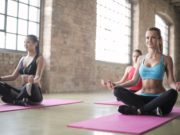
Most children at a young age are visual learners. They’ll see what their parents are doing and they’ll copy it. Invite your children to join you during your meditation sessions. For the most part, they’ll probably think of it as a game. They may try and sit next to you, on you or even will just run around the room.
However, by showing your children what a meditative state looks like is the first step towards them developing their own meditation routine.
Develop a Routine
Children thrive when they live in a routine. Mornings are easily the best time to meditation and will provide the most benefits so try it then. Your children will normally be well-rested so they’ll be very engaged in the activity.
Try to work the sessions into your regular routine. For example, your children could wake up, go to the toilet, come downstairs, meditate for ten minutes with you and then start their day how they normally would. That’s really all it takes to develop a routine.
Create a Meditation Space
Another great way to introduce children to meditation is dedicating a certain space in your home to do so. It doesn’t have to be massive but if you’ve got a spare room or space, this would be ideal. It could even be a corner of your home or a space that you transform especially for meditation.
For example, if you wake up before your children do, set up mats or cushions as the first thing you do. Then, when your children are away, meditate with them, put the meditation things away and carry on with your day.
Use Music
The way that children respond to music is incredible. In most cases, sitting in silence may put some children off the idea of meditation. Fortunately, there is a tonne of meditative music options you have available.
From meditation apps to YouTube videos, you can easily find one that works for you. As a rule of thumb, look for music tracks that match the length of your sessions and provide a relaxed and calming environment.
Don’t Pressure Your Children
It’s easy to get frustrating by wanting your children to pick up how to meditate quickly. However, there’s no need to rush as your child will get there in their own time.
You’ll need to be patient when teaching them that distractions, such as a phone ringing or people walking in the street, can just be ignored. Learn to embrace the distractions and simply dismiss them, much like you would yourself.
Don’t Give Up
It could take months for your child to pick up a meditative practice that suits them. However, just like if you were training for a marathon, it’s important that you don’t give up. You may find that your child has a particularly poor experience one day and claims that they never ever want to do it again.
If this is the case, simply continue to meditate yourself during the same time, following the same routine. Keep the door open for your child to enter at their own will. They can decide when to join you in your own time.
Mindfulness as A Tool for Social Workers

Being a social worker is hard work, even at the best of times. One minute you could be dealing with something as painful as a child abuse case. The next, you could be dealing with an individual who has dealt with a huge amount of trauma.
As a social worker, it’s essential that you remain professional, resilient and selfless. It’s becoming increasingly popular among social workers and health care professional to practice mindfulness meditation as a way of coping.
Molly Rose Zametkin was recently interviewed by the UK Guardian about her experiences. The 29-year-old is a primary therapist from Washington DC. She states that she regularly practices meditation, yoga, and mindfulness as it massively helps her to deal with the pressures of her job.
She went on to say that not only do these practices help her stay present throughout her days, it allows her to have time to herself. This is hugely positive as it, in turn, it helps her to give better care to her patients.
Mindfulness Costs Nothing
Molly is not alone and this practice is common across the industry. It’s important to remember that even a basic or beginner practice, such as ten minutes in the morning can be so beneficial. Yoga and meditation aren’t time-consuming, doesn’t cost anything and doesn’t need the invest of any kind of equipment. It can be practiced at home, at work or even in your local park.
One therapist stated that social workers are commonly underpaid for the work they do. In most cases, individual social workers are over-booked and regularly in contact with people who have suffered traumatic experiences. As a result of this, many social workers are at a high risk of ‘burning out’ or even suffering from ‘secondary trauma’.
Social Workers: Don’t Risk Burning Out
Secondary trauma, also known as STS, is a variant of post-traumatic stress. There’s a regular link of STS to social workers and other high-pressure jobs roles when the individual ‘burns out’. Kirsten Esposito Brendel, in the same Guardian article, expressed her views on mindfulness.
She states that meditation can help her to balance the risks involved in being a social worker and the practice is a way to ‘heal the healer’.
As mentioned above, meditation is a great way to divide work and private life. For a social worker, it’s incredibly easy to let work ponder on your mind, even if you’re in a private social situation. Living a life this way almost guarantees to increase stress and mental pressures and can even cause mental issues within anindividual.
Mindfulness is such an important part of life. No matter what job role you’re in, it’s important that you find balance. The work-life balance can be so hard to find but, through meditation, you’re proactively taking one step towards making it happen.
For advice, guidance, and information on meditation, check out some of the other blogs on our page. There’s also a tonne of information online so you can easily find a solution that works for you.
No matter what job you have, it’s vital, for your own health, that you find balance. Take a breather every once and while, become present and live the life that you want to live.
Ayurveda Students of Jaipur Sets New Guinness World Record

A brand-new world record has been set by 733 Ayurveda students in Jaipur this week. The feat? The record has been awarded for the most Naysa Karm treatments administered simultaneously.
Naysa Karm
The treatment of Naysa Karm is an Ayurveda treatment where oils, herbs, powders, and juices are installed and inhaled through the recipient’s nasal passages. This is a proactive treatment that works to cleanse and repair ear, nose and throat issues.
This Naysa treatment is renowned for being of the main five panchakarma techniques. These techniques are typically used as Ayurvedic detoxification treatments.
The participants took part in this event as part of the second day of the National Ayurveda Institute Festival that has occurred over this weekend.
The youth festival is the first of its kind and has attracted thousands of students from all over the country.
Rajaasthan Lokayukta S S Kothari, stated that the students should answer the world through their work, not through the art of speech. He then went on to say that the record that has been set by the students is a true example that Ayurveda is the best medical practice in the world.
The First Youth Festival of Its Kind
The entire record was set in an incredible eight minutes. A huge tent was erected specially for the event.
The festival, which is the first of its kind, is to attract young people to the practice of Ayurveda. It’s thought that over 2,500 students attended. They’ll be more on this story during the week!
Ayurveda: the Source for Clearer Skin

No matter what culture you’re a part of, clear skin is always at the top of the cosmetics list. Societies around the world spend millions of dollars on it every single year. However, Ayurveda practices are renowned for their health and well-being benefits, so could it have an answer for clearer skin?
The answer is yes. In fact, there’s a tonne of remedies and treatments you can use to better yourself and your skin conditions. Here’s how.
Raw Milk
Instead of paying out a small fortune for skin care cream, why not head down to your local supermarket and get yourself a pint of milk. Milk is renowned for its properties of cleaning our pours that will help to leave your skin with a brilliant shine and glow.
All you have to do is take two tablespoons and put into a container. Using a cotton ball, simply dab the milk and use it to clean your face like you normally would. It’s that simple!
Honey
Honey is one of the leading Ayurveda treatments for treating fine lines and wrinkles. All you need to do is to take a teaspoon full of honey and apply it to your face. Leave it there for about 15 minutes and wash it off with lukewarm water.
Aloe Vera
Easily one of the most renowned skincare treatments, you’ve probably already got a product that has this extract in it. However, using the pure form can be so much more beneficial to your skin and hair. In most cases, it will also help to reduce any redness you have thanks to pimples and acne.
All you need to do is to take a leaf and split it open for the gel on the inside. Then, applying this gel to your skin wherever you want it to take effect. Gently massage it into your skin, leave for a few minutes and wash off with lukewarm water.
Potatoes
Finally, we have this odd contender to my list. Surprisingly, potatoes are great at removing dark spots in your skin and reduce blemishes. It also has the unique ability to lighten your skin’s complexion. All you need to do is to take a potato and cut it into small pieces. Now, just rub the potato chunk onto your skin and you’ll have blemish-free skin in no time at all!
A Brief Checklist for Newly-Qualified Yoga Teachers
Congratulations! You’ve completed your yoga teacher training and you can share your passions and your dreams with the rest of the world! You’ve just completed one of the most important steps in your career! However, you may be asking; what comes next?
Today, we’ll explore several things you should do now that you’re qualified, giving you the best foundation for your yoga career!
Sort Out Your Files
The first thing you’ll want to do to make things really easy for you is to sort out your files. This means buying an actual file. Inside, you’ll want to put in a copy of your certification and a list of all the classes and studios you’ve worked in or attended. If you have actual attendance records, even better! This will be so helpful when applying for jobs.
Safety Training
Yup, that’s right, back to school again. You never know when someone might try and push their limits in your class. More commonly, you simply never know what will happen in your class. Since you will be the authoritative figure, it’s up to you to handle the situation.
Get yourself CPR trained and keep your certificate in your file.
Get Insured
As above, you never know what’s going to happen but if someone breaks their leg, you won’t want to risk your business, especially if it’s not your fault. Take out Yoga Liability Insurance so you know that you’re covered in the worst-case scenario.
Start Small
If a job has you, a newly-qualified instructor and a trainer with 30 years’ experience, the chances are that they’ll get the job, unless you really sell yourself.
However, you’re not expected to jump straight in at the deep end. Contact gyms, yoga studios, and private tutors. See if they would be happy in you working together, joining their classes and overall just helping them out. You never know what opportunities this could open up for you.
Brand Yourself
If you’re looking to going online, the first thing you’ll want to do is to start a website. This will help people get in contact with you and you’ll be able to market yourself from your website. It may seem like a very simple website to begin with but don’t worry, it will build up over time.
Set Your Prices
You don’t want to get to a point where someone asks you for private lessons but you’re unsure of the price. Will you charge by the hour, by the lesson, or monthly? Will you hold classes? How much are you going to charge?
While building your website, it’s a great idea to set a price list to work from. Don’t worry, these prices can be changed whenever you want but for now, you’ll need a foundation.
Be Patient
As with anything in life, good things will come to those who work hard. Be motivated by yourself, feel inspired and always look out for new opportunities. Plans will start to fall into place when you put in the right amount of time and effort.
Be the best you can be in everything you do!
16 Forms of the Hindu Goddess Lakshmi
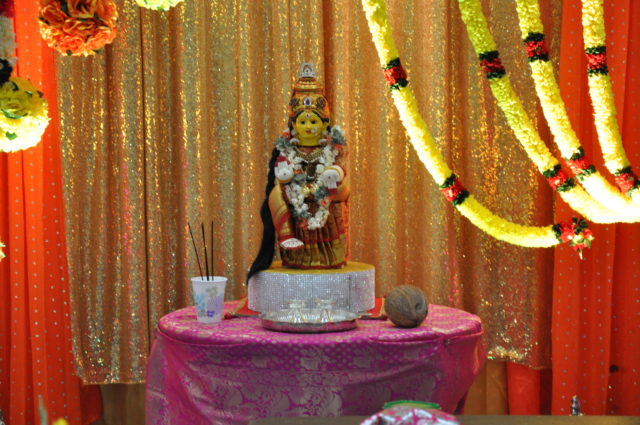
Lakshmi, the consort of Lord Vishnu, is the Hindu Goddess of wealth, prosperity, wisdom, fortune, generosity of courage. She embodies beauty, grace and charm and is worshipped for sixteen days during the festival of Mahalakshmi in northern India.
The purpose of the 16-day festival, is to celebrate the 16 forms which Lakshmi represents. Each form represents an aspect of life that is most important to mankind: knowledge, intelligence, strength, valor, beauty, victory, fame, ambition, morality, gold and other wealth, food grains, bliss, happiness, health and longevity, and virtuous offspring.
In ancient Sanskrit, the term Mahalakshmi roughly translates to “the one who aims to improve mankind.” The Vedas describe her as emerging from the Milky Ocean which is a myth that describes the process of restoring order to chaos.
Goddess Lakshmi then marries Lord Vishnu. Together they represent mastery over the Universe, the Supreme duality of nature. This is your power to bring down the illusion of Maya in mankind and reveal of the absolute Truth of our nature.
Lakshmi’s role with Vishnu
Mahalakshmi is also found in the heart of Vishnu and thus represents the embodiment of love. It is through the love of Lakshmi that the atman, in the inner soul, is able to connect with the absolute consciousness of Brahman.
The goddess Lakshmi therefore plays a critical role for her devotees. She is a mother figure people look up to and hope to emulate. Her warm, soothing nature makes her approachable. Her caring and nurturing of Vishnu reflects the devote wisdom we need to maintain our contact with the higher faculties of the unconscious mind.
As the feminine energy, Lakshmi is the creative force which purifies and uplifts us as individuals. It is with Lakshmi that the rising of Kundalini energy begins, hence why she is known as the Goddess of (spiritual) wealth and fortune.
Despite the power of Lord Vishnu, it is goddess Lakshmi who provides his strength. As the feminine principle of Vishnu’s active energy, it is Lakshmi influence that determines how energy manifests as reality – hence the purpose and deeper symbolic meaning of the Mahalakshmi.
The 8 appellations of the Goddess Lakshmi
You will often find in Hindu iconography motifs reflecting the eight appellations of the goddess Lakshmi, known as the Ashta-Lakshmi. This is because Lakshmi is found in two forms; Bhudevi ad Sridevi, dual aspects of nature and energy.
In essence, the Mother Goddess is a representation of the totality, both in the material world and the spiritual world which are a reflection of each other. As the personification of universal energy, the eight forms of Lakshmi are either manifested or unmanifested, hence why there are 16 forms.
Adhi Lakshmi
This the primal force which we inherit when we are born. Life is an opportunity to find inner peace and bliss and experience our true nature on earth. Adhi Lakshmi is the manifestation of material and spiritual contentment. Regardless of your circumstances, there is an eternal reservoir of inner happiness for you to indulge in should you choose to find it.
Aishwarya Lakshmi
Aishwarya Lakshmi reflects the goddess bestowing wealth upon her devotees. Contrary to popular belief among devotees of Hindu, wealth here does not mean riches in the form of material possessions. It is spiritual wealth. When cultivated it gives you everything you need in this life, and not everything you want in relation to material desires.
Vidya Lakshmi
In her role as the bestower of wisdom, Vidya Lakshmi is often depicted with books denoting the importance to acquire knowledge of arts and sciences. However, this information has little use if the benefactor does not apply the knowledge in a practical sense. In doing so, you acquire the wisdom of Vidya Lakshmi.
Dhana Lakshmi
In the appellation of Dhana Lakshmi, we find the Mother Goddess pouring gold coins from her open palm. Here we see the need for money to survive and fulfil aspirations. But the desire for money should not be for greed or material gain, but to help you reach your full potential in life.
Santhana Lakshmi
As the goddess good fortune and fertility, Hindus pray to Santhana Lakshmi to ask for children. In this form, goddess Lakshmi represents eternity as childbirth represents the continuation of longevity of a family, and possibly a legacy.
Dhanya Lakshmi
Dhanya means grain, and in this form Lakshmi represents wealth and prosperity in agricultural. In the modern world, this form extends into the household pantry in the hope that it will be kept well-stocked with healthy foods to feed the family.
Gaja Lakshmi
Gaja Lakshmi is also known as Elephant Lakshmi as in Hindu iconography, the goddess is see pouring water on her elephants. In this form, she resembles the need for authority, patience and strength. The elephants, an ancient form of transportation, represent your capacity to move forward in life and grow from strength to strength.
Veera Lakshmi
We see Veera Lakshmi as the ‘goddess of courage’ because of her ability to persuade people to face their fears and overcome situations that may appear difficult. Our perception of the world often makes us believe the task ahead is harder than it actually is, but with strength and virtue, we can actually make life a little easier and more pleasant. The key is to make the right decision every time, because when you know you are doing the right thing, the experience is easier.
Vijaya Lakshmi
As a resulting of the preceding virtues, devotees will emerge victorious, just as Lakshmi emerged from the churning of the Milky Ocean. Hence, we see the goddess in her final form, the Vijaya or Victory Laskhmi. In this form she represents the challenges you have faced and conquered, and the reward for your achievements is inner growth.
Hinduism teaches us many things in life, and by following the advice of ancient sages and living the words of wisdom through actions every day, life becomes easier and more enjoyable. This is what it means to acquire spiritual growth. This is your nature.
How to Live a Happy Life

This may seem like a broad statement to squeeze into a blog post that’s less than 1,000 words, but I’m going to give it my best shot. Every day, everywhere I go, I see people that are miserable with their lives and, despite desperately looking for a way out, they seem to find themselves stuck in a rut time and time again.
But when approached, it seems as though the vast majority of these people have given up hope and are trying to learn just to accept how their lives have turned out. But this doesn’t have to be the case.
After much thought, I came to the conclusion that there was one thing missing from these people’s lives. Gratitude.
What is Gratitude?
Officially defined, gratitude is the quality or personality trait for which you are thankful and appreciative of something or someone. It can also be described as having a readiness to show that appreciation.
I believe this is missing out of so many people’s lives and it’s causing emotional problems to their wellbeing. Most of the people I spoke to about the subject were also miserable with the fact that they didn’t have everything they wanted in life.
Maybe they wanted a new car, a new house or a steady relationship. Some people wanted to move forward in their careers or wanted to branch out and start a new hobby. Some wanted a holiday. However, there’s only thing that all these hopes and dreams had in common.
These were all things that these individuals didn’t have. And this remained common throughout anyone I applied this concept too.
The Problem
So when it came to talking to people, instead of focusing on the positive attributes of their lives and being grateful for what they did have already, many people were looking at the future to want they could have to what they wanted.
In short, this is a conditioning on society. Everywhere you look, you’re bombarded by marketing and advertising telling you to buy and what you should be looking to purchase next. This has been going on for decades now, even as far back as the 50s and 60s, if not before, meaning it’s now hard-wired into our conscious mind.
Even when we feel like that we might not pay attention to them, if you can see them, your brain is processing that information. For some of us, society has been this way since we were born, meaning it’s all we’ve ever known.
A Distracted Reality
All in all, this means that our minds are constantly craving new and exciting things, whether it’s the latest smartphone, a holiday or even a meal in a restaurant. This means we often overlook the fact that we already have many positive things in our lives.
For many of us, we all have a roof over our head; we have friends and family that surround us, we have a smartphone, access to food, water and heating and much more. These are the things in life we need to start being grateful for, and although it may seem simplistic, this is how you can achieve a happier life.
This is because you’re not constantly thinking about how unhappy you will be until you get the thing you want, you’re already happy because of what you do have. Adopting this mindset is a great way to become happier while actively reducing stress and anxiety.
But how can you adopt this mindset?
Meditation on Achieving Gratefulness
One of the best ways to achieve this state of gratefulness is through meditation. This is because you’ll be able to take a minute or two out of your life where you’ll be able to bring your mind to the present moment.
While here, you won’t be thinking about what you want to buy next or the experience you want to have in the future. Instead, you’ll be thinking about what’s going on right now. You’ll be focused on your breath, thinking about how your boy feels, as well as the condition of your immediate environment.
These are all things you can be grateful for which will, in turn, and with practice, will allow you to live a happier, much more appreciative life.
Reducing Alcohol Intake Through Meditation

We all love a drink every now and then. Maybe it’s the end of a busy and stressful week, and you simply want to relax and put your feet up with a cold beverage. However, it’s not uncommon for drinking to become habit and booze is renowned for its nasty ways of becoming a frequent thing.
Everybody knows the dangers of drinking and what it can do to you, but not many people know how to stop. If you’re becoming a bit worried about your alcohol intake and you want to do something about it, going to an AA meeting may seem a bit over-the-top. Alternatively, you could try looking into some habit-breaking meditation practices.
The Facts
Recently, a study considered the effects that mindfulness meditation had on a group of ‘at-risk’ drinkers. These are people who come into the category of woman who drinks more than 112 grams of alcohol (around six glasses of wine) a week or men who consume more than 168 grams (roughly nine 4% pints a week).
The study was carried out among 68 people who fall into this category. The group partook in an 11-minute mindfulness session. Simultaneously, another group partook in a session that revolved around just relaxing.
The results were staggering. In only just one week, the mindfulness control group has consumed, on average, 75 grams of ethanol less than they had before. This averages around four drinks per person.
With the current health epidemic that we are currently in as a world society, it has never been more important to turn to studies such as this to look for answers. Although this study was small, hopefully, it will be a gateway for more similar studies to take place in the hopes of finding an answer to better off the planet.
The Technique to Reduce Alcohol
If you want to start feeling the benefits that this mindfulness meditation can bring, here’s a technique that can help you to create habits that you want to keep.
Let’s start by turning your head from left to right. Really pay attention to how you feel when you do this. Can you feel your neck, or is the feeling stemming from your head or your spine? Does your skin or muscles change temperature?
Monitor this feeling. It doesn’t matter if it feels wrong or right, simply accept the feeling and move on to the next. This is the most basic concept of mindfulness meditation, and you’ve just done it! Now, the same needs to apply when you have an urge to get a drink.
Monitor that feeling. Where in your body does the feeling originate? Is it in your stomach, in your head or in your chest? If you keep practising this form of meditation in every way you can think of, the world becomes your oyster, and you’ll be capable of successfully completing anything you put your mind too.
Every time you feel an urge, such as imagining the refreshing taste of beer, a glass of wine or any form of alcohol cooling you off, how does it feel? Make a note in your head of these feelings, and then let them pass.
There is a tonne of online courses, books and apps that can get you started in the practice of mindfulness meditation. Even if you start by practising ten minutes every day, this can help to create a habit that could change your life, and your health, forever.
Two Yoga Poses That Strength Your Body for Pregnancy

Pregnancy is such a beautiful and amazing time, but it can also feel very destructive to our bodies. The female body can feel very strange, and you may even experience feelings that you’ve never had before.
This is your body adapting to change, but unfortunately, this can leave you feeling weaken and weaken by the day. However, to combat this, yoga can help to rebuild the strength in your body. This can help you feel better, stronger, more alive and more confident.
To give you a helping hand, here are three yoga poses to help you during pregnancy.
The Triangle Pose
The triangle pose is designed to strengthen your whole body. This is because you’re stretching and engaging key muscles in your arms and your legs as well as your chest. It’s also not too strenuous on your back, but it will help to build muscle there.
What to Do
Firstly, stand on your yoga mat with your feet facing the longest edge. Stand with your feet a bit further than shoulder width apart. For the first part, keep your right foot facing forward and swing the left at a 90° angle. Now bend your left leg, so your knee is parallel to your ankle.
Continue to maintain a calm and collected breathing pattern. Exhale and begin to stretch your right arm out over your head. It should end up pointing directly upwards. Move to place your left arm on to your bent knee. This will provide increased support. Maintain for five breaths before returning your body to the usually upright position.
Now reverse your feet and practice again.
The Mountain Pose
This is a nice, casual yoga pose that will help you to stretch out and wake up your body. That makes this ideal for the mornings! Most yoga routines will use this pose at the beginning to wake you up. But, even getting out of bed in the morning and doing this pose is a great way to start your day.
What to Do
Stand with your feet firmly positioned on the floor or on your yoga mat. Then, place your hands together in a prayer-like position close to your heart and close your eyes. Breath in and out deeply and steadily. From this position, as you inhale, push out your chest and stretch your arms over your head. Make sure your hands remain together.
Sweep your arms back over your head and gently arch your back backwards. Open your eyes and gently stare upwards at a 45° angle. Hold this position for ten breathing cycles. After, slowly lower your hands back down into the prayer-like position and then release your arms down by your side.
Final Thoughts
These are just two of the most basic yoga poses, but they are so beneficial. Whether you’re waking up or your baby’s making you feel a bit tired and tight, these poses are sure to wake you up and loosen you up.
By practising yoga when you’re pregnant, you can strengthen your body, helping you to feel energetic and independent. This will make your pregnancy a much more enjoyable experience, an experience that you’ll never forget.