Home Blog Page 22

When the Past and Present Collide: Ayurveda For the Modern Age

0
Triphala

Take the age-old teachings and practises of the Ancient Indian traditions of Ayurveda and infuse it with the knowledge and experience of the modern Western world. The result is New Age Ayurveda. This developing practice is making a steady increase in popularity in cities and countries around the world. The concept behind this is the opportunity for every person to live a happy, healthy and fulfilling lifestyle. In addition to this, the purpose of this practice is to find a balance between the mind, spirit and body.

REDEFINING TRADITIONS

Traditional practises of Ayurveda are based on the knowledge of the three main Doshas, known as Pitta, Vata and Kapha. These Doshas have their own unique representing elements which have a set of guidelines and advice that can lead to a fulfilling, happy and healthy lifestyle. The main practices to balance these Doshas include meditating, yoga, healthy diet and other forms of relaxation and contemplation.

Based on these concepts, New Age Doshas aim to update these guidelines and advice to suit the lifestyle of the modern-day individual. By following these practices, these individuals will be able to enjoy a whole range of benefits. Consequently, even an individual with the most hectic of lifestyles can find calm and enjoy the positive effects. These benefits can change the way the modern-day citizen lives their lives, from reduced levels of stress to increased levels of life satisfaction.

There are many doctors and practitioners that are developing their own form of New Age Ayurveda. The most popular of which is a Germany-based doctor, Dr Harsha Gramminger.

The New Age practices are still under a year old and still have a lot more work to do. Once completed, Ayurveda could spread throughout the Western world and touch the hearts of many. If the concept does pick up the pace, we could see a complete change in the way modern day people live their day to day lives.

HARSHA GRAMMINGER

Let us know what you think! Do you think a New Age take on the traditional practices of Ayurveda is a good thing? Or do you believe the traditional methods should be the only practised techniques? Let us know in the comments below!

Benefits of Yoga: 4 Things You Need to Know

0

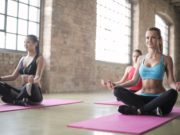
Day in, day out, we all hear about how amazing yoga is and how much good it can do for your body and mind. Believe me; I talk about it all the time on this blog! Anyone you speak to who practises yoga will tell you how incredible they feel after they have finished a session. More often than not, they’ll probably ask why you’re not practising it already! If you’re still in doubt about the benefits of yoga, this article is for you. This is designed to list out some of the most popular and beneficial properties of the practice, so there’s no doubt in your mind.

It’s for Everyone, Everywhere

There’s no excuse for yoga these days. Whether you pop down to your local gym, leisure centre or the community centre in your local area, you can be sure that you’ll find a yoga class. After all, it’s more popular than ever before. Furthermore, yoga is for everyone. It doesn’t matter if you’re four years old or 99 years old, you can practice yoga. It doesn’t matter whether you’re a mum, an OAP or a body builder, there’s a form of yoga that’s suitable for you. What’s more, yoga classes have been described as one of the friendliest environments around where everybody is welcome.

Yoga is Bespoke

There are over 20 main types of yoga, each one catered for a different niche and lifestyle. From more traditional forms, such as Hatha and Astanga, to more innovative forms, such as Nude or Aerial yoga. No matter what your taste, there’s a yoga session for you. All you have to do is find the one you most enjoy. If you’re a beginner, Hatha yoga is ideal as you can focus on increasing your flexibility while remaining comfortable. On the other hand, Bikram Yoga is performing in a hot environment where your body can increasingly rid itself of harmful toxins through sweat. It’s completely up to you! Looking for something a bit different? Look into Goat or Kitten yoga!

Promoting a Healthy Lifestyle

This is one of the leading reasons why you’d want to practice yoga. The practice isn’t just about exercising and working out; it’s about promoting a better, happier, healthier lifestyle. This is one of the main reasons why meditation is typically introduced at the beginning or the end of each session. During a session, you’ll learn essential breathing techniques that can help you become less stressed throughout your day. It will also help you to forget stresses in your life, if only during the session. This helps you to become a much calmer, much more peaceful person.

Build Muscle

My final benefit of yoga is building muscle mass in your body aka, working out. If you’ve ever watched a yoga session, you may feel like it’s relatively calm and peaceful and not very forceful. In other words, you’re not deadlifting weights like you would at a gym. However, yoga is all about posture and developing your muscles to be lean and strong under your own body weight. Imagine a rock climber and a heavy weight champion. The latter is packed with muscle caused by intense workouts, but they would never be able to zip up a rock face. However, the rock climber is nimbler, agiler and still has enough strength to race up cliff edges. Yoga helps you to become more like a rock climber.

Conclusion

This is only scraping the surface of the benefits of yoga. There are tons. Believe me, when I set about writing this, I managed to fill up a page of benefits, but I understand you haven’t got all day! Let us know your thoughts! Do you have any wise words or advice for people who want to start yoga? Do you have any questions or queries you’d like answered? Let us know using the comment section below! Don’t forget to share this article with your friends and family!

How to Meditate to Achieve Lucid Dreaming: Part Three

0

Welcome to the third and final part of my lucid dreaming series. Over the few days, you should have been practising a few techniques that can help you to control your breathing and your mental state. By now, you should be feeling relatively present throughout the majority of your days. Additionally, you should have been keeping a dream journal which should have a couple of entries. Don’t worry if not, using the information in this last article, you should be able to piece every together. You can then continuously practice these techniques day in, day out. Over time, you’ll build up your awareness so much that lucid dreaming will then become possible.

In today’s article, we’ll explore how to induce your mind into a lucid dreaming state. There are two types of induction you can attempt. These are known as WILD (Wake Induced Lucid Dreams) and MILD (Mnemonic Induced Lucid Dreams.

WILD

This is considered the most difficult form of lucid dreaming induction. You’ll need to practice your techniques strictly to achieve this. However, there are two primary advantages of using WILD. Firstly, you’ll be able to choose in your dreams when you want to become lucid. This means you can be simply observing a dream and then choose to become directly involved. The second advantage is known as Peak Lucidity. This means your dreams will be the most vivid and therefore the most engaging.

TECHNIQUE: WILD

Step 1

Firstly, get into your bed and lay in corpse pose. This is where you lay on your back with your arms comfortably at your sides. You’ll want your body to be loose and relaxed. Another way of achieving this is setting the alarm about 5-6 hours into your sleep.  You can then turn it off and return to your sleep. This is because your body will already be in the relaxed mode.

Step 2

Close your eyes and stare into the blackness. Use your meditative practices to observe and release any thoughts and feelings that pop into your mind. Try and clear your mind as much as possible. Inhale and exhale through your nose very slowly. For this, inhale for four seconds. Hold for seven seconds. Exhale for eight seconds. Counting your breath like this will also help you to stay focused.

Step 3

As you repeat this, you’ll start to see that strange buzz of colours you normally see when you have your eyes closed. Stare at these colours. At this point, you should feel your body starting to fall asleep. Concentrate on your breathing and these colours. Try not to lose consciousness.

Step 4

As you’re on the verge of falling asleep, start to create a mental image of what you want your dream to be. Start at the ground. Do you want a beach or grass? Slowly branch outwards from your feet. Are there trees, buildings or mountains around you? Slowly add in detail piece by piece, ensuring you can see each clearly before you envision the next. As you keep going, you should find yourself asleep and in a lucid dream.

TECHNIQUE: MILD

This is the ideal technique for beginners just starting out. MILD works by setting memory cues in your mind so, when you’re asleep, you can remember that you’re supposed to be lucid dreaming. This is where you’ll need the practices you have been doing. If practised enough, they should continue in your sleep. Note, you can also add an action to remember to be present. This could be looking at your hands or looking at your watch. Something simple that reminds you to be aware. These actions will naturally reoccur while dreaming, causing you to become lucid.

Step One

Get into bed and position yourself in corpse pose as above. Close your eyes and stare into the blackness. Now, with easy breathing, repeat a phase in your head. These should be something along the lines of ‘I will have a lucid dream tonight’ or ‘I’m Dreaming Now’.

Really mean the words that you are repeating to yourself. Maintain the easy breathing and stay focused. Your meditative practices will have taught you how to do this. Any thoughts or feelings that come into your head, simply observe and dismiss. You need your mind clear. As you repeat, you should find yourself quickly falling asleep.

Step Two

As you’re about to fall asleep, while repeating your chant, start to visualise your dream, similar to the method above. As you fall asleep, your conscious mind will also become part of that dream. If this happens successfully, you’ll be lucid dreaming!

Note

Another method that some people use is using lucid dreaming induction music, such as binaural audio. These can be easier found online, such as here. This is effective for some people and not to others; it simply depends on your mind.

And with that, I conclude my meditating to lucid dream series. You may not be able to enter lucidity on your first attempt but don’t give up hope. I practised for many months with the odd lucid dream, maybe once or twice a week. Sometimes none. After about six weeks, I was able to start lucid dreaming near constantly. We’d love to hear your feedback and some of your dream stories and how you got on with the techniques! Let us know your thoughts in the comment section below!

How to Stay Present at Work

0
pixabay_stheaker_candle-197248_960_720

Work environments are stressful at the best of times. With colleagues bothering you at all hours of the day, ever-increasing ‘in’ boxes and impending deadlines, it’s not uncommon to feel like you can’t catch a break. Lunch breaks don’t even feel like lunch breaks these days when your mind is running at a million thoughts a minute about what you have to do later that afternoon. However, by squeezing in a quick meditation session at work, you can become present, introduce peace into the middle of your day as well as reducing those all-important stress levels. Below, we’ll show you how;

Ensure You Stay Hydrated

We know that every doctor under the sun will recommend this to you two times over, but it’s so important. The body is made up of over 60% water, and by keeping these levels up, you’ll be able to stay hydrated and in top form throughout your day. Furthermore, when you go to top up your water levels, this is the perfect time to get present. At the water fountain, take three deep breaths. Inhale through your nose and fill up your lungs as much as you can. Then slowly exhale through your mouth, prolonging your exhale to as long as you can. Follow your breath for its entirety.

Remain Present

This is extremely difficult at work. Your mind is constantly at other times of your life. Maybe on that deadline for a weeks time. Maybe it’s on what you’re going to have for lunch or dinner. It could be on Friday and what you’ll be doing at the weekend. Get yourself into the present minute. Get your mind into this second. While at work, implement the breathing technique mentioned above. One of the best ways to stay present is to write down all your ‘unpresent’ thoughts in a list. This will help you clear your mind of all these thoughts, leaving you free to live in the present.

Be in Nature

Being in nature is one of the most therapeutic spaces you can open your mind in. Whenever you get the chance, get yourself outside for some fresh air. If there’s a local park of green space near your place of work, go and eat lunch there. Take some deep breaths to really revitalise your mind.

Better still, invest in some low-maintenance plants for your desk. Some sort of cactus or a Chinese Evergreen is ideal as it requires minimal watering and looks great. You could also make this plant a reminder to stay present. Every time you look at it, get into the habit of taking a few deep breaths. The perfect way to stay present and focused.

Summary

By implementing these methods throughout your day, you can easily stay focused, calm and collected throughout your day. You’ll notice you’re a lot more stress-free and you’ll be a lot more productive, lighten your workloads and helping you to stay on top of things with ease.

Do you have any advice for staying calm and stress-free at work? If you have any tactics, let us know in the comment sections below! Don’t forget to share this article with your friends and family to help give them the boost they need!

How The Hindu Creation Story Helps Explain Life Creation on Earth

0
Tumblr_o3z58lev5r1slhhf0o1_1280

The Hindu creation story explains the emergence of the Trimurti. These ancient gods go a long way to explaining the origins of the Universe. Yet the concept of what the gods actually mean is widely misunderstood

Whilst science and religion are often pitted against one another, a closer study of the two reveals they have more in common than most people realise.

Commentators that argue for one theory against the other are ignorant. Belief systems seemingly forgo the ability for people to understand and appreciate opposing views. The simple explanation for that is because the true meaning of Hindu texts is hidden by esoteric symbolism.

This article seeks to address the similarities between religion and science. We will reveal how the Hindu creation story and the Big Bang theory essentially share the same views. This required ancient symbolism to be decoded.

Even the general purpose of science and religion share the same views. Science emphasizes the need to acquire knowledge and wisdom by understanding the nature of reality. Religion teaches us how to discover the innate nature of ourselves. This requires initiates to be consciously aware of our inner world.

A brief overview of the Hindu creation story

There are various versions of the Hindu creation story. It is written in the Vedas that before the world began nothing existed other than darkened water. The atmosphere then heated up which brought ‘The One” to life. The One is consciousness. The Rig Veda says:

“Darkness there was: at first concealed in darkness this All was indiscriminate chaos. All that existed then was void and formless: by the great power of Warmth was born that One.”

This scenario is what science calls the zero-point. Although scientists are uncertain what the zero-point actually is, they do believe it consisted of a volatile energy “indiscriminate chaos”. There was then an intense heat which resulted in the Big Bang.

The sound of the Big Bang is symbolised by Aum in Hindu texts – the sound of creation. We also know water has memory which can be impacted by consciousness. Scientists also believe life on earth emerged from the depths of the ocean.

Consciousness is referred to as ‘The One’ in Hindu scripture and symbolised by Lord Vishnu that emerges from the volatile energy represented by a giant cobra in later myths.

Lord Vishnu is known as the preserver. Consciousness preserves nature in all living things by adapting to its environment. This is how evolution occurs. Charles Darwin described evolution as ‘the survival of the fittest’.

But nature firstly has to be created – symbolised by the Hindu god, Lord Brahma who emerged from a lotus flower that stemmed from Vishnu’s navel. Consciousness must evolve in order for nature to evolve.

As the creator God, Lord Brahma and his female consort, Saraswati represent atoms and matter. The first elements that emerged after the Big Bang essentially create everything we see around us. Electrons bond with other atoms and create mass which forms as matter that we can see, touch, smell, feel and hear.

How creation is formed

Everything you see around you is made from atoms and matter. These objects began as pure energy within certain elements. When elements bond they create things.

An atom is made of a positive electric charge known as a proton which scientists refer to as male. The proton forms the nucleus of an atom which is circumnavigated by electrons. The number of electrons in an atom is equal to the number of protons.

The force created by the opposing positive and negative charge create the electromagnetic field to which are all connected. Hence we have the ancient axiom that we are all one. We are all connected to the same energy field.

This is the balance between male and female principles evident in energy, hence the Trimurti all have consorts. The gods in the Trimurti are not considered complete without their feminine aspects. Atoms cannot bond with female electrons.

The electromagnetic field is everywhere. It is found throughout nature because it creates nature. This is what religions call ‘God’ which is omnipresent, omniscient and omnipotent. Hindus simplify this concept with the term ‘Brahman.’

Brahman is considered to be the ultimate aspect of consciousness, or spirit. The Super Soul. Hindu texts explain we connect to Brahman through atman, the inner god of man. In psychological terms, this is known as our unconscious mind.

We need to be consciously aware of the subconscious of in order to connect with our True Self. The three gods in the Hindu Trinity come from the Brahman.

Who are the Trimurti?

The Hindu trinity features three principle gods; Vishnu, the preserver, Brahma, the creator and Shiva, the destroyer. Each of the gods represent an aspect of energy.

Atoms are energy. As discussed earlier, atoms are the basis of creation which then evolve. This is explained in ancient myth in the stories of Vishnu and Brahma. But why is God, Lord Vishnu in Hindu also destructive?

Because the Universe is in a constant state of flux, Earth develops different environments. For example, as we revolve around the sun each year, seasons come and go. Nature dies and is reborn when the environment enables it to flourish.

But sometimes, the environment changes so drastically that nature cannot regenerate. Consciousness then has to destroy the aspect of its own nature that is not able to survive. The energy then finds another way to transform.

Remember everything in nature is energy. The first law of Thermodynamics predict energy cannot be created or destroyed, it transforms. For example, when you turn on a light it creates heat.

Thus we have Lord Shiva, the destroyer. When old systems are destroyed the energy regenerates into a new form. This scientific principle is described as death and rebirth in ancient texts.

So as you can see, when you combine the discoveries of modern science and unveil the symbolism of ancient wisdom, there is a significant correlation between the two.


How to Meditate to Achieve Lucid Dreaming: Part Two

0

In my previous article, we explored how you can meditate throughout the day using a variety of methods to prime your body and your mind to achieve lucid dreaming successfully. For a brief recap, we focused on breathing techniques that you should practice throughout the day to help yourself stay present. We also used notes to bring ourselves into the present moment. If you’ve been practising these techniques, you should feel relatively present. We can now grow these techniques to allow our brains to enter a state of lucidity when we sleep.

Now, these techniques will need to be practised every day to become effective. These are in addition to your daily meditative practices that you already committed to. This will keep your mind calm, present and relatively stress-free throughout the day. This creates the perfect mental conditions for achieving a lucid dream. When referring to lucid dreaming, there are four main areas of focus which I’ll describe in depth.

Sleeping

This is a crucial element to get right. Make sure you are getting enough sleep every night. The best way to achieve this is by going to bed early the night that you want to lucid dream. By practising this on a regular basis, your sleeping pattern will normalise and will also become consistent. This is also vital for lucid dreaming.

Waking Up

This is the act of waking up after you have been asleep. When you wake up, you don’t want to rush out of bed as though you are late for work. Ensure that you wake up calmly, taking your time. The best way to achieve this is to lie still for a few minutes and just rest. Let your body wake up naturally. When you decide it’s time to get up, follow the tips on my Ayurveda guide.

Additionally, you’ll want to record a dream journal. Once you are awake and your dream is still fresh in your mind, take a notepad or piece of paper. On this paper, you’ll want to jot down all the information you remember from your dream the night before. This is essential for dream awareness. This is also useful for finding reoccurring patterns in your dreams.

Walking

This refers to you be awake during the day and going about your daily business. In addition to the present techniques such as saying, ‘I Am Present’ and breathing methods, take note of how you feel throughout the day. This will help you help you to become more self-aware, perfect for achieving lucid dreams.

Another interesting thing to do throughout your day is to pretend to fly. I’m not saying jump around from building to building though. Whenever you’re in a high up place, imagine flying around the area in which you can see. The more often you do this, the more commonly you’ll be able to fly in your dreams. This is renowned for being one of the most liberating and satisfying dream experiences.

Dreaming

This is the state when your body and mind is in the deepest form of sleep. It’s here that you’ll experience lucid dreams. There are two things you can do in your dreams. Firstly, you can do nothing. Dreams are extremely creative in their own rights, so, for the next couple of days, don’t try and control your dreams. Simply observe them. Any dreams that you do have record them in your dream journal.

The second state of dreaming is a controlled dream. This is lucid dreaming. For example, if you want to fly in your dream, you simply must desire to fly. Never think of falling or crashing. As long as you remain thinking that you can fly, you will be able to do so. Make it all you are thinking about. It will take time and practice to achieve a lucid dream, but it will happen as long as you put the time in.

The third and final part of my article tomorrow will explain the process of lucid dreaming. Bookmark this page for future reference and over the next few days, practice. Using this technique on a regular basis, you’ll train your mind to become closer and closer to lucid dreaming. Only with practice will you be able to achieve the right state of mind. Return tomorrow for the final part, and we’ll explore the best methods of getting your mind into a lucid dream.

How to Meditate to Achieve Lucid Dreaming: Part One

0

Meditation has always been promoted as having a tonne of benefits from improving your mental health and well-being to helping people across the planet to relieve stress and anxiety. You’ll find a wealth of articles on this site, as well as across the internet for the many uses of meditation. However, have you ever considered using the practice as a gateway into lucid dreaming?

If you’ve heard of lucid dreaming before, being mindful and self-aware is the first step to completing a lucid dreaming session. If you haven’t heard of lucid dreaming, in this article, I’ll explain what it is and how you can achieve it.

Lucid Dreaming

In short, lucid dreaming is the ability to take control of your dreams. At first, this may sound crazy and somewhat spiritual, but there are countless cases where people have been able to achieve this state of mind. In fact, it’s actually quite common in certain communities. If you successfully enter the state of lucid dreaming, your dreams will feel very real. Instead of witnessing your dreams and watching them play out in front of you, you’ll be able to have complete control.

This may sound like something out of the film Inception, however, this is a very good way of describing it. Without the fighting and people taking over your mind, of course. Lucidity, as the practice is known, when your mind switches conscious states, and you suddenly realise that you’re actually in a dream. Usually, dreams will feel fuzzy and hazy. When in a lucid dream, things seem a lot clearer and more vivid.

Despite how this sounds, this is a very safe practice and nothing like an out of body experience. When you’re in a lucid dream, you always safe and tucked up in your own bed. Of course, having full control of your dreams also means you can wake yourself up at any time.

It’s been known that Tibetan monks have been able to achieve this state of mind of thousands of years. The term ‘Lucid Dreaming’ was coined by Marquis d’Hervey de Saint-Denys, an enthusiastic dream researcher in the 1800s. States of lucid dreaming have been scientifically proven by several studies.

So, How Can Meditation Help Me Achieve This State?

To enter a state of lucidity, you must be relaxed, calm and possess a reflective state of mind. I’m sure you can see where this is going. By constantly practising meditation, you’ll find that your mind becomes more and more peaceful throughout the day. One of the key aspects of meditation is ensuring your mind is presently aware. This means being aware of the moment you are in right now, right this very second. As a rough guideline, close your eyes.

Take a long deep breath in, filling up your lungs with air as much as you can. Hold for second or two and then exhale. Make this exhale as long and steady as you possibly can. Empty your lungs of air. As you practice this exercise, follow the breath inside you with your mind. Right from the beginning of the exhale to the very end of the exhale. You should feel your breath fade out at the end. Try it now.

When you open your eyes again, you should automatically feel a huge amount of stress release from your shoulders and back. You’ll also feel a lot more aware of your surroundings. This is a feeling of being in the present moment. The more you practice this technique, the longer this effect will last throughout your day. This is meditation in its simplest form.

Now, to achieve lucidity, you need to bring this present feeling into your dreams. Throughout today, practice this technique. Tomorrow, we’ll be exploring the technique of how to enter the state of lucidity but for now, try and get your mind into this state as often as you can. Maybe write a note on your hand saying ‘Now’. Every time you notice this note, take a deep breath in as described above. Also, throughout your day, repeat in your mind, whenever you remember, ‘I Am Present’. This is also vital to achieving Lucidity.

Practice

Keep practising, and I’ll see you tomorrow! If you’re looking for any more tips on how to stay present throughout the day, leave a comment in the section below, and I can advise other methods on how to stay present. This will also allow you to stay focused throughout the day, making you more productive and stress-free!

3 Ways to Become More Self-Aware

0
7912377858_d1e19cbf35_z

Meditating is a fantastic way to become more self-aware. No, I’m not talking about AI machines becoming self-aware and taking over the world, I’m talking about your current state of mind. Here’s a question for you, how many times a day do you check in with your body?

When asked this question, many people will scratch their heads, not understanding what I’m asking them. I’ll put it another way. Whether you’re sat at a computer or browsing on your smartphone, take ten seconds just to stop whatever it is you’re doing and take notice of how your body feels, right this very second.

Does it feel hot? Does it feel cold? Do any parts of you or do any muscles feel tight? Do you feel relaxed, stress or excitable? Just take a moment to feel your mind and your body. Feel the blood rush flow around your body and try to feel your heartbeat inside your chest.

…

This is the first step to becoming self-aware. From the moment you wake up, you’re instantly checking your social media feeds, emails, deciding what to have for breakfast, deciding the best route to work, so you miss the traffic, choosing what music to listen to, work, work, work, go home, dinner, television, more social media feed scrolling and then sleep. At what part of the day did you take a step back to let your mind breath? At what point in the day did you stop and think ‘Am I okay? Are my body and mind okay?’

Chances are you probably didn’t. However, you’re not alone. This is the daily routine for millions, if not billions, of people around the world. By becoming self-aware, you can enjoy many benefits including better levels of focus, reduced levels of stress and anxiety, higher rates of productivity and the rest which I will include in a follow-up article tomorrow.

So how do you become self-aware? To help get you started, here are three things you can include in your everyday life to free your mind from the restraints of modern-day mental states.

Write

One of the most effective ways of becoming aware of your mental state is to write down your thoughts and feelings. You don’t have to be a good writer or even have written anything before. Simply write down what’s going on in your head. This could be in note form, a poem, a letter to yourself, whatever you feel comfortable with. This is a great way of destressing, and it will also help you understand how your mind works. This is because thinking something to yourself and seeing that thought on paper is a completely different experience. It makes it real.

Grow

Once we leave school, many of us stop learning. Not in the sense of starting a new job, for example, a factory where you would learn a new machine or a new system, I mean in a worldly sense. When was the last time you spoke another language or attempted to learn a new one? When was the last time you sat down and tried to solve a maths puzzle? With so any brain training apps and language learning programs, it’s easier than ever to pick and maintain a new skill.

Why are new skills necessary? Because knowledge is fuel for your mind. Like any muscle, the brain needs exercise to grow and develop to be the best it can be. To get you started, I used the brain training app Elevate (not an affiliate link). For just ten minutes a day, you can push your brain to improve its existing skills that will improve your life and your mental state.

Meditate

This one goes without saying, but it’s so important for achieving a state of self-awareness. You can meditate for an hour or a five-minute session after you wake up. It’s really up to you what you can do and fit into your schedule. You’ll see the most effective results if you do three 20-minute sessions a day, the first being as soon as you wake up. But it’s up to you. The important part is making sure you make a regular habit out of it, that’s when you start to see the results.

By meditating at least once a day, you are taking a break from your everyday life and treating yourself to a bit of ‘you time’. This gives you the ability to check in with your body, allowing you to listen to its wants, needs, passions, pains and, above all else, to relax.

I’ll be talking about each of these points about becoming self-aware over the upcoming articles so stay tuned to find out more! If there’s anything you would like to discuss or any topics you would like for me to explore, leave a comment in the comment section below!

Yoga Trends – Aqua Yoga

0

Created by the Birthlight company, a website and physical class organisation, Aqua Yoga is spreading like wildfire. Specially adapted from traditional practices, Aqua Yoga brings a new edge to the modern-day phenomenon. As you can imagine, these yoga practices are carried out in bodies of water, usually hired swimming pools. But why practice yoga in water? Surely you need stability and breathing to concentrate, rather than the constant fear of finding yourself submerged?

Well, according to the Birthlight website, Aqua Yoga is a fantastic alternative to traditional yoga but offers increased flexibility. As the individuals are in the water, there are new possibilities for various poses and adaptions. Thanks to the buoyancy of the water, flexibility can be achieved, regardless of who you are. This means whatever age, size, weight or fitness level you are; you can effectively practice yoga. This has been the draw for many people seeking ways to get flexible without the restrictions of dry-land.

Furthermore, being in the water adds a certain level of resistance through drag. This means that individuals can practice various poses that simply aren’t possible on the ground. Regardless of whether you’re an active swimmer or a beginner, Aqua yoga has been designed to be as suitable for everybody as possible. In some classes, the floor and walls of the pool are also utilised. This adds another form of resistance for people to practice. Additionally, due to the size of the pool, full 360° movement is encouraged. This gives you vast areas of space to move around, unlike the limitations of a yoga studio.

But What Are the Benefits of Aqua Yoga?

As you are practising in water and have the added levels of buoyancy, there are many benefits to Aqua yoga that you may not expect. Firstly, thanks to the density of the water, water yoga is ideal for strengthening your muscles. This is due to the added resistance, making your muscles work harder to move but the buoyancy relieves the stress. You can expect firm results in your abs, back and hip muscles especially.

Secondly, the buoyancy of the water helps to distribute your weight, typically around your joints. This means your joints can fully express and explore their full range of movement. This makes Aqua yoga ideal for helping people who suffer from joint conditions, such as arthritis.

If you suffer from back pain, this new form of yoga could be ideal. One of the most beneficial aspects of this practice is the that you can partake in various exercises, without adding excess stress to your back. Whether you suffer from back pain regularly or have recently sustained an injury, this form of yoga may be perfect for getting you moving again. This is because your weight is more evenly distributed, making you feel, in effect, lighter. This means that while carrying out certain exercises, you can do so with ease, without having to worry about added stress to your joints and muscles.

New-Age Yoga

Aqua Yoga officially kicked off at the end of 2016 but is now spreading across the Western World rapidly. There are countless classes and sessions set up by different companies with more and more people joining the practice every week. As mentioned above, this practice is suitable for people of all ages and body types thanks to its low impact results. This makes it ideal for people who are looking to start exercise or want to add some calming and relaxing sessions to their routines.

What do you think about this latest practice that is hitting the mainstream? Is this something you’d like to try? Let us know your thoughts and feelings in the comment section below!

Waking Up: A Technique That Will Change Your Life

0

Known by nearly everyone around the world, sleep is one of the most important functions your body has to undertake. It’s essential if you want to live a happy, healthy lifestyle. Some of us sleep way too much, and some of us don’t get enough. Some of us get it just right but have you ever thought about how you wake up? We all have different morning routines. Some of us shoot out of bed as soon as we hear our alarms. Others will hit the Snooze button 50+ times before crawling out, and others will just keep on sleeping. So, here’s the Ayurveda guide to waking up!

Following Ayurveda practices and guidelines, here’s a morning routine you can easily follow to help you enjoy the best start to your day possible.

Preparation

Ayurveda recommends that you wake up before sunrise. Around ten minutes before sunrise is ideal as this is renowned for being the calmest, most peaceful time of the day. You can easily find out the sunrise time in your area by searching online. By getting up at this time, you’re giving your body the chance to synchronise itself with the sun, allowing for the best possible start.

The following steps will teach you the best way to wake up and to start your day. If you’re a heavy sleeper, it may take some time to get into the routine, but by trying your hardest to follow it every day, you’ll soon find it gets easier and easier. Then you’ll start feeling more and more positive benefits.

Step #1

Once you wake up, the first thing you’ll want to do is roll over to the right. Swing your legs over the edges of your bed and sit with your feet firmly placed on the floor. Physically, when your body is asleep, your body is operating at a much lower metabolic level. If you roll over to your left, you could be putting minute amounts of pressure onto your cardiac system. This won’t do any damage, but it’s a lot more beneficial to roll right.

Step #2

Once you’re sitting on the edge of your bed, rub your hands together as though you were cold. The place your palms over your eyes. This may seem strange and a bit surreal, but there’s a good reason. Since your body has been stationary for hours, rubbing your hands together will reactivate the nerves ending. By placing your palms over your eyes and rubbing your face, you’ll instantly feel more awake as all your nerves begin to come to life. Move your palms around your face to your forehead and your shoulders.

If you’re in doubt, try it now as you read this. Rub your hands together for 5-10 seconds and place one hand on each cheek. Now slide your hands up your temples, over your forehead and back down. Sit still for a couple of seconds, and you’ll instantly feel your face come to life!

Step #3

Now take a deep breath in through your nose. You do this to figure out which nostril has a better air flow. Let’s say your left nostril has the best air flow, you now want to kiss your left palm, and then your right palm. Kissing is renowned for transferring energy. If your right nostril has the best air flow, kiss the other way around.

Step #4

Now it’s time to get up. Whichever side your breath was strongest, put that leg down and stand up on that leg first. Now you’re up and ready to start your day in the most alive and productive way possible!

Once you start getting the hang of this routine, it will become second nature to you. You’ll instantly feel the effects throughout your day, and you’ll be amazed and how much more you can achieve. This technique will benefit your work flow, your social life and your overall happiness.

Have you tried this technique to get yourself up in the morning? What were your thoughts? Let me know your experiences in the comment section below!