The Dangers of ‘Alien Yoga’
Social media platform, Instagram, is famous for its trends, concepts and yoga pictures. The three are regularly seen combined with thousands of yoga posts uploaded to the site every day. However, we’ve all heard the dark side of Instagram. These shadowed areas including body shaming, low confidence, harmful fads and now, Alien Yoga?
If you haven’t heard of it so far, chances are you’ll see it for yourself for. Commonly known as Nauli, alien yoga is the practice of yoga where individuals will curl up their stomachs into weird and twisted shapes. As you can see, these shapes are very weird indeed.
The shapes are created by the individual effectively emptying their lungs and then proceeding to pull their abdomen underneath the rib cage. This can be achieved by contracting the middle, left and right side of the abdominal muscles. Freaky, right?
This type of yoga has been considered to have a wide variety of benefits, but only when practised properly using a technique that has been mastered over several years, even decades. Nauli is rarely practised in classes or studios amongst Western world yoga practises.
In traditional, commonly practised yoga poses, the idea is to maintain a regular breathing pattern and focus on your breathing, however, Nauli requires the individual to breathless. In fact, to practise Nauli successfully, you must be able to hold your breath for at least a minute. This is simply unfeasible for many.
Borg-Olivier, the Director of Yoga Synergy, Sydney Australia, explained;
“Society has become obsessed with core workouts, hardening the core and opening the chest areas. In fact, this technique is the opposite of that.”
Borg, himself, has been practising Nauli for over five decades, teaching it to some of his classes over the last 35 years but, these classes are extremely specialist and not partaken in by the majority of yoga students. But this is a professional yoga teacher who has been practising for over 50 years? Can an Instagrammer with thousands of followers really be doing it so long? Is this an acceptable and safe trend for Instagrammers to be spreading for anybody to pick up and want to practise?
Health Effects
Unfortunately, there are some quite severe health effects that can follow from practicing Nauli using incorrect methods. Exercising whilst not breathing for a minute can have serious implications of a Yogi who hasn’t practiced or been taught properly. There is a huge risk of hyperventilation and inaccurate breathing can result in negative pressure changes that affect the body, the blood vessels and even the brain.
It’s clear looking at several of the Nauli photos that this could simply be another fad in which body-obsessed individuals are able to show off their bodies in a weird and engaging way, disregarding the potential health consequences for themselves and their inspired followers.
What do you think? Will this just be a fad that will carry on for a bit, peak and slowly decline or do you think Nauli or Alien Yoga will grow and grow in popularity? Let us know in the comment section below!e
10 Interesting Facts About Hinduism
Hinduism is the world’s oldest religion and has the third largest following of all modern organised religions. Although, Hinduism originated in India, its presence can be felt all over the world and over the centuries has been a major influence in modern thinking.
Ancient Hindus texts are the foundations of moral codes, laws, philosophical viewpoints and a precursor of modern science. Much of the knowledge founded by the ancient Indians which gave rise to Hinduism has been lost. But here are 10 interesting facts that are not widely known outside India and Hinduism.
Hindus are not original Hindus
The word Hindu was given to people of Indian origin by travelers, possibly the Aryans that entered northern India through Pakistan and encountered the tribes that lived along the Sindhu River. Sindhu became Hindu and their religion was given the name Hinduism. The first records of people being called Hindus are found in Persian and Greek writing.
Hindus believe in a circular time rather than linear
The concept of time in Hinduism is cyclical and divided into four ages or yugas; satya yuga, treta yuga, dwapar yuga, kali yuga. This idea also gives rise to reincarnation, the death and rebirth of the soul that returns to Earth as another life form once we die.
But the life cycles are also aspects of the cyclical nature of energy. Hindus believe that time is a manifestation of God. Time begins when primordial energy becomes active and ends when the energy returns to the source of absolute consciousness where it is transformed to new energy and the cycle of time starts again.
The sacred number of 108 is found in nature
Ancient wisdom is based around the principles of nature which in turn are the building blocks of creation. Everything we see is the result of the five sacred shapes we know today as Platonic solids although these shapes were understood thousands of years before Plato.
The mathematical equation phi (1.618) is found throughout nature and is closely linked with the number 108. Hindus and Muslims both refer to Gods using the number 108 to highlight its importance throughout creation.
The angles of the upper arms of a pentagon are 108 degrees. In ancient symbolism, the pentagon or five pointed star represents man, two legs, two arms and the head. Because phi can be found throughout the entire human body, 108 degrees is considered a sacred number.
Hindus do not consider the pursuit of wealth a sin
This is perhaps a contentious argument as most people do not consider the pursuit of wealth a sin, but rather a necessity of survival and a comfortable way of life. But wealth in Hinduism does not mean material possession like other religions want us to believe.
In Hinduism, wealth is wisdom and experience. There are four categories of wealth; Kama – the pursuit of sexual and sensual pleasure that can give rise to spiritual experience; Artha – the pursuit of a comfortable livelihood; dharma – the pursuit of knowledge and teaching; moksha – the pursuit of liberating the mind.
All living creatures have a soul trying to connect to spirit
One of the most difficult concepts for non-Hindus to grasp is the difference between soul and spirit. Hinduism classes soul and spirit as two separate energies that in essence are one and the same energy.
They explain the concept through the descriptions of Brahman and Atman. Ancient Sanskrit texts explain that Atman is the soul of all living things, and Brahman is the zero-point from whence all creation originates.
The overriding goal for Hindus is to reconnect atman with brahman and liberate the mind from bondage. This is how we understand more about life, grow in consciousness and improve ourselves as individuals whether on a moral or a spiritual level.
Ancient Hindu Texts Explain The Big Bang
The explanation given for the creation of the Universe in Vedic literature is not far removed from discoveries in modern science. The Nasadiya hymn od Rig Veda X.129 for example, alludes to the theory of the primeval zero-volume atom proposed by George Lemaitre.
1. THEN was not non-existent nor existent: there was no realm of air, no sky beyond it.
What covered in, and where? and what gave shelter? Was water there, unfathomed depth of water?
2 Death was not then, nor was there aught immortal: no sign was there, the day’s and night’s divider.
That One Thing, breathless, breathed by its own nature: apart from it was nothing whatsoever.
3 Darkness there was: at first concealed in darkness this All was indiscriminated chaos.
All that existed then was void and form less: by the great power of Warmth was born that Unit.
4 Thereafter rose Desire in the beginning, Desire, the primal seed and germ of Spirit.
Sages who searched with their heart’s thought discovered the existent’s kinship in the non-existent.
5 Transversely was their severing line extended: what was above it then, and what below it?
There were begetters, there were mighty forces, free action here and energy up yonder
6 Who verily knows and who can here declare it, whence it was born and whence comes this creation?
The Gods are later than this world’s production. Who knows then whence it first came into being?
7 He, the first origin of this creation, whether he formed it all or did not form it,
Whose eye controls this world in highest heaven, he verily knows it, or perhaps he knows not.
Hindus are travellers
The Roma people of Europe, commonly known as gypsies, have common ancestors that date back to ancient India. They still use Sanskrit words in their language.
The discovery was made several years ago in a joint research study by Indian and Estonian academics which confirmed the Roma people originate from the Indian sub-continent.
Anaesthetics were used by ancient Indians
The ancient text known as Sushruta Samhita is an account of countless treatments and medical procedures including various forms of surgery that were used in India over 2600 years ago.
It is believed the text was written by an Indian physician called Sushruta, known by Hindus as the ‘father of surgery.’ The book demonstrates ancient physicians used anesthesia and conducted surgical procedures such as caesarean births, cataract and the removal of urinary stones.
Hinduism have the biggest pilgrimage site in the world
Hinduism may rank as the third largest religion in the world, but it boasts the largest pilgrimage site. Sri Venkateshwara Temple also called as Balaji Temple in Tirupath attracts over 60,000 visitors a day and receives donations of some US$2bn a year.
Hinduism influenced all other world religions
Hinduism is the world’s oldest known religion although was influenced by earlier pagan religions. Other world religions also have pagan influences and the stories in the Koran, the Bible, and the Torah all share similarities with Hinduism. It is also common knowledge that Hinduism heavily influenced Buddhism, Sikhism and Jainism.
How to Increase Mindfulness and Awareness using Swimming
A lot of us use swimming as a great exercise to stay healthy and fit. When practised regularly, it’s not uncommon for us to become lost in own worlds and switch to autopilot, however, swimming is a great opportunity to practise meditation and increase the awareness of our minds and bodies.
To help get you started, I have compiled a list of tips and advice that effectively allow you to meditate and become aware every time you exercise, allowing you to stay fit and healthy and become a calmer, more stress-free and positive person in the long term.
Start at the Beginning
Firstly, even when you’re on your way to swimming pool, place yourself in the mindset that you’re going to be present when you’re swimming. You could even meditate for 5-10 minutes before you go, just to ensure your mind is in the ready state to become more aware when you’re in the water, not just trying to rack up the number of laps you can achieve.
Draw Your Attention to your Movements
When you’re in the pool, notice how you move through the water. Pay attention to how your skin feels and how the water moves over your body. Feel how you float and how the edges of the pool feel against your skin. You may find your body starts to wander as it normally would and, like meditation, it will take practice to get into this mindset.
Concentrate on your Breathing
As with meditation, focus on your breathing to ensure you’re breathing naturally whilst maximising your breath. Try and find a constant, satisfying rhythm that allows you to concentrate and exercise efficiently. Draw focus to how your body is reacting to your breath.
Feel your Strokes
Notice the changes in your body as your arms, legs and feet leave the water and re-enter it. Notice the air on your body and the feeling of your body parts re-entering the water. Become aware of the changes in temperature.
Listen to the Sounds
Can you hear the splashes around you? Can you hear the bubbles and your own breathing patterns? Listen to the sounds around you. This will enable you to become a lot more present while swimming, a practice you can then apply to everyday life. Practice seeing how quietly and peacefully you can swim.
Define Yourself
Each stroke, each breath, each movement your body makes should grow to be more and more defined and precise. Make each movement you make as defined as it can be. Aim to be as ‘tall’ as possible. Move with the water.
Summary
Swimming is a fantastic form of exercise and when combined with meditation, it can become even more beneficial to your mind and body. By practising meditating at home and when your exercising means you are maximising your opportunities to become mindful throughout your day, leading to a more positive and self-aware existence.
Have you practised becoming mindful when swimming, or in any other exercise? Do you have any tips for other people or looking for some advice to suit your personal situation? Let us know in the comments below!
4 Common Ayurveda Misconceptions Explained
As the practise and science of Ayurveda become increasingly popular in the Western developed world, as with any new and exciting concept, there are many people that hear rumours, misinterpret information or simply don’t take the time to research a concept before dismissing it.
This is especially true when talking about a practice as ancient and traditional as Ayurveda. Unlike many sciences and practises, Ayurveda has yet to be described and presented to people in an easy to understand the way that’s written for modern ears and many people find it hard to comprehend that it’s a science in its own right.
To help you gain a better understanding, here are four extremely common misconceptions related to Ayurveda to help you gain a clearer perspective and to help stop the spread of misinformation.
Ayurveda Is Not A Science
This is a phrase you may instantly hear mentioning the practice, however, this is not the case. Look up the definition of science. You will find a definition along the lines of;
“…the systematic study of the structure and behaviour of the physical and natural world through observation and experimentation…”
The practise and study of Ayurveda cover this definition in every single way. At its core, this study looks into the laws of universal energies and provides individuals and groups of people with the necessary results that enable them to accurately and consistently predict results that allow them to control disease, illnesses and the overall wellbeing of a person (patient).
There Are No Side Effects From Ayurveda
As with any substance, material, practise or action in this world, everything has a consequence. Whenever you’re involving or introducing the body to new chemicals or practises, your body is going to react in a certain way. In extreme cases, the purification and detoxification practise, commonly known as Panchakarma, can cause severe side effects that occur very quickly and can even be fatal.
This is why, as with any medical science, Ayurveda must be practise with the utmost care and respect. When practised and performed with the proper care and the correct level of guidance, side effects can be minimised and, in some cases, avoided completely, a benefit that comes with experience.
Ayurveda Should Be A Last Resort
As the Western world has ‘progressed’, especially in the fields of science and medicine, many illnesses and diseases in the body have developed and evolved, symptoms being repressed or hidden by the effects of modern drugs such as painkillers and steroids. It has also been proven that the long-term effect from consumption of these modern-day, over-the-counter drugs has a negative effect on an individual, changing the individuals’ metabolism and reducing the bodies effectiveness to combat natural diseases on its own.
Once a person has reached a stage such as this, it’s extremely difficult, for any kind of medical or scientific practice, to know what to do or how to treat the patient, usually resulting in drastic changes to aspects of their lives such as diet or lifestyle.
However, it has been proven in many parts of the world, and in scientific studies, that Ayurveda, when used as a primary source of treatment and prevention, produces incredible results that work, fighting and combatting diseases and symptoms at their source, whilst simultaneously boosting the bodies natural immune system.
Ayurveda Effects Take Ages To Become Apparent
As with any kind of treatment, the process it takes to heal someone can vary in length, dependent on a number of different factors that include the severity level of the illnesses. For example; colds, flu, fevers and other similar conditions are all able to be quickly managed if handled and treated in their early stages.
When using Ayurveda to cure ailments such as these, it’s been proven that the body witnesses quick results and in some cases, can even control certain, more common ailments in less than 24 hours, especially if following a treatment plan strictly.
For prolonged periods of illness or disease, it can take a complete change in a individuals’ lifestyle, including factors such as diet, treatment and medicine, to help assist the body back to a normal state of being which can last weeks or even months. This may seem like a long time but when you remember that many illnesses, and their original forms, can be present in the body for years, a few months doesn’t seem so bad.
Have you had a enlightening experience using Ayurveda as a treatment or are you looking for more information on how it can help you? Leave a comment in the box below and we’ll be happy to answer any questions!
How Meditation Can Positively Change Your Life
Meditation has massively grown in popularity over recent years. From businesses now allowing employees time to meditate at work from individuals learning in their own time at home, the majority of people nowadays have heard of phrases such as mindfulness, headspace and peace of mind.
Unfortunately, for many people, the practice of meditation still feels like a distant concept. How can the practice of regularly sitting and breathing in a special way change your life? If you’re one of these individuals, there’s no need to worry. It’s incredibly easy to start practicing and feel the scientifically proven benefits including a calmer mind, a more positive outlook to life and a more productive and happier attitude.
In the following posts, we’ll explore how to get started in the practice of meditation and how it can positively change your day to day life.
A Kinder Attitude
It goes without saying that everybody deserves affection and kindness in their lives. This also includes you. Everybody feels negative at some point in their lives. Maybe you’ve witness or experienced an upsetting event? Maybe you made a mistake and now feel regret or maybe you’re prone to putting yourself down?
These aren’t uncommon feelings and as the saying goes;“You can’t love somebody else until you love yourself”. Practicing meditation can help you alleviate these thoughts and feelings by allowing you to take a moment to stop and pause the thoughts you have about everyday life. Think of meditation as a way of taking a break from everyday life, allowing you to sit by yourself and just take a breather from the chaos and madness that surrounds us all.
Rid Yourself of Fear & Anger
It’s not easy to accept or express feelings of fear and anger. It’s extremely common for these feelings to become repressed within own beings but, in truth, this only causes depression, shame and anxiety. Through meditation, you are allowing yourself the time to face these issues and feelings, addressing them head on which in turn can allow you deal with the situation, empowering you to avoid those negative feelings which always result in a negative attitude towards life.
As above, meditation allows you to take a breath and a break from the constant nagging from our minds and open ourselves up to feelings of self-acceptance and self-awareness.
Revive Feelings of Appreciation
Everyday life is so full of hustle and bustle, we really get time to think for ourselves. Before I started to practice meditation, I constantly released that my mind was rarely clear and that they wasn’t a moment where my thoughts would stop and I could just appreciate the world around me.
Meditation is the key to unlocking these feelings of appreciation. Once unlocked, you begin to appreciate everything around you. From the chair you’re sitting on, the room you’re sitting in, the trees around you, the sounds of birds outside, the plants, the grass, the heat from the sun, the sound of rain, by noticing these little details in life and appreciating them, you become so much more grateful for the life you’re living and the place you live. These feelings of appreciation all come together to reward you with a much more positive outlook on life, allow you to smile each and every minute of every single day.
Becoming Aware
Finally, I’ll touch on the aspect of meditation which is quite possibly the most well-known, awareness. Specifically, self-awareness. Every aspect of our lives as a purpose; you go to work to get paid, you pay your bills to have water and electricity, you go to the shops to buy something, there is always an action and a consequence to everything that we do.
However, meditation has no physical purpose or alternative motive. The idea of meditation is to be present. To be aware. By being present and aware, you are simply locked in to your surroundings, allowing time for these feelings of appreciation and awareness to exist. With practice over time, these feelings will then spread to every aspect of your life, allowing for a complete, satisfying and healthy positive lifestyle.
The next article in this series will describe how you can get started with meditation and the best methods of practice to fit your personal situation and lifestyle!
Have you began practicing meditation or looking for more inspiration to get your started? Comment below to spark the conversation that could change your life!
The Spiritual Lessons of the Ramayana
Together with the Mahabharata, the Ramayana is the Opus Magnum of Indian philosophy. Written by the ancient scribe, Valmiki, the Ramayana teaches us lessons on many levels, both moral and spiritual.
Essentially, Lord Rama is the epitome of the ‘Ideal Man” that upholds spiritual values that guide us towards enlightenment so that we can know everything and become eternal.
The principle teachings are rooted in the moral lessons of dharma. But a deeper insight explains how we sometimes have to sacrifice materialistic and sense pleasures in order to grow spiritually.
In order to reach Moksha – liberation of the mind – we must forfeit life’s guilty pleasures. Material desires and the need for gratification only lead to suffering and keep us welded to the illusion that the world around us is the only place we can be.
But Rama’s 14 years in exile rejects the idea that the material world is all there is. The hero accepts the commands of his father to leave a life of comfort and live a destitute life in the middle of the forest. Even when his wife Sita is snatched by the evil King, Ravana, Lord Rama never loses hope and does not wilt in his loss.
Stay true to yourself
Although we all have desires, ambitions and emotional needs to be recognised, most of these feelings come from the unconscious mind and are faulty mental programs we develop as children. In adulthood, we have to free ourselves from unconscious programming and follow our true path.
This is why the dharmic lessons in the Ramayana are so important. Rama sums up the purpose of dharma when he says:
“You do not know dharma, or worldly affairs, or the laws governing enjoyment, nor the people’s behavior in different conditions and circumstances: and yet you blame me. The whole earth belongs to the kings descended from Manu and therefore my forefather Iksvaku. The present ruler in the dynasty of Iksvaju is my noble brother Bharata. He is the supreme monarch of the whole earth: and I derive my mandate from him, to ensure that all the subjects of that noble emperor observe the laws of virtue.”
Even though Rama has been asked to relinquish his reign of Ayodhya, he does not feel any hate or distaste to his father or his half-brother, Bharata who has taken his position as King.
Bharata is a reflection of Rama. He represents the shadow self – the side of our nature that we often see in others. Bharata defends Rama whilst he is away, and upon his return, hands Lord Rama the kingdom that is rightfully his. Bharata knows his duty. It is the right thing to do and he has been prepared for this moment ever since he accepted the crown.
Here, neither Lord Rama and Bharata are interested in power, wealth and recognition. They both make sacrifices and give up everything they could have. Their desire for greater spiritual needs outweighs the passion for materials desires that never last.
The historical Buddha, Gautama Siddhartha must have been inspired by the same lessons that inspired the Ramayana. The Buddha said that all suffering comes from material and sense desires, but these physical needs hamper spiritual growth and restrict us from reaching moksha.
The power of forgiveness
The opposing forces of sacrifice, purity and virtue are reflected in the actions of King Ravana. Overcome by lust and intoxicated with Sita’s grace and beauty, Ravana represents greed, hostility and deceit. Here we have a character that only as a heart for his own interests and contempt for others.
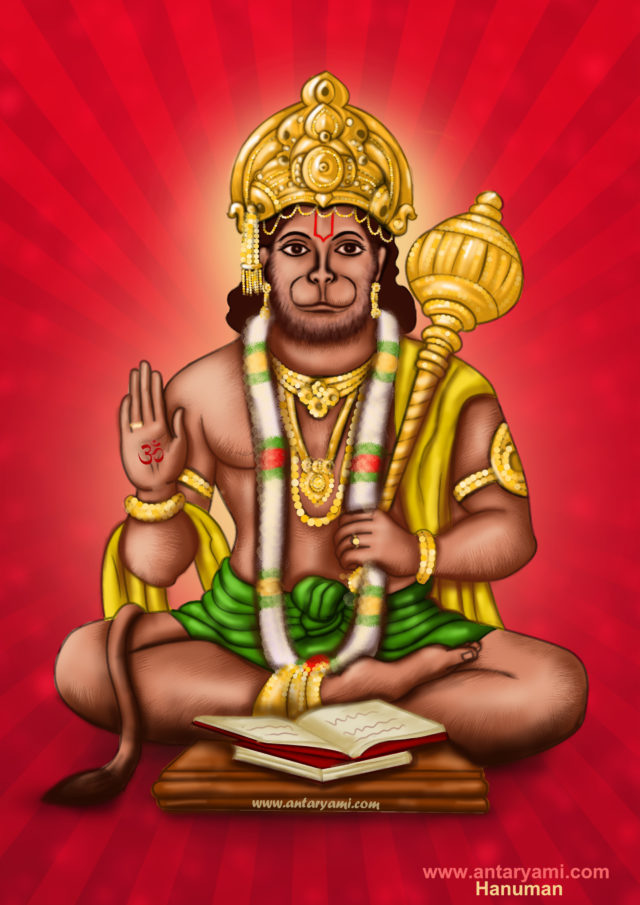
However, the ‘Demon King’ Ravana is only deceiving himself. When Lord Rama mounts a rescue mission with the help of Hanuman, King Ravana is subsequently defeated by his own anger, treachery and thirst for vengeance.
On moral grounds, acts of malevolence always lead to our downfall as well. But we also deceive ourselves spiritually through thoughts of lust, greed, anger and vengeance as we disturb the flow of energy and cause ourselves to become agitated and unsettled.
Lord Rama on the other hand is the personification of a calm and collected man – the ideal state of being. Even when Lord Rama realises his wife has been abducted, he does not fly into a rage and vow for vengeance.
Lord Rama actually breaks the mould of Indian dogma at the time. He asks for help from the people he finds in the forests including the monkey warrior, Hanuman and his army, characters that represent the lower castes of Indian society.
Let’s not forget that the Ramayana was written sometime around 500BCE when the class system was ingrained in society. In many ways, we witness the same issues today. But Rama is prepared to treat everyone as equals despite his noble background.
Here we see Sri Rama representing the laws of the Universe – they do not discriminate against any living creature regardless of age, sex, or status. Karmic laws will determine the judgement of everyone and everything in relation to your dharma.
Love and compassion
Because our unconscious mind is programmed to believe, view and think in certain ways, the world is an illusion. What we actually experience is a perception based on subconscious programming. Therefore, when you, and others, make a mistake, try to understand that we act in certain ways because we think it’s the best thing to do in that moment.
Oftentimes, when we act instinctively, our actions are driven by our emotions. This is why is it so important to be consciously aware of our thoughts and actions, remain calm and collected so we can follow our dharma. Dharma comes from within and when you consciously aware of that, you always know how to act.
But we also have to remember that syncing with our internal dharma is not easy when driven by unconscious programming that feeds our emotions. Therefore, love and compassion for our fellow man is the greatest lesson told in the Ramayana.
Even though King Ravana wanted to steal Sita from Rama, the hero of the story forgives his oppressor, just as he obeyed his father’s command to leave Ayodhya and live in the wilderness.
10 Tips To Help You Start Meditating
The practice of meditating can seem like a confusing and even daunting concept. Inner peace? Becoming increasing aware? These are all questions that spring to the mind of beginners and in truth, sprang to my mind when I decided to see what it was all about.
However, as you’ll quickly realise after your first few sessions, the practise of meditating is extremely easy to grasp and once perfected, it can lead to a lifetime of increased quality of life and healthy physical and mental wellbeing.
To help get you started, here are ten tips to get you used to the ideas and nature of meditating, perfect for beginners looking for happier, healthy, more balanced lifestyle.
Sit Still & Take A Deep Breath
This may seem like an incredibly simple step but this technique is the foundation of meditation. A great starting place towards a peaceful and stress-reduced life is to sit, or stand, for around two minutes a day for a week. Just ensure that you’re comfortable with deep, regular breathing.
New Day, New Beginning
It’s been proven that meditation is most effective when practiced in the morning. A easy way to motivate yourself is to set up a reminder on your smartphone or even written it down somewhere you can see when you wake up is a great way to stay motivated and helps to turn this practice into habit.
Don’t Think How, Just Do
There are so many variables that beginners get caught up with such as; Am I sitting properly? Should I be standing or sitting? Should I be using a cushion? These are all great questions and always come down to personal preferences, the answers to which you’ll get over time. The main thing to think about when starting out is to make sure you’re in a quiet and comfortable place where you won’t be disturbed.
Become Aware Of Yourself
This process is known as ‘checking in’ with yourself and you’ll see it a lot in meditation articles and in guided meditation videos or audio tracks. It’s a simple process where you are simply asking yourself how you feel. Are you tired? Stressed? Anxious? Happy? The important part here is to always remember not to judge yourself. Any feelings that are you feeling, whether it’s one or a mixture of a few, just let them be, simply be aware that this is how you feel.
1,2,3… Breathing
The next step in starting out, once your settled and comfortable in your position, is to count your breathing. Your should always try to keep your breathing at a natural pace, breathing in through your nose and out through your mouth. Count 1 with the inhale and 2 with the exhale. Continue to breath in this fashion until you reach ten and then start back at 1.
It’s Normal To Get Distracted
Don’t judge yourself if you’re counting your breaths and you find your mind wanders off and you find yourself distracted and losing count of which number you are on. This is completely normal and a common process with all beginners to meditation. Don’t beat yourself up over it. Simply take a deep breath and start again. With regular practice, this will stop happening.
Listen To Your Thoughts & Feelings
When meditating, you’ll find a large number of crazy thoughts and feelings spring to mind. This is because you are giving your mind a break when it can actually become aware and listen to those thoughts, a lot different if say, you’re at work and you briefly think of something before the thought goes. Listen to these thoughts. Are they of people, loved ones, enemies, situations or events? Welcome these thoughts into your mind and let them pass in their own time.
Clear Your Mind
This is another expression you’ll hear a lot when reading up on meditation. It’s true, a clear mind is a happy mind but, as a beginner, this is something you can work towards. When I started meditating, I was practicing months before I finally completed a session and was shocked that for once, probably in many years, I actually had a mind that was completely clear.
Learn About Yourself
How often do you actually sit down day to day to take the time to learn and listen to yourself. The closest most people will get is writing a diary but you’ll still occupying your mind with thoughts of what to write down on paper and other goings on in your life. By watching and listening to the thoughts and feelings that come into your mind whilst meditating, you can learn about what your mind thinks about most, what it worries about and what causes anxieties. By understanding what makes you feel like this will help you understand how to deal with those situations.
Commitment
For my final point, I want to talk about commitment. Whether you’re practising a sport, art or learning an instrument, as the old saying goes, Rome wasn’t built in a day. The same is applied to meditation. Your brain and your mind is muscle and it take regular training and exercise to keep it healthy and active. Lock yourself in and give it your all, besides, everybody can spare 2-5 minutes a day.
A great milestone to set for yourself is a month. Try meditating for a month and you’re realised a new you you wouldn’t believe could exist.
Are you trying meditation for the first time or have you begun and looking for some more tips on how to carry on and stay motivated? Leave a comment below and spark a conversation that could yours or someone else life!
App Review: Daily Yoga
Available on both Apple and Android devices, Daily Yoga prides itself on being one of the largest yoga pose databases in the world. The app is simple yet fully comprehensive with free service options and a paid subscription service.
Upon downloading the app, you’ll be given the opportunity to sign up and customize your profile before getting started on any of the free yoga routines. With a paid subscription, you’ll have full access to every routine as well as personalized programs and extended classes led by some of the leading yoga professionals.
The design of this app is incredible. The interface is extremely well laid out, allowing for easy use, and the soundtrack included is just amazing. There is also a fully integrated meditation section which includes a fantastic selection of soundtracks to listen to whilst meditating.There are also audio tracks available for a guided meditation experience.
On top of all this, Daily Yoga also boasts an impressive and active community section, allowing all members of the app a platform to communicate on, allowing other members to ask or answer questions and the ability to inspire and motivate each other by posting progress pictures or chatting on any of the discussion boards.
My experience in the community section has helped me no end, especially if you find it hard to complete a certain pose, there are loads of members online that can help you and give advice.
The app has a brilliant and non-invasive system for notifications, reminding you everyday to complete a session of your choice. Users can easily track their process on the home screen which details how many minutes you have logged each day/week/month/year and how many calories that relates to. As well as having access to routines and programs, users can view individual yoga poses and create their own routines using the ‘Pose Libary’.
Each yoga session varies from a few minutes, ideal for when you’re busy and on the go, or to an hour long. The only downside to this app is that each training program needs to be downloaded prior to being watched and there is no option to stream meaning that smartphones with limited memory may experience some memory issues with extended use.
Pricing
The Daily Yoga app is constantly handing out various offers to new members in a bid for them to sign up. A standard subscription that allows you access to everything will set you back around £19.99 ($25) but may vary from country to country.
Summary
In conclusion, Daily Yoga is one of the best yoga apps on the market. Ideal for beginners wanting to try their hand at yoga for the first time and even experts who are looking for an app to help them with new routines, schedules, programs or just looking to try something a bit different. Personally, I have tried a vast range of yoga related apps and Daily Yoga is one that has kept me going.
Rating
Features: 10/10
Ease of Use: 10/10
Information: 10/10
Value For Money: 10/10
Overall Rating: 10/10
Download from here:
iPhone
10 Lessons of the Bhagavad Gita To Cultivate Inner Peace
Of all the books to come out of Hinduism, the lessons of the Bhagavad Gita are the most cited. Still one of the greatest spiritual books of our time, the Bhagavad Gita holds the doctrines of Universal Truth. There are so many lessons one can learn from Bhagavad Gita.
The Bhagavad Gita is actually a story extract from the Hindu epic, the Mahabharata. The famous scene that takes place is a discussion between the prince Arjuna and Lord Krishna.
Arjuna is in the heat of a battle when he suddenly questions his ability to defeat his enemies. Lord Krishna comes to his aid and teaches him important lessons in life. Hindus call this the ‘Gita Gyan.’ The lessons influence readers as much today as they did when the Mahabharata was first published almost 2000 years ago.
The purpose of the Bhagavad Gita is to give life meaning so that devotees can find inner peace. This article looks at 10 lessons you can use to help cultivate your own inner peace.
#1: Materialism encourages greed
In today’s world, materialism is a pandemic that causes widespread suffering. We are being groomed as consumers and measure our success on the size of our homes, cars and the number of possessions we have.
But in reality, material possessions are just a short term fix to satisfy your emotions. Rather than cultivating inner peace, you develop greed, one of the seven deadly sins that ultimately manifests as tension and anxiety. By letting go of your desire for worldly possessions helps to release your suffering.
#2: Keeping the mind quiet cultivates inner peace
There is a lot of reference to meditation in the Bhagavad Gita. Meditation is several things; first and foremost, meditation is the ability to focus your attention on one thing. It is better known as concentration.
But meditative practices often performed by Hindus concentrate on keeping the mind still. When you can sit comfortably in silence without feeling the need to do something, you reach a state of Samadhi – pure bliss. This is the ultimate goal for everyone, and by keeping the body and mind still, you can cultivate inner peace.
#3: Use consciousness as your guide
The writers of the Bhagavad Gita portray Krishna as the Supreme Godhead. The true meaning of the Supreme Godhead is confused by all religions including Hinduism.
The Godhead is consciousness. And consciousness guides you just as Krishna guides Arjuna on the battle field. When you put your complete faith in the “Godhead” you have nothing to fear. Consciousness is the core of your thoughts and emotions. All you have to do is listen to what they say and follow the instructions.
#4: Evolution is the nature of consciousness
Consciousness needs to evolve. This is how the world we live in today is created. Because nature creates. And because mankind is a part of nature, we are the ultimate creators. In essence, we are, or can be Gods.
The problem for most people is that ego does not understand consciousness. We usually listen to the basic needs of our unconscious which is based on survival. But our unconscious needs to thrive as well. So sometimes, we need to step away from our comfort zone and try new experiences without fearing the outcome.
#5: Living in the now
Living in the moment is atypical advice these days. The origin of this philosophy dates back to ancient Hindu writers long before even the Mahabharata was written.
The idea is to savor the moment you are experiencing without worrying about the future or thinking about what has happened in the past. As Albert Einstein say, ‘time is relative.’ Time is merely a fragment of our reality because we have clocks.
#6: Everything changes
No matter how comfortable or miserable you are in your life, it won’t stay that way forever. Everything is in a constant state of perpetuation, and the energy we create and emit each day ultimately manifests itself as reality.
Once you accept that nothing will stay the same, you learn to go with the flow of life and live in the moment. And when you become absorbed in the present, you release all the tension, anguish and other fear related motions that keep holding you back.
#7: Don’t worry about results
It’s quite typical for us to worry what other people think of us or how well we can do something. This is a negative program we develop at a young age when we attend school. We are judged on our abilities thus become protective about ourselves and judgmental about others.
As adults we carry this negative program into our working life and feel pressured to achieve results. But the reality is, you will achieve better results if you don’t worry about achieving results. By concentrating on what you have to do, you will naturally do it well.
#8: Live moderately
Too much of a good thing is not a good thing. When we indulge in things too often, we become addicted, obsessed and irrational. This type of behavior plays havoc with our minds and we struggle to find peace.
By living in moderation, you are able to balance all aspects of your nature. This ultimately reinvigorates you, keeps your energy levels high and you find more enjoyment from life because you give yourself more chances to experience many other good things you can enjoy in life.
#9: Mastering the mind eases suffering
The reason we experience chaotic moments in life is because we have chaotic minds. We allow our thoughts to run away with internal chattering, and as a result we wind ourselves up.
Being consciously aware of your thoughts and state of mind eases suffering. By not allowing the ‘monkey mind’ to constantly chatter, your thoughts are clearer to enjoy life and make better decisions.
#10: Everybody suffers
The Bhagavad Gita reminds us that everyone sufferers. This is something we forget when we criticize, yell and pick fun out of people. The truth is we all have faulty programs and a view of life that causes suffering.
Sometimes, to release emotional blockages and ease your own suffering, you have to forgive others. By acknowledging everyone suffers from the same complexities as you, it is easier to forgive. You come to the realize it is how people are mentally and socially programmed that makes us act and react the way we do.