










Home Blog Page 28

How to live a yoga lifestyle
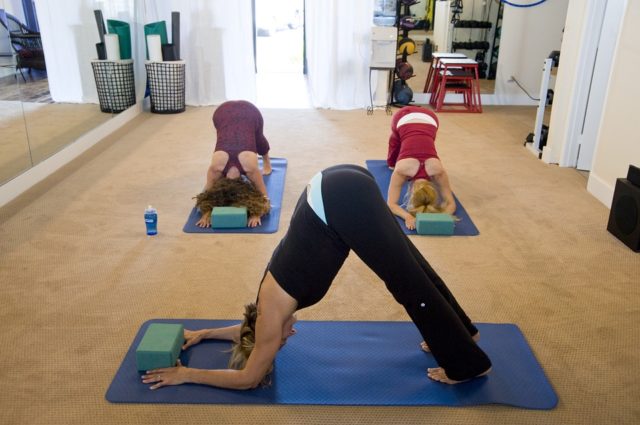
0

Many people use yoga as a form of exercise to improve stability, flexibility, and stamina. However, we can benefit more by developing a yoga lifestyle.

Yoga is made up of both physical and mental practices. The physical aspect includes is the repeated performance of exercises or techniques that are intended to produce positive states in both the body and the mind. The mental aspect is the practice of letting go behavior patterns, habits or attachments that no longer serve us.

Yoga for the Body and Mind

Most people know that yoga has amazing benefits for the body. It can improve strength, balance, and flexibility. But many other benefits have been found from practicing a yoga lifestyle, including reduced stress and better heart health. Yoga has also been found to be beneficial for mental health, reducing anxiety and relieving depression.

One of the reasons yoga has such all round benefits for body and mind is because it is a practice that includes not only poses, but also focus, breathing techniques, and meditation. Yoga is a holistic approach to wellness, targeting not only the physical system of bones and muscles but every part of the body, including the digestive system, respiratory system, and the mind.

Yoga as Holistic Medicine

This is a tradition that has always been centered on becoming whole. Yoga is traditionally called a liberation teaching. Its aim is to help us become greater than we are by freeing us from limitations we have acquired through our culture and education. It is also a system to become enlightened spiritually. When we focus only on the benefits to our muscles and stamina we miss out on so much that a yoga lifestyle has to offer.

So how do we incorporate yoga into our everyday lives?

Yoga is a diverse practice and people approach it in many different ways. Some people study the yoga sutras or find a guru to lead them on their path. However, it is not necessary to study the traditions of yoga in depth to benefit from its holistic approach.

There are several ways you can simply incorporate holistic yoga practices into your life to create a yoga lifestyle.

1. Asanas

The poses, or asanas, help develop physical strength and flexibility. Holding poses while breathing correctly and maintaining focus also develops our mind.

2. Meditation

Most teachers understand that yoga is an exercise for the mind as well as the body and part of the practice is to incorporate a meditation into the class.

3. Karma Yoga

Karma yoga is the practice of liberation from the ego by service to others. We can incorporate service to others in our lives by helping out friends or family members or by engaging in some form of volunteer work.

4. Mantra-Yoga

In this form of yoga, sound is used as a method of transformation. Simply repeating a mantra, such as Om while breathing deeply helps us enter a state of presence and breaks our attachment to constant thinking.

6. The Law of Yoga

Part of the principles of yoga is moral values. These include non-violence, truthfulness, and compassion. We can be mindful of how we treat others and the planet. Many yoga devotees choose to be vegetarian, though this is not strictly necessary. However, it is necessary to be mindful of how the things we buy are produced and avoid anything that has caused harm to others in its production.

A Yoga Lifestyle

All these practices are very simple. However, they require commitment and focus if we are to reap the benefits of them. A yoga lifestyle encompasses everything we do and the way we do it. When we choose to be aware of our thoughts, habits, and behaviors we can learn to choose new thoughts, habits, and behaviors that serve us better. When we treat the earth and all who inhabit it with respect, we create more peace in the world.

Yoga as a Journey

While we must commit to the journey, it is not necessary for us to achieve perfection in everything we do or to achieve enlightenment as soon as possible. The desire to grow and improve is the only requirement. One of the fundamental understandings of yoga is that our efforts are never wasted. Even the slightest attempt at transforming our world and ourselves makes a difference.

Ultimately, practicing yoga concerns choosing how we use our consciousness to make our lives, and the lives of others, better.
Latest Yoga Health News – March Edition

0

Keep up to date with the yoga community with our monthly round-up of yoga health news including salty yoga, yoga for kids and keeping your brain healthy.

The research to prove that yoga is good for health keeps emerging. This month we look at yoga health news including salty yoga, the benefits of yoga for children and the research showing yoga can help prevent Alzheimers and dementia.

Salty yoga

Salt has been used as a therapy for a very long time. The use of salt baths and caves were considered to boost the immune system, soothe allergies, improve skin conditions, and beat stubborn colds.

Salt therapy, or halotherapy as it is also known, became more mainstream in the 1800’s. A Polish physician, noticing that salt miners had healthier lungs than the general population, set up the first “salt spa”.

The theory behind salt therapy is that salt has antifungal, anti-inflammatory, antibacterial, and antiviral properties.

Salty yoga combines the benefits of salt therapy with yoga poses designed specifically to help with breathing. For this reason, as well as being good for sinus problems, it can also help athletes increase endurance by boosting lung capacity.

Breathe Easy, a halotherapy spa is the first place to offer the practice in New York. The salt room has walls made of rock salt bricks and is lit with salt crystal lamps. For one night a week, the room is converted into a yoga studio, where Ellen Patrick leads a with a slow flow yoga practice focused on breathing.

There is some science to back up the use of salt therapy.

A study published in the New England Journal of Medicine studied 24 patients with cystic fibrosis. The study found that symptoms were eased and breathing improved after inhaling the salt-infused vapor.

Another study in the European Journal of Allergy and Clinical Immunology tested regular salt therapy treatments for several weeks on patients with asthma. The patients reported breathing easier after the course of salt therapy.

The benefits of Yoga for children

Unfortunately, in modern society, children seem to be becoming as stressed out as adults. For this reason, many parents and educational institutions are turning to yoga practice to ease these stresses. Yoga can really provide all round physical and mental health benefits for children.

Here are just some ways in which practicing yoga will support your child’s development

  • Enhances flexibility and coordination
  • Strengthens mind-body awareness
  • Improves concentration and memory
  • Encourages good listening skills and ability to follow instructions
  • Increases confidence and self-esteem
  • Improves breathing and can help with physical conditions such as asthma
  • Improve social skills
  • Reduces stress
  • Helps children deal with overwhelming emotions

There are plenty of yoga classes for children that incorporate fun and games into the practice. The classes can reduce stress, help children deal with emotions and socialize with others. In addition, yoga classes can also help with skills such as focus and concentration that will help them in school.

Yoga for brain health

You might think that to improve memory and keep your brain healthy you should be doing puzzles like Sudoku and crosswords. However, research at UCLA suggests that Yoga is better for brain health and memory than mental challenges such as puzzles.

A team of UCLA neuroscientists studied the effects of a three-month course of yoga and meditation on patients. They found that the practice helped minimize the cognitive and emotional problems that often precede Alzheimer’s disease and other forms of dementia. They also found that yoga practice was more effective than standard memory exercises.

Helen Lavretsky, the study’s lead author said that “Memory training was comparable to yoga with meditation in terms of improving memory, but yoga provided a broader benefit than memory training because it also helped with mood, anxiety and coping skills,” said, the study’s senior author.

The is fact that yoga reduces anxiety could be an important factor in preventing dementia. This is because chronic stress can be damaging to the brain. A recent review of the literature on dementia led by Dr. Linda Mah found that chronic stress and anxiety can damage areas of the brain involved in emotional responses, thinking, and memory.

So whether you are old or young, the latest yoga health news shows that there are plenty of good reasons to make yoga and meditation a part of your daily practice. Yoga can help us achieve good health now and in the future.

We will have more yoga health news next month.


App Review: Calm

0

Calm is an app that offers daily meditation and breathing techniques to help you be calm, relaxed and to drift off to sleep easily.

When you open Calm, you see a beautiful picture of mountains and a lake with rippling water. You also hear the sounds of waves lapping the shore and birds singing. You can change the picture and sounds to a variety of other soothing images and soundscapes including a crackling fire, a tropical beach, and Zen ocean.

App Features

Within the Calm app you are offered a choice of:

  • Breathe
  • Meditate or
  • Sleep

There is also a Daily Calm for subscribers.

When you click on the breath icon there is a graphic that shows you went to breathe in, hold and then breathe out.

If you click on the sleep app, you are offered an explanation of a sleep story. In this section, a gentle voice asks you to imagine yourself by a fireside and explains how we need to transition from wakefulness to sleep. Sleep stories can help us to power-down and provide a soothing and natural way to drift off into a deep sleep. There follows three sample sleep stories for you to try which are a bit like an adult equivalent of a bedtime story. There are many further sleep stories for subscribers.

When you click on the meditate icon you are given the option of starting a trial which consists of 7 days of Calm. There is also an option to choose sample Daily Calm Sessions. If you are a subscriber you can choose from a variety of further options including managing stress, focus, sleep anxiety and happiness. There are also individual guided and unguided meditations.

On your profile page, the app keeps a record of your time meditating and your longest streak of meditating every day. There is also the opportunity to connect with others.

You can also set a reminder to help your stay on track with your meditation practice.

Pricing

Subscription’s costs £9.99 per month. If you buy a yearly subscription this cost works out at £3.74 per month. You can also choose Lifetime membership for £299.99

This is a wonderful app and I would recommend it to anyone who has trouble with anxiety or stress. The app is particularly useful for those who struggle to sleep at night as the sleep section offers wonderful stories to help you drift off.

App Rating

Features: 10/10

Ease of use: 10/10

Information 8/10

Value for money 10/10

Overall rating: 9.5/10

Run For Your Life: Mindful Running for a Happy Life

0

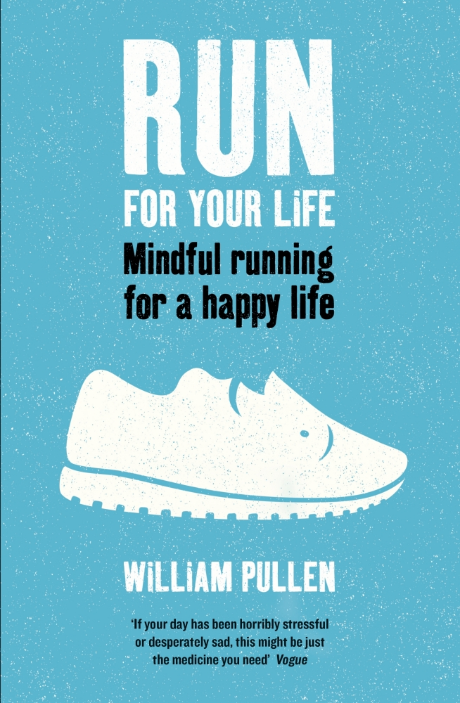
Run For Your Life: Mindful running for a happy life is written by psychotherapist William Pullen.

The book is divided into 12 chapters offering an explanation of mindful running, introductory chapters on the process of Dynamic Running Therapy and chapters focused on specific issues such as Anxiety and Relationships.

Introduction

In the introduction, Pullen explains what Dynamic Running Therapy (DRT) is and how he came upon the process. The author shares some experiences from his own life, how running helped him, and his own training.

The following quote explains the process. ‘DRT is a powerful and engaging step-by-step therapeutic method for confronting difficult feelings and circumstances in your life through movement.’

Initially, I was unsure whether this book was for me as I am certainly not a runner. However, Pullen says the process ‘can be adapted to whatever level of fitness you have as long as you are challenging yourself physically some degree of the time’. He himself could barely run a quarter of a mile at the start of the process.

I decided that I was interested in the idea of DRT, as it seemed a different way of approaching mindfulness and one perfect for someone like me who has trouble sitting still for more than a few minutes at a time. Pullen suggests that ‘This powerful process of walking or running with, into, or through our feelings can be amazingly insightful and liberating’.

The book draws on Pullen’s expertise and also uses research and quotes from other mindful thinkers including Danny Penman, Mark Williams, Jon Kabat-Zinn, Elizabeth Gilbert, Pema Chodron and Paulo Coelho.

The Journey

This chapter explains more about the process of DRT. Pullen says ‘Dynamic Running Therapy is not complicated or particularly challenging – it’s more about learning a couple of simple but very powerful techniques and embarking on an exploration of who you are.’

Pullen explains the 3-step process of DRT

  • Step 1 Grounding

This includes a four-step grounding practice to complete before your run.

  • Step 2 Moving with intention

This step explains how to ‘acknowledge without judgment what come up on your journey’. It also explains how to work with the questions offered in later sections of the book.

  • Step 3 Take note

This section explains the importance of note-taking or journaling after your run in order to gain further insights.

He goes into some detail about these steps and how they help. It is certainly quite a simple concept and something anyone could easily do with very little preparation or equipment required.

The Healing Environment

Pullen encourages us to do our running in nature wherever possible. He points out that nature has ‘incredible healing powers’ and is ‘busy at work on your mind and body, reducing your heart rate, stress levels, and blood pressure.’

In addition, he offers advice on choosing the right terrain depending on what you need at a particular time.

This section also offers advice on choosing whether to run with a partner or alone. There is a comprehensive section on setting up a healing partnership with someone else and the precautions to take should you choose to do so.

After these introductory chapters, there are several chapters on specific needs you might want to address as part of your DRT. The author suggests that you pick whichever section seems most relevant to you. The issues covered are:

  • Depression and low mood
  • Anxiety
  • Relationships
  • Anger
  • Decision making
  • Parents and kids

In each of these sections, Pullen offers information about the problem and how DRT can help with the issue. The author also references studies, which prove his points, for example, that exercise has been shown to improve mood.

There are then a series of questions to work through as part of the process. The book contains space to write answers to these questions and there is also space to make your own notes at the end of the chapter. The questions are very insightful and really encourage you to think about the problem at hand in new and deeper ways.

Mindful Running

After the chapters on specific issues there follows a chapter which offers mindful running exercises that do not address any specific issue. ‘Instead, they will help you to get the most out of your running.’ There is a section on preparing for a mindful run and 3 different mindful-running exercises.

Running Backwards

This chapter deals with the setbacks you may encounter on your mindful running journey. It covers pride, shame, fear and pain and how to overcome these roadblocks. As always in the book, Pullen is a gentle coach, encouraging us to face our fears, trust ourselves and find our own path.

The End of the Rainbow

The final chapter of the book deals with coming to the end of your DRT practice. Pullen encourages us to write a final journal entry about your journey.

I found this book to be a wonderful, thorough introduction to the process of mindfulness through running. Pullen is an encouraging coach who is both supportive but also asks the right questions to help us move forward. This is not a journey to be undertaken lightly. It seems to have the potential to create great change. However, for anyone looking for an alternative to sitting meditation, which has the added bonus of increased physical health, this is the perfect tool for the job. Pullen’s life experience and qualifications make you feel like you are in safe hands for the journey.

I would rate this book 9/10 as it seems an excellent tool for the journey of mindful running. Personally, I didn’t need the sections to write notes, which took up a lot of the book. I would prefer to write in my own journal and use all the space I need.


Three Surprising Benefits of Yoga

0

We all know that yoga is good for the body. But there are some surprising benefits of yoga including better digestion and increased immunity and creativity.

Yoga has been well researched and studies suggest it is good for us physically. Yoga can help reduce stress and lower the risk of ailments such as heart disease. However, recent studies have suggested that yoga also has a beneficial effect on other areas of our bodies. These includes our digestion, immunity, and creativity. These more surprising benefits of yoga could have a real effect on our health and happiness, not to mention our creativity and productivity.

1. Digestion

Yoga isn’t simply a way to burn calories and tone muscles. Certain poses can also help digestion. Poses where you twist from one side to the other can be particularly effective. This is because they follow the path of digestion and can help the body break down food more efficiently.

The fact that yoga helps reduce stress is also good for our digestion as stress hormones can affect the digestion process.

In addition, the mindful aspect of yoga can make us more conscious of our eating. It encourages us to sit down, take our time and chew our food. Eating mindfully is also likely to encourage us to make healthy choices rather than cramming ourselves with junk food without thinking.

Good digestion is one of the keys to good health, providing us with the nutrition we need for great health and plenty of energy.

2. Immunity

Regular yoga sessions can also help boost our immune systems and help prevent colds and viruses. A recent study by Norwegian researchers, studied a group of yoga practitioners to see how yoga affects genes that control the activity of immune cells. They found that yoga increased the activity of certain genes that influence the immune system, thereby increasing immune functions.

3. Creativity

Yoga can also help boost your creativity by changing the pattern of brainwaves in participants. Being in a prolonged state of alpha brainwaves has proven to help with problem-solving. This mental state has been associated with eureka moments in participants. Studies show that meditators’ brains can slow from beta to alpha within minutes.

These findings indicate that yoga practice is more than just an exercise to help tone the body and improve flexibility. If the benefits of yoga include yoga improving our creativity digestion and immunity it seems worth making a yoga practice of even a few simple exercises a chance.

These findings indicate that yoga practice is more than just an exercise to help tone the body and improve flexibility. If the benefits of yoga include improving our creativity digestion and immunity it seems worth making a yoga practice of even a few simple exercises a chance.

Yoga also has the benefit of being a simple practice to begin Only a few basic accessories are required to get started. You might like to choose a nearby class or use a book or app to help you on your path to a healthier, calmer and more creative self.

References

http://journals.plos.org/plosone/articleid=10.1371/journal.pone.0061910#s3


Book Review: One-Minute Mindfulness

0

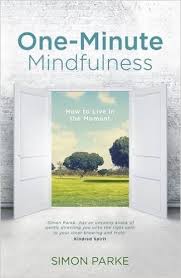
One-Minute Mindfulness by Simon Parke is a collection of short essays and stories that help shift our thinking onto a more mindful path.

Introduction

The book starts with an introduction, which explains what mindfulness is.

1. Awareness of yourself and the world
2. Living in the present
3. Acceptance of your situation (which strangely is the catalyst for good change).

The book does not give a detailed explanation of how to achieve mindfulness. However, there are a few simple exercises scattered through its pages. What the book does offer are stories that help us shift our thinking, much like Zen koans. The author says, ‘I offer mindful stories and thoughts for when you sense the need for a psychological or emotional shift in your life.’

The Chapters

The book is divided into eight chapters each with a theme that covers an aspect of mindfulness.

1. Becoming Simple
2. Becoming Aware
3. Becoming Present
4. Becoming Trust
5. Becoming Impermanent
6. Becoming Nothing
7. Becoming One
8. Becoming Behaviour

The stories are short, less than a page each and so easily read in under a minute. However, it is worth reading the stories more than once to get to their underlying truth. Some of the stories didn’t make much sense to me on first reading, but the more I thought about them, the more I understood something new about mindfulness. It was the most difficult stories that actually caused the biggest shift. Not all the stories are difficult to understand, many are simple stories that nonetheless have a big impact.

Mindfulness and Breathing

The first story in the book, In search of the unborn, I found quite a challenge to get my head round which nearly put me off the book. But I did find an internal shift happened after I read it a few times and I was glad that I continued with the book. Later in the book, the author offers this explanation of mindfulness, ‘Mindfulness is an invitation to fresh experience and virgin knowing in which present thoughts and emotions are allowed to speak without judgment or rejection.’ I found these words helped to calm my busy ‘monkey mind.’ He compares our breathing to a lighthouse which can ‘guide you to safe harbor through the crashing water and battering winds.’

Becoming Present

In the chapter, Becoming Present the author explains the importance of noticing the breath and how this can be a great way to become more present. He also argues that anxiety can be a desire to be distracted from the present out of fear of what it might hold. The author also explains how ‘if we take our emotional state for granted as if it is inevitable and outside our jurisdiction, it can acquire the power of a rampaging elephant, dangerous and out of control.’

There are some beautiful, mindful passages in the book which really did help me to think about my life differently. One such passage is ‘If rush and impatience is your manner of spiritual travel, don’t expect to arrive anywhere beautiful’. This sentence made me look differently at how I was trying to become mindful as if it was a job to tick off my to-do list rather than a state to embrace.

Dealing with Anxiety

There are several sections of this book that address anxiety. These helped me to look at my anxiety in a different way. Particularly helpful in this was the idea that ‘beyond anxiety is not the absence of anxiety, but an increasing capacity to accept it as a visitor.’

The book uses examples from different traditions and religions to help us understand our suffering. There are stories from the Bible and also many examples of Buddhist philosophy such as ‘the fruit of mindfulness is awakening, a state in which greed, hatred, and delusion are removed.’

Many sections of this book are very comforting. I liked the idea that ‘the opposite of depression is not happiness, it is vitality.’ I also found comfort in the idea that ‘the soil of your existence needs it all, the difficult and the easy; the awkward and the presentable.’

The book also warns us about some traps of spirituality. For example, ‘ The ego thrives when we strive. If we desperately desire this or passionately desire that (even spirituality) our ego will be in seventh heaven’.

How to use One-Minute Mindfulness

This is not a book to be read in one sitting. Rather it is one to either read a page a day to set the tone for your experience of life, or to dip into when you feel the need. The book is a calming, comforting resource. It really can shift your thinking away from busyness and stress and help you to be more present and aware.

Overall Impressions of One-Minute Mindfulness

I think this book has a lot to offer anyone who is looking for a more mindful way of living. It is easy to use and, though the concepts are simple and mostly easy to understand, they are powerful and provoking.

I would recommend this path to anyone who would like a simple way to introduce more mindfulness in his or her life.

I would rate it 8/10 as a mindfulness resource.

App Review: Headspace

0

Headspace is a meditation app that uses scientifically proven techniques to reduce stress and anxiety and help you feel calmer and happier

Features

The free ten-day Headspace trial offers a ten-minute meditation every day. Once this is completed there are two further courses that build on the basic skills you have learned. Once you have completed this, Level Two includes a 30-day course of 15-minute meditations. After this, Level Three offers 30 days of 20-minute meditations.

With full Headspace access, you can choose from a range of different courses for specific needs such as health, sport, relationships and performance. You can choose how long you want the meditations in these courses to be.

The app also offers a range of one-off meditations of different types of issues such as fear of flying and sleep. These range from 3 minutes to 60 minutes.

The founder of Headspace, Andy Puddicombe is a meditation and mindfulness expert. You can see his Ted talk here. Andy has a lovely relaxing voice and as he guides you through the meditation you immediately begin to feel the benefits. The app also uses cute animations to explain some of the concepts of meditation. The Headspace website offers information about the research that proves the effectiveness of the app.

The app is easy and convenient to use. You can set up daily reminders to help you stick with your practice.

Cost

Headspace offers a free 10-day trial

Full Headspace memberships are 1 month at $12.95, 1 year at $7.99/month, 2 years is $6.24/month, and lifetime membership is $419.95

Rating

Headspace is a really great, scientifically proven app that can help you develop a meditation practice that could have a huge impact on your health, wellness, relationships and performance in life. I have been using it for several months and have really noticed that I have been calmer and less anxious.

I would rate the app

Features: 9/10
Ease of use: 10/10
Information 10/10
Value for money 9/10
Overall rating: 9.5/10

MAHA SHIVARATRI POOJA AUR JAGRAN at Washington Kali temple

0

Event: MAHA SHIVARATRI POOJA AUR JAGRAN
When: Feb 24th 2017 – Feb 25th 2017
Time: 7:00 PM (FRI) – 6:00 AM (SAT)
Where: Washington Kali temple
16126 New Columbia Pike
Burtonsville, MD

OPEN to PUBLIC

What Are The Hindu Vedas?

0

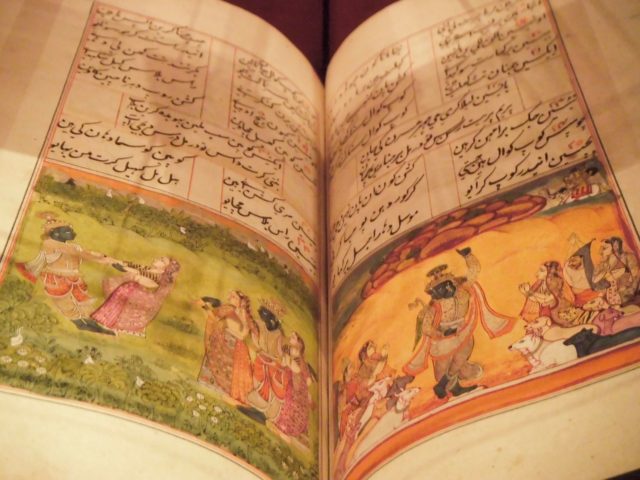
The Hindu Vedas are a collection of sacred texts and poetic hymns. They are the oldest surviving religious works that we know exist. Composed around 1500-1000BCE they went on to heavily influence Buddhism, Jainism and Taoism.

The myths found in the Vedas are rich in symbolism which have deep spiritual meaning together with moral lessons. They were written by wise sages, although the actual names of the writers are unknown.

Written in ancient Sanskrit, the earliest Hindu texts are so old and fragile that scholars are not able to translate them all. The oldest books are known as the Samhita Collections and compromise of the following:-

Rig Veda – The Book of Mantra

The Rig Veda is the oldest Hindu text and comprises of a collection of hymns and mantras. Scholars dispute the actual date the Rig Veda was written with some researchers dating ist as far back as the 12,000BCE. The widely accepted date is 1500BCE.

The Sama Veda: The Book of Song

The Sama Veda is practically a replica of the Rig Veda, and was probably written much later. It is the remaining three Vedas which mainstream scholars typically base their dating. As such the Sama Veda is said to be a stripped down Rig Veda.

The Yajur Veda: The Book of Ritual

The focus of the Yajur Veda is aligned to ceremonial proceedings. It serves as guidebook for priests and has drawn comparisons with the Book of the Dead from ancient Egypt.

Atharva Veda

The Atharva Veda was written much later than the earlier manuscripts – around 200BCE. It contains much of the knowledge in the Rig Veda, but with additional incantations and metaphysical inserts.

The Upanishads

Over time the stories and names of the Gods featured in Hindu texts changed although they essentially have the same meaning. However, it is possible to see in the later scriptures that the understanding of consciousness in ancient India had evolved over time.

Some of the most important Hindu texts are the Upanishads, often referred to as Vedantas. The core teachings of these scriptures deal with Brahman (ultimate reality) and Atman (the soul). These teachings lay the foundations of modern Hindu philosophy and traditions.

It is believed the Upanishads were written in the first Century BCE when more than 200 were composed. The first thirteen books are the most important; Brihadaranyaka, Chandogya, Taittiriya, Aitareya, Kaushitaki, Kena, Katha, Isa, Svetasvatara, Mundaka, Prasna, Mandukya and Maitri.

Post-Vedic Texts

The post-Vedic texts feature some of the better known ancient Hindu scriptures including Ramayana, The Mahabharata and the Puranas. Known collectively as Smrti literature, they also include the theological treatise of the Agamas and the philosophical texts of the Darshanas. Some scholars also believe the Dharmashastras belong to Smrti literature as well.

Post Vedic texts are easily distinguished from earlier writings. Whereas the formative wisdom was written out in hymns, the post Vedic texts are written in the form of epic poems and the heroes – the deities – take on developed personalities that reflect human qualities.

It is in the epics of the Ramayana and the Mahabharata where we first encounter the avatars of Vishnu, Rama and Krishna, both of whom are the most popular Hindu Gods today.

The Bhagavad Gita

The Bhagavad Gita is the most famous and widely read of ancient Hindu texts. Composed of 700 verses, the story recites a conversation between the nervy Pandava prince, Arjuna, and the calming God, Krishna.

The scene is lifted from the larger work of the earlier Mahabharata and has become one of the most important lessons in modern day Hinduism. The battle scene is believed to be an allegory for the ethical and moral struggles faced by humanity and teaches us to act selflessly. The story is said to have inspired many Indian leaders including Gandhi who called the Gita his ‘special dictionary.’

Many commentaries have been given as to the core meaning of the Bhagavad Gita, though most of them have different views on the essential elements. However, the one element that all Hindus will agree on is that the Gita – or song of the Lord – is a powerful abbreviation that loving God means loving the immortal Self.

The Puranas

By the time the Puranas were written (between 3rd and 16th Century AD), the ancient writers had developed a pantheon of Gods with special powers and destructive qualities. Much like humans.

The belief and favouritism in particular deities had become established in Hindu faith by the time the Puranas were written and we first begin to see the dominance of the Trimurti. Shiva and Vishnu in particular dominate the texts.

The Puranas are notable for five distinct qualities; a description of the creation of the Universe, the destruction and reconstruction of the Universe, the genealogy of Gods and patriarchs, the reign of early man and the solar and lunar race of Kings.

There are a total of 37 Puranas although only 18 are considered major works. Some of the most important teachings found in the sacred texts of the middle-ages are the Gunas which cultivate qualities of purity, (sattva) passion (rajas) and the deconstruction of ignorance (tamas).

The Tevaram Saivite Hymns

The Tevaram Saivite are a body of hymns credited for inspiring the Bhakti movement across India. The canonical books are devoted to Shiva and were composed by a series of Tamil saints between the 6th and 8th Century AD.

Divya Prabandha Vaishnavite Hymns

The Divya Prabandha Vaishnavite are a collection of 4000 divine hymns written in the Tamil language. The original texts were written before the 8th Century, although the existing texts were put together during the 9th and 10th Centuries.

It is believed the earlier manuscripts were lost, but written out by the legendary theologian Nathamuni after he heard the hymns being recited. Captivated by their sound and vibration, he wanted to understand their meaning and undertook a conquest to find and scribe all 4000 verses.

The Divya Prabhandha is considered to be on a par with the Rig Veda in the South of India and continues to form a part of the daily chanting.

How Yoga Props can help develop your Yoga Practice

0

The following yoga props address a need for support and allow for everyone to participate whatever their current fitness and flexibility.

Last month we talked about the essential yoga accessories. However, once you have established a practice there are a few more accessories that are worth considering if you want to get the most out of your yoga routine.

Known as yoga props, these items can increase your ability to maintain good posture and allow you to practice poses that would otherwise be difficult. Although they are called props, they are not just for beginners. Everyone can get more out of their yoga routine with these props.

Here are the four yoga props that can make the biggest difference to your yoga routine

1. Yoga Blanket

A yoga blanket is a very useful accessory. As well as keeping you warm while meditating at the end of a routine, it can also be used for extra support when doing poses such as shoulder stands. Simply fold the blanket several times to provide a thick layer of support. When rolled, the blanket can also be used within poses to help extend the muscles. For example, you can place the rolled blanket between your thighs and calves in child’s pose.

A Mexican blanket is a good choice because while it is soft and warm it is not too floppy so it provides some support. The traditional Mexican yoga blanket from Yoga Direct is a good starting place. It comes in a range of colors and is a good thickness and costs just £16.48.

2. Yoga straps

A Yoga strap is a great accessory with a variety of uses. They can be useful for maintaining structural alignment within the poses. They are also useful for easing into poses, especially if you are a bit stiff or tense. Once you become a more expert yogi, you can use the strap to create more challenging tension.

Yoga straps are available in a range of materials, Manduka does a lovely cotton one with a metal buckle for 12 Euros. It is available in 8 and 10-foot versions and a range of colors.

3. A yoga bolster

A yoga bolster can be used in many ways for extra support, stretch and tension reduction in your yoga routine. For example, it can be placed under the knees to release tension in the lower back.

Yoga Matters does a great one that is covered in 100% cotton and is filled with Recron, which guarantees firmness throughout use whilst giving gentle and comfortable support. This bolster comes in a selection of colors and has a long lasting removable cover that is machine-washable. The bolster also has a strong carry handle and is lightweight and portable, suitable for both studio and home use.

The yoga bolster is a must have if you are into restorative yoga. It’s a treat to use helping to open the joints, reduce tension and increase relaxation.

4. Yoga blocks

Yoga blocks also have a variety of uses. They can be held between the knees, sat on or used to provide extra stability and support where necessary.

You can use them under your hands in forward folds to help bring the floor closer to you so you don’t have to strain your back of your hamstrings as you try to reach for the ground. Yoga blocks are widely available and do not need to be fancy. They can be made of cork or firm foam and are cheap to buy. The Yoga Warehouse has a good range.

Investing in these yoga accessories can really extend your yoga practice. The yoga accessories we have discussed are an inexpensive way to get the most out of your routine, allowing for a wider range of movements and better alignment within the poses. They are also beneficial to the more relaxing aspects of yoga, helping you to wind down and meditate in comfort.