

















Taking Yoga on Instagram with a Pinch of Salt

0

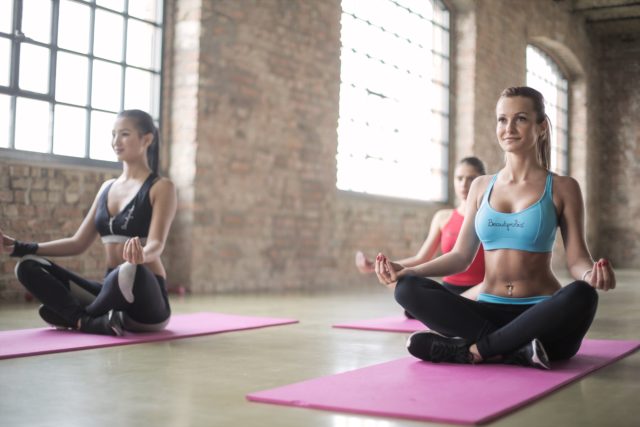
If you’re anything like me, your Instagram feed will be full of photos and snapshots of beautiful people in beautiful yoga poses. Typically, these poses are taken in a picturesque studio or a stunning mountaintop. When I first got into yoga, I took these images as my inspiration to want to achieve more with my body. I mean, imagine bending in the way that those people do!

However, it’s come to my attention that things might not be all they seem. Social media is renowned for being a place where things are also better than they actually are, especially when it comes to filters and photo editing.

One of the most common apps I use is Daily Yoga, a yoga app which is a fantastic resource for poses and routines as well as being home to thriving community of beginners and experts alike. If you take a look on there, the images that users are posting are far different to the poses featured on these top Instagram accounts.

These images have people who are new and experienced, practising certain poses and striving to achieve certain routines. There is a tonne of accounts you can follow when it comes to tracking and viewing someone else’s progress. I can tell you now that these homemade images are far from the ‘perfect’ images for Instagram.

Defining Yoga

In my personal opinion, and the opinion of many others, yoga is a practice of the body and the mind. It combines two of my favourite aspects of being healthy, exercise and meditation, into one common entity.

In short, the mental aspects of meditation and breathing are just as important as the physical sides of things. With this in mind, I’m starting to wonder what these images that are plastered all over our social media feeds have to do with yoga as a whole.

I’m even going to go as far as saying even a video of someone in a flow or practising a certain pose doesn’t capture the whole essence of yoga entirely. This is because yoga is a subjective experience that’s different for everybody and cannot be ‘summarised’ in one image.

The Main Pet Peeve

Moving back to social media, the yoga niche and posts are very orientated towards creating an idealistic image of what yoga is like. These are all images that are creating an expectation of body perfection which most of us will be unable to achieve in our lifetimes.

Speaking to a few of my friends, I discovered that many people loved the idea of doing yoga but having seen ‘professional’ images (which you must remember have no way of telling whether they are edited or at least touched up) are put off by the idea of doing it.

The fact that these are people getting up from the practice because of these images, rather than being inspired by them, is a cause for concern. For these people, they stated that it’s actually quite depressing knowing that they haven’t got the time to become that flexible and in some cases even lowered some of my friend’s self-esteem.

If these are the thoughts coming from my rather self-confident friends, imagine what these images are doing to body sensitive individuals or those with potential eating disorders who are viewing these unrealistic images.

Getting Inspired

I’m not saying that these posts that you see on social media platforms like Instagram aren’t inspiration. To some of us, they are. However, as with all things on social media, you need to be aware of where these images come from and what they mean.

In a world where success is defined by how we look physically, it’s more important than ever to read between the lines when it comes to the images and messages we’re subjecting ourselves too. If you’re feeling helpless or despair in regard to yoga images you’ve seen online, remember that they need to be taken with a pinch of salt.

Even if you’re practising for ten minutes a day, every other day, remember that your practice is your practice, no matter how experienced or inexperienced you are. And, most importantly, remember to enjoy yourself!

Releasing and Letting of Bitterness Through Meditation

0

There’s something about human beings that simply love to blame other people for our own downfalls. As much as we don’t like to admit it, this is something that we’ve all done from time to time, and it’s rarely something we own up to doing.

In most cases, it’s an old habit that’s been hardwired over time into our mindsets and of course, like any personality trait, it can take time to unwind, and it may be a long process ahead of you. However, without changing this ‘victim’ mindset, you’re risking making yourself extremely unhappy and bitter about your life.

At the end of the day, it’s so important to realise that when you’re bitter towards something or someone, you’re not going to hurt the other person or party involved, only yourself. By clinging to blame, anger or pain from a past event, you’re never going to be able to move on.

You need to learn to forgive.

How Bitterness Hurts

You could be bitter and angry about anything. It could be something relatively small, such as someone taking the last doughnut in the office, or it could be something much more life-changing, such as someone beating you to a promotion, or your relationship falling apart.

In one study, 71 people were studied by psychologists and shown special images that were designed to encourage feelings of resentment and hate for 15 seconds. After these 15 seconds, the participants were shown images that were designed to soothe and relax these feelings for just 5 seconds.

Surprisingly, those who focused more on resentment and bitterness during the trials had a collective heart rate increase of an incredible 250% after just four seconds of being shown the first images. However, four seconds later, after the soothing images were shown, that heart rate dropped by an astonishing 200%.

Those who were able to focus on being relaxed and empathic throughout the entire study has a heart rate (and blood pressure level) that averaged around 150% lower than the group noted above.

As you can imagine, this level of stress and elevated heart rate can be detrimental to your health. Another study that was carried out by the National Center for Biotechnology Information found that ‘being bitter’ and ‘resenting’, which resulted in elevated blood pressure and heart rates can lead to numerous health problems which include; enduring emotional distress, overall declining health, poor sleep quality, chronic depression, increased stress hormone production (cortisol) and even negative cardiovascular problems.

Meditation and Your Brain

So, it’s clear that being a bitter person, whether you release it or not, can be extremely damaging to your health, so what can you do about it?

As mentioned above, one of the best ways to go about it is learning to forgive people and yourself for things that have happened in the past. One of my personal favourite sayings is ‘the past is the past, and the future doesn’t exist’. All you need to focus on is the present.

As I’ve suggested in the title of this article, one of the best ways to learn how to forgive and let go of the past is through meditation. By taking the name to take a step back from everyday life to breath and clear your mind, you can train your brain to let go of anything negative, whether it’s a situation of the past or anxiety, to solely focus on the present.

This will help you to become free from stress, worries and anger that can drive down your emotional wellbeing in the day to day life. Of course, if you feel like you’ve been a bitter person for several years, it can take months, possibly even years, to re-hardwire your brain to let go. However, with daily practice, you’ll be pleasantly surprised with how good you feel after such a short amount of time.

4 Ways Ayurveda Will Change Your Life

0

Ayurveda is one of our favourite practices here at Antaryami.

As you may have noticed, we featured a tonne of posts highlighting the benefits that it provides, methods you can use to improve your well-being and overall improve the quality of your life, no matter your individual situation.

However, it seems like some people are still a bit dubious when it comes to the 5,000-year-old practice and is unsure of the benefits.

I was talking to a friend about the practice last week, describing all kinds of benefits and teachings they could use, from having a cold or even back pain. But they wanted to know more.

So, in a way, this is a post for them. But, I decided to share it all with you, just if there are any more people like Ben out there!
To get you started, here are four ways that Ayurveda will change your life.

#1 – Stop Comparing Yourself to Others

While Ayurveda is referred to by people all over the world, the practice helps us to look inside ourselves and to realize that we’re all unique in our own special way. Whether you’re growing as a person, healing or simply living your life, your body and mind should reflect who you are.
There are so many Ayurveda treatments out there, so if one thing works for you, another might not and visa versa with a friend. This goes for diets, lifestyle and generally the way we live our lives.

#2 – You Are Healthy

There are so many doom and gloom stories out there that tell us all how we are burning ourselves into the ground. However, Ayurveda teaches us that we all healthy on the inside. Healthy defined as you being in balance with the environment around you.

However, health conditions, such as stress, depression, anxiety, obesity etc. occur when you become out of balance with yourself and your surroundings. This out-of-balance feeling doesn’t happen overnight; you can stop it, slow it down and even reverse it.

#3 – Ayurveda Understands You

Ayurveda teachings tell us that we are all made out of the same stuff. Earth, Fire Water and air. However, the differences appear with how these elements interact with each other. For example, fire comes through us in the form of digestion problems, anger, inflammation and ambition. Earth refers to our general structure, our cells, loyalty, and so on and so forth.

The key to embracing Ayurveda is understanding the balance that your body has in the form of doshas. You can then follow the teachings of dosha and how it applies to you and the foundation of the decisions that you make.

#4 – Ayurveda is YOU

Ayurveda teachings understand that you are a shining light in this world and you should believe this with all your heart. Everybody is different, and everybody has something new and exciting to contribute to this planet that we call home.

You are perfectly capable of happiness and healing; it can just be hard to see that from time to time. Through Ayurveda, you can learn to love yourself and the others around you.

5 Ways to Turn Your Relationship into a Team

0

Over the holiday weekend period, I went to stay with my parents for a couple of days to spend the holiday season with them. One day, my parents went for a walk out in the countryside, and I stayed behind to finish off some work (I know, over Christmas, right?).

When my parents return, it was evident that they had had an argument about taking the wrong turn on a footpath which had blown up into an argument of who was wrong and who was right. This blew my mind as both my mother and father were intent on proving who would have made the right decision and the wrong decision.

I listened to them ‘discuss’ something so relatively small for about an hour before stepping in and stating ‘why are you so focusing on such a minor detail? Did you still enjoy your walk?’. My parents aren’t the type to argue too much, but I was shocked to see how they were caught up on some little detail with the end goal of trying to get the other one to say they were wrong and they were right.

Finally, I stepped in to finish the conversation that their focus should have been enjoying the walk together and that it doesn’t matter who made a wrong or right decision, all the matters was that you enjoyed the time in each other’s company.

However, the more I thought about this, the more I could see it in so many relationships, whether it was friends, family or even in my own past relationships which has led me to writing this piece. Being in a relationship with somebody means that you’re a team and you’re working together, something that seems that to be forgotten from time to time.

To help bring back this team spirit into your relationships, here are five considerations to think about.

#1 – Working Together to Achieve a Common Goal

Every single day, you and your loved one will come together to achieve certain tasks, no matter how big and small they are. Whether you’re going for a walk, doing the washing up, going to a family’s house or anything you care to name, it’s vital that you remember that you’re both there for the same reasons.

Instead of proving who’s wrong or right, consider that the decisions you’re making will affect both of you and both of you alone. If you’re on a walk and you take the wrong path, it doesn’t matter who messed up, what matters is that you both work together to get yourselves back on track.

#2 – Not Holding onto the Past

One of the biggest benefits of meditation is the feeling of becoming present. One of my favorite sayings is ‘the past is the past, and the future doesn’t exist’. When my parents were arguing, both were bringing up points in the past trying to create a fool-hardy point to prove but what gain does this have for anybody?

Yes, there may be things in the past that your loved one has done to upset you or anger you but are these points really worth bringing up? If they weren’t brought up when they were relevant, or they were dealt with them, leave them in past as they will provide no benefit now.

#3 – Appreciate Each Other’s Qualities

I’ve had several relationships in my past, but as a whole, I’m a rather independent person who likes to do things myself. However, from a relationship point of view, compromises need to be made for things to work.

One of my ex-partners was really good at cooking, which is why when it came to dinnertime, she would focus on the cooking side of things while I would lay the table and do the washing up. Although such a small aspect of life, this level of teamwork not only gets things done, it always helps to instill a team ethic.

Now consider the skill, traits, and qualities that your partner has. How do you nurture them in everyday life? How do they nurture them for you? By encouraging and helping each other in everything you do, the world will truly be your oyster.

#4 – Listen to Each Other

One of the biggest things I noticed that came from the argument is the fact that both parents love to interrupt each other. The same can be said for pretty much every single relationship I have looked at since. I know I’ve been guilty of it in the past.

Listening is one of the most important things to consider in a relationship. And this doesn’t mean listening for them to finish their point, so you can move onto your own. It means actually listening to the point that they’re trying to make before basing your response on what they’ve just said which will process the conversation.

This stops conversations going in circles and never arriving at a conclusion.

#5 – Enjoy Each Other’s Company

At the end of the day, everything you do with your loved one is in the mindset that you enjoy doing it with them. It doesn’t matter what that is, whether it’s driving from A to B, going to the cinema, watching TV at home or even waiting for a hospital appointment together, you’re there because you love that person and want to be there with them.

This article is written with meditation in mind. All the points above require you to be living with your mind in the present moment. Using meditation, you can learn to be present, to be grateful for the other person and the relationship you have and to appreciate your life and the people in it.

By practicing meditation, you can improve these qualities in your life, leading to a happier, healthier and brighter future for you and your loved one.


How to De-Stress While You’re on Holiday

0

Holidays and vacations are supposed to be a time of complete relaxation. It’s the part of the year where you can put your feet up, unwind and not have to worry about any of the problems back home for a while, giving your mind the break it needs and deserves.

In a way, a holiday is a form of mediation, typically going to nice places with beautiful surroundings and fresh air that can help you clear your head. However, these vacations can quickly turn into stressful nightmares if you’re not careful.

Letting Go of the Stress

Typically, most people will go on holiday with their friends or family. This means that any stress that you have between these individuals or groups of people needs to be left at home, which of course is easier said than done.

When you get to your destination, and you’re trying to pick a restaurant, or activity, or even where you’re going to sit on the beach, stresses can instantly increase, and arguments can so easily break out.

However, this is your holiday, and you don’t want things to be ruined, so something needs to take place. As you should be doing when you’re at home, you need to learn and take notice of the times where you need to appreciate that you’re in a beautiful place with beautiful people, something that can be encouraged through meditation.

Quick Meditating to De-Stress

When it comes to being on holiday, especially when you’re with other people, you might not have the time or a quiet environment in which to meditate which can cause stress to increase within itself if you typically practice every day.

However, that doesn’t mean that you can’t meditate and there are things you can do so you can fully enjoy your holiday experience. One of the easiest things you can do is to simply lay on your back and sit in your chair while looking up at the sky/ceiling.

Once here, simply close your eyes or softly gaze ahead and repeat in your mind ‘I am grateful to be here’. This is a simple affirmation or mantra that you can repeat to yourself or simply edit to whatever you to say, maybe something like ‘This place is so beautiful, and I’m happy to be here’.

This works in the exact same way that affirmations and mantras work and even if you’re sat in a restaurant, and you do it once, twice, or even for a few minutes, it can be all you need to keep yourself present and enjoying your experience as much as you can.

Keep Up Your Practice

Just because you’re on holiday, it doesn’t mean that you need to stop your practice. Of course, if you’re sleeping in a hotel, an apartment, or even a hostel, it can be difficult to find somewhere where you can have some peace and quiet to relax, but it’s not impossible.

Whether you’re laying in bed listening to a guided meditation through your headphones, getting up early to take a walk and soak up some early sun or the same in the evening, take an opportunity to find some peace and quiet, if only for several minutes, so you can fully enjoy your holiday.


Festival of India by ISKCON of Baltimore

0

Event name : Festival of India
Organised by: ISKCON of Baltimore
When : May 27th, 2018
Where : MCKELDIN SQUARE, INNER HARBOR, BALTIMORE MD
ADMISSION : FREE

** FREE VEGETARIAN FEAST ** and ** LIVE MUSIC AND MANY MORE **

A Guide to Mindfulness Meditation for skeptics

0

If you’re anything like my dad, you’re probably on the wavelength and mindset that your brain is fine how it is and ‘spiritual’ practices like meditation are for ‘hippies’ and monks in the mountains. This is a common conception that I hear a lot when talking about meditation and one that’s agree with by a lot of cynics.

This is even the case, despite countless studies that prove the benefits of the practice, a practice that has been adopted by human beings for over 5,000 years. Let’s take a look at Dan Harris.

Back in 2004, Dan Harris, a news anchor for ABC News in the United States, had a panic attack live on air with a viewing audience about five million strong. The reason for this was that Dan had commonly reported from war zones around the world and it’s safe to say he’s seen some things that are going to play on his mind. Originally, he had used drugs to cope with the stresses and worries.

However, Harris has recently come forward to claim how he has now adopted meditation and how it has changed his life. He’s even written a book titled 10% Happier about his whole experience. Yet, Harris soon discovered that the original impact for convincing people to meditate didn’t happen. He claims how he was surprised how difficult it was for human beings to create healthy, life-changing habits.

Meditation for Fidgety Skeptics

This is the title of Harris’s latest book, which can be found here. He claims that there’s no better time like New Year, where people are infamous for following the ‘new year, new me’ saying, but there are a few problems that come with this.

Most notably is the fact that many people are trying to convince themselves to do something, whether it’s quit smoking, lose weight, or start exercising. This is just another thing on the to-do list which usually causes more stress than enlightenment.

Starting Your Own Meditation Journey

Harris claims he has spoken to neuroscientists who study meditation when writing the book. In his book, it states that 5-10 minutes of meditation a day is enough to start enjoying and relishing in the benefits that it provides. In fact, even developing a habit of a minute a day is more than enough.

Even if you try meditating once, trying to focus on your breath, and stay focused on your breath, it’s surprisingly difficult for most people. You’ll soon realise that your mind is a crazy and insane place that doesn’t seem to want to stay peaceful.

Even after the first session, it’s easy to see that our minds are constantly having an endless conversation with ourselves and you’d be surprised what happens when you actually listen to it.

For many of us, there is a tonne of negative and degrading thoughts about ourselves that repeat over and over again. These are completely natural to a certain degree but only exist because of our lifestyle.

Let’s say you’re casually scrolling down your Instagram feed. You might see a cute puppy, an exotic destination and a beautifully prepared meal. Now, what does your mind say to these things ‘I want to stroke the puppy, I want to be in that destination, and I want to eat that meal’.

All of these things are taking our minds off and out of the present moment in which we’re living and into a place where our minds are constantly elsewhere and not focused or appreciating where we actually are right now.

Now consider the average time spent on Instagram a day is 50 minutes, this is a lot of time where we’re thinking in this mindset. Through meditation, you can actively calm these thoughts down, helping you come back to the present moment where you’ll be able to breathe and be grateful for what you’ve got.

Trying it Yourself

Even if you’re a sceptic of meditation, even trying it once, just for ten minutes, say when you wake up tomorrow morning, give it a go to see what you think. If you have the willpower, try practising ten minutes a day for a week. This is all the time you’ll need to start feeling the benefits for yourself which can have dramatically positive effects on your mental and physical wellbeing.


3 Yoga Poses for Complete Beginners to Start With

0

Starting something new for the first time can be a daunting and overwhelming concept. As with anything new, it can be worrying to know whether you’re doing something right or wrong or whether you’re feeling the benefits or not.

However, the benefits of yoga are unparalleled when it comes to reducing stress, anxiety and changing our lives to a happier and healthier outlook which is why I recommend it to everyone so highly.

So, where can you start and what you can do to get into this wonderful world of yoga? In short, you can sign up for a class in your local area. Since the boom of yoga, there are countless classes you can sign up for, regardless of where you are in the world.

Whether it’s through your local gym or a freelance instructor, there is a tonne of options that are available to you. However, if you’re confidence isn’t enough to join a class yet, here are three yoga poses you can try yourself at home to get you into the swing of things.

#1 – Mountain Pose

By far one of the easiest poses to practice is the mountain pose. This is a pose that is perfect for beginners and will typically start, end and be a transition pose when practising a yoga routine.

Some of the benefits of this pose include enhanced posture, muscle building in your knees, ankles and thighs and improves your balance and stability.

All you need to do is the stand up straight while reaching your arms above your head, really stretching upwards by pointing all your fingers. Be sure to make sure your shoulders are relaxed and not hunched.

Now, breath steadily while reaching for the heavens for a minute or two and that’s the pose!

#2 – Warrior Pose

The warrior pose is by far one of the most positively effective poses you can perform. This pose is great for developing muscles in your legs, hips, arms and shoulders as well as your chest if performed in a certain way.

Although these are the main beneficial areas, this is an easy pose in which your whole body is worked, and even your mind once you’re in the pose and focused on your breathing.

For this pose, stand up straight with some distance in front and behind you. Move your left foot out in front of you, like a lunge, and point your left foot slightly inwards. Now move your right foot at a 90° angle.

Place your hands on your hips and relax your shoulders as much as you can. Ensure that your left thigh is directly over your ankle at a 90° angle, or as close as you can get, making sure both feet are firmly planted on the floor.

Stay in this position for a minute before switching over to your other foot and doing the same again.

#3 – The Twisted Seat Pose

This is a highly beneficial pose you can practice that helps you to stay calm while improving your blood circulation in your body. It’s also great for improving your posture.

All you need to do for this pose is sit on the floor (hard surface) and extend your legs out in front of you. Move your right leg and cover up your left knee with it, making sure your right knee points up towards the roof.

Now position your left elbow against your right knee and gently push into it. Place your right hand behind you flat onto the floor.

Now twist around with the aim of looking directly over your right shoulder (in the same direction as). Hold this pose for one minute before swapping over and practising on the other side.

How to Lose Weight Using Meditation – Part Two

0

In part one, we discussed how meditation could be used to help you lose weight. We explored your mindset and how mediation can help you to become aware of your thoughts so you can resist those temptations and urges.

Today, we’ll explore several steps to get you started on this road to turning meditation into a habit. Even after the first session you do, you’ll already start to feel a lot more confident in your decision-making skills.

#1 – Starting Off

The best way to get started with meditation is to jump straight into it and get started. Start by setting a time of day for your meditation.

However, it’s worth noting that meditation has been proven to be most effective when you wake up in the mornings. So, why not try doing it as the first thing you do when you wake up?

It doesn’t matter how long you meditate for when you get started. Do whatever you have time to do, whether it’s five, ten, twenty or thirty minutes. The longer, the better but you’ll be able to build it up over time.

There are plenty of blogs on this website or guides online that can show you how to get started with meditation.

#2 – Be Present When Eating

One of the main reasons we tend to overeat is because we’re not present when we do. For example, if you’re sitting having a meal, the chances are that you’re reading a newspaper, watching TV or scrolling through your smartphone.

This makes our brain miss the fact that we’re eating and makes us hungry later. Try sitting and eating with no distractions. Pay attention to every bite you have, all the tastes and all the smells. Really start to enjoy and notice the food that you’re eating.

#3 – Realise Your Weaknesses

As with any lifestyle change, there are going to be times when you’ll want to give in. For example, you might go to work, have a stressful meeting and, usually, this is when you’d resort to your cravings.

When a craving for food develops, try to pay attention to how you feel at the time. Are you nervous? Maybe you’re feeling stressed? Perhaps you’re tired or feeling a bit emotional?

For many of us, food has many emotional ties and is usually a comforting trait. Instead of eating, try to address how you’re feeling. This will become easier to address when you start getting into your habits of meditating.

#4 – Be Present with Your Decisions

When it gets to the point in the day when you’d normally have a snack, or maybe you’ve walked past a shop and want something to eat, ask yourself, are you really hungry?

Many of us are simply in the habit of snacking, and it’s been hardwired into our brains for several years. This is not an easy habit to break, and most of us now eat for the sake of it.

When the urge to eat at a time that isn’t a meal time comes up, use your meditative practices to become present. Ask your body, do I really need to eat this food? Am I really hungry or just eating because I can? Maybe there’s an emotional element involved? Your mind and body are constantly talking to you; it’s up to you to listen to it.

#5 – Set a Goal

Most of us find it very difficult to make new habits, especially when the ones we’re trying to break have been our lifestyle for the last few years. However, by setting a goal, we can become a lot more determined and motivated to reach that goal as it’s so rewarding to get there.

When it comes to this practice, try setting yourself a week goal. Try to eat mindfully through this week and practice meditation, if only for ten minutes a day, every day. Take it day by day but once you get to the end of the week successfully, check in with yourself and see how you feel.

More often than not, you’ll realise you’ll feel so much better about yourself. If you’ve been eating healthily, you should also notice a spike in your energy levels, as well as having better sleeping patterns and less stress.

If you’re feeling great, set yourself another week, and then another, and keep going until this becomes your lifestyle. You’ll thank yourself so much when you’re feeling better than you’ve felt in years!

Using Ayurveda Treatments to Treat and Improve Hair Loss

0

Ayurveda has been present in the global society for thousands and thousands of years and have had a solution for nearly anything you care to name. For centuries, hair loss has been a prominent ailment in modern-day society with suggested cures ranging far and wide.

However, it’s still an extremely common problem in both men and women today. While some believe it’s simply part of evolution, where we have clothes to keep us warm, so hair is no longer necessary, others blame lifestyle choices and digestive functions.

Today, we’re going explore the ins and outs of hair loss and how Ayurveda treatments can be used to help you.

The Causes of Hair Loss

The reason for hair loss solely depends on each individual case which is why it’s so difficult to pinpoint just one cause that can be treated. While some doctors will claim hormone imbalance or a lack of certain nutrients, others will claim high levels of stress or a type of disease or illness.

However, according to Ayurveda, hair loss is experienced when there is an overflow of Pitta dosha in the body. This is typically caused by heat or by being in hot conditions. Also, the individual may have consumed spicy or hot, salty or sour foods. Excessive consumption of other hot foods, such as tea, coffee, alcohol, meats or even smoking can also contribute.

If you’re experiencing hair loss, and you’ve had a lot of takeaways, which includes greasy or oily foods, this can also be a cause.

The Reasons for Hair Loss

While hair loss over a long period of time can be caused by the foods we eat and the lifestyle that we have, there are many contributing factors that we can experience in our everyday lives which can cause us to lose our hair.

For example, illness is perhaps one of the most common reasons for this. However, increased stress levels, imbalance of the Thyroid, dramatic and fast weight change or even consumption of certain drugs can cause rapid and sudden hair loss.

Treating Your Hair Loss

With the information above in mind, it’s important to firstly realise what problem or lifestyle choice is causing your hair loss. Which lifestyle choice is increasing your Pitta dosha? Once you’ve figured out what it is, you can work on trying to reverse it or make it more balanced with the rest of your doshas.

Milestones & Tips for Treating Hair Loss

While you’re treating your hair loss, here are some things to remember so you can check your body to make sure that you’re on the right track to making yourself feel better;

  • You should experience bowel movement at least once a day.
  • Regular exercise will speed up any positive changes you wish to make
  • Rub your scalp to improve your body circulation
  • Wash your hair regularly to keep it clean (around 2-3 times a week)
  • Don’t wash with chemicals every day since it will destroy your hair’s natural quality.

Summary

Over time, you’ll naturally start to see the quality of your hair improve. Not only will it stop falling out, but you’ll also notice it’s a lot cleaner, healthier and thicker. This means you’ll be happier, healthier and far more confident in your everyday life!