












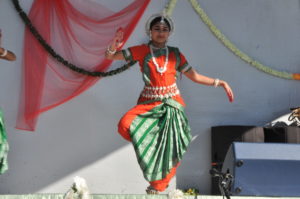
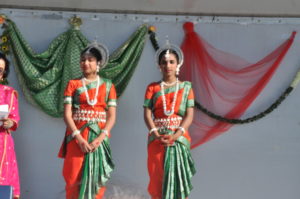
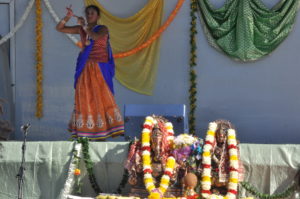
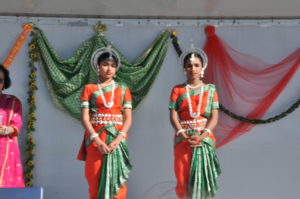
2016 Deepavali(Diwali) Celebrations @ Siva Vishnu Temple
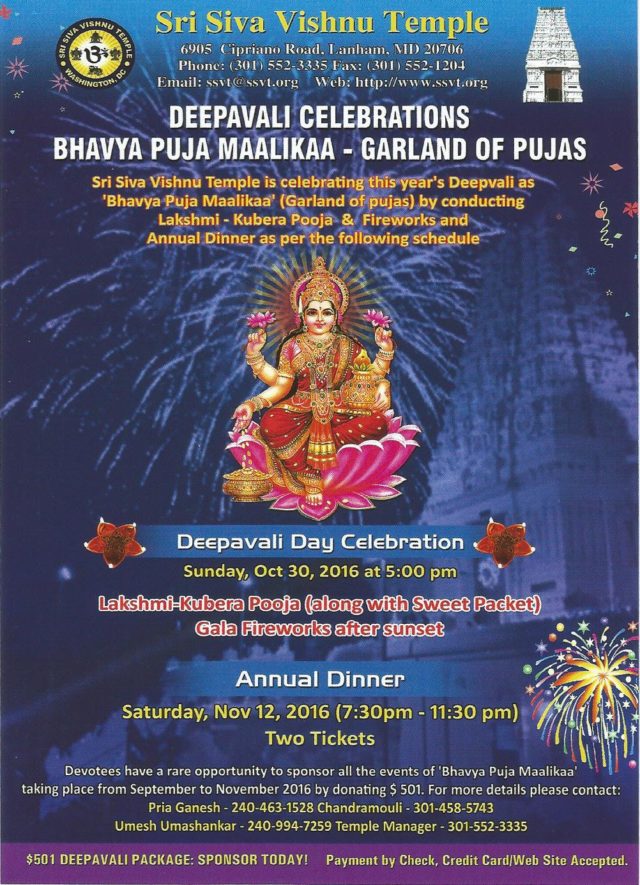
EVENT INFORMATION:
WHEN: OCT 30th, 2016
WHERE: SRI SIVA VISHNU TEMPLE, 6905 Cipriano Rd, Lanham, MD 20706
TIME: 5:00pm



EVENT INFORMATION:
WHEN: OCT 30th, 2016
WHERE: SRI SIVA VISHNU TEMPLE, 6905 Cipriano Rd, Lanham, MD 20706
TIME: 5:00pm
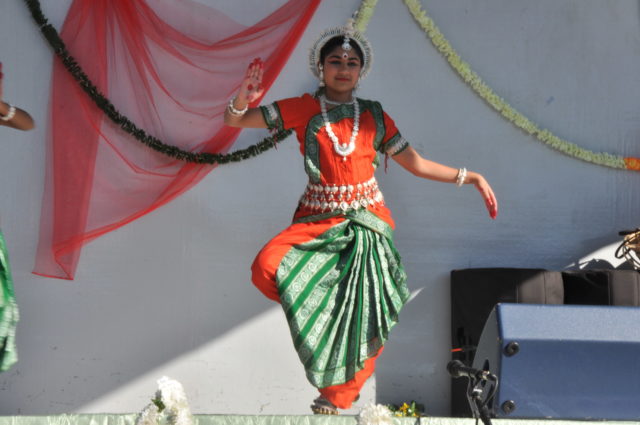
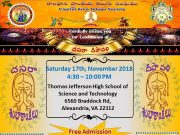
EVENT INFORMATION:
WHEN: October 15th, 2016
WHERE: Langley Park Plaza, 8001 New Hampshire Ave, Hyattsville, MD 20783
TIME: 1pm-6pm
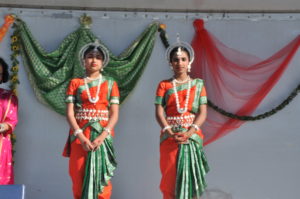
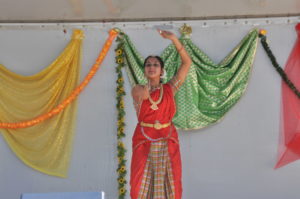
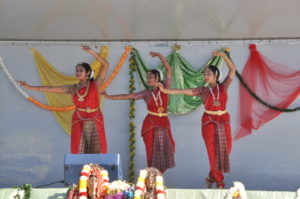
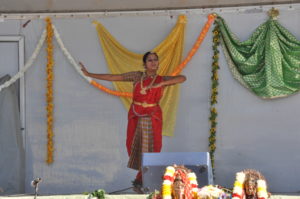
Grand Cultural Program( Music, Traditional Dances) STARTS AT 2:00pm






































Horse Yoga or Horseback yoga is the perfect practice for those who love both yoga and horses. But even if you have no experience with either, horseback yoga offers a unique experience that you will never forget.
Working with horses provides a unique way of performing yoga that allows you to enjoy nature and cultivate a special connection with another creature. In working with horses you get to know the horse better, and understand its physiology, strength, flexibility and mental states. This knowledge actually helps you to understand yourself better by helping you notice what is different and what is the same. Horseback yoga is a mind and body expanding practice that will help you to see yoga and life in a whole new way, offering unique benefits both in mind calming and in refining balance and stability. For horse lovers, it also offers a special way to connect with your horse.
The practice of horseback yoga involves relaxation, reiki energy, breathing exercises, deep stretches and movement in combination with the movement and the energy of the horse. There are classes suitable for complete beginners, both to yoga and to the horses. These introductory classes usually start with matwork, meditation and body opening to connect with the horse before moving onto the horse’s back.
Horseback yoga has all the benefits of other yoga forms, including increased strength and flexibility, relaxation, reduction in stress and calming of the mind. In addition, horseback yoga can be deeply healing and transformative, helping you to become more aware and develop compassion for other living beings.
Horseback yoga can help you to develop trust and confidence around horses, and develop a deeper connection with your equine partner.
You’ll get to put your yoga skills into practice in a new way. You will find that moving with and around the imposing stature of a horse changes the way you practice yoga and strengthens your practice. In horseback yoga you work with an equine companion, which encourages you to be more outwardly focused. Horseback yoga can also put your strength and balance to the test.
Horses communicate non-verbally and by developing a practice of horseback yoga you will learn to communicate more effectively with your horse, strengthening your bond. Through participating in a mindful horseback yoga practice you will come to understand what your horse is trying to tell you and you can use the knowledge to listen to your own body more deeply.
Horseback yoga can be enormously beneficial to those with physical disabilities or illnesses by allowing them to experience the joy and unity of working closely with an animal and stretching the boundaries of their physical limitations. Horseback yoga can also be hugely beneficial to those with emotional or psychological issues, helping them to find peace and awareness in the bond with another animal, being in nature and enjoying the calming benefits of yoga
Corinne Rosita Aulakh sums it up perfectly when she says in Yogi Times:
“In my mind yoga and horses are the perfect combination. Both develop strength in body and mind and invite us to develop inner awareness. Both are really fun to do! Both invite you to find your quiet place inside of you. Both ask you to delve deeper into your inner awareness and intuition. Both ask you to be courageous in your quest for union and harmony.”
In the UK, you can try Horseback yoga at Bluebird Bliss in Bristol.
Visit: https://bluebirdbliss.co.uk for more details.
In Spain, you can find Yoga on horseback at Ladonaira.
Visit: http://ladonaira.com for more details.
In the U.S., try Equitors for a unique and spectacular yoga on horseback break.
Visit: http://www.equitours.com/horseback-riding/yoga-horseback-riding/ to find out more.

Prajapati is one of the mysterious gods from the older verses of Hindu mythology. He first appears in the Rig Vedas as an individual God, yet most Hindus today recognise Prajapati as a group of deities.
In the earliest Hindu scriptures – the Rig Veda, he is an individual deity in his own right and not a collective. Furthermore, the Rig Vedas depict Prajapati as one of the most important gods.
However, in later texts, Prajapati disappears and is replaced with the Brahma – which stems from the Brahman caste, the highest status, or upper-class of the Hindu society.
According to ancient myths, Prajapati was emerged from the primal waters and produced the Universe and all sentient beings. In one myth he is described as becoming an ascetic before producing the Universe.
However, Prajapati is first mentioned in Rig Veda 10 verse 121 where it describes him emerging from the “golden germ.” This is a direct correlation with Brahma who emerges from the golden egg.
And there is another connection between Prajapati and Brahma which leads me to believe he was a forerunner to the Creator God of the Hindu Trimurti.
In later Sanskrit texts, Prajapati is described as a group of people, rather than the individual God he is depicted as in earlier legends. Essentially, Prajapati is a collective for a group of deities – gods that were born from the mind of Brahma.
There is some dispute among Hindu scholars over the number of deities in the Prajapati group. Some claim there are 10, whilst others claim there are seven which relate to the seven great rishis.
In my opinion, there are probably ten. The seven rishis are a reference to the seven body chakras, and neither Brahma nor the original Prajapati relate to the energy centres. They relate to thoughts.
In ancient numerology, the number 10 denotes the end of one life cycle and the beginning of another. Each thought we have is formed and evolves through various stages of consciousness until it manifests and a new cycle of consciousness begins.
What is the life-force of Prajapati?
If you study the earlier version of Prajapati and compare him with Brahma, you will find some very striking similarities. Both deities are considered ‘creator’ gods that made the Universe.
Furthermore, they are both associated with the laws of nature, which is the essence that forms in accordance with cosmic laws. Prajapati is actually described as ‘the life force’ which later became known as prana.
But in the early legends, Prajapati was also responsible for upholding the moral principles of dharma – the need to do the right thing. Modern Hindus still practice dharma with the belief that if they live an honest and virtuous life, they will be rewarded favourably by the gods.
But when you study the philosophy behind Prajapati, it is easier to understand that the life-force is the consciousness of thought which ultimately becomes creation when energy is placed behind that thought through action.
This is the hermetic principle of the triangle of manifestation which is made up of three factors, thoughts, emotions and actions. Thoughts are energy that is the beginning of creation – the life force or prana.
When we run with our thoughts and conceive (to give birth to) an idea, we have to act in order for that idea to manifest into reality. And we only choose to act if we have a desire to make it real. Desire is emotion.
Prajapati as the Universal Mind
In an earlier article, I explained how Brahma is also symbolic of our conscious thoughts. In Hindu mythology, Brahma is described as the Universal Mind. And given the comparisons between the two gods, Prajapati is also symbolic of the Universal Mind.
In turn the Universal Mind is your mind, as you are the centre of your own Universe. It makes sense that you have to be because you are the only person in the Universe experiencing your existence from your point of consciousness.
Although Prajapti is generally known today as “the god of the people,” a more accurate description would be God in man. He represents a state of higher-consciousness that is innate within each of us if we choose to search for it through the act of self-realisation.
Prajapati is also associated with sacrifice and is honoured in Hindu rituals as the god of fire. Fire of course is used to dissolve things we no longer want in our lives. We destroy old furniture and rubbish for fuel.
We can also do this symbolic act in a practical way by dissolving our ego and finding our path back to our true self. Furthermore, the element of fire in hermetic alchemy, which shares the same meanings as religious symbolism, represents passion and desire.
Sometimes, in order for us to evolve into our next stage of consciousness, we have to sacrifice things that we desire or have a passion for. We have to burn away values that we no longer need.
The dual nature of consciousness
Nature is governed by cosmic laws, one of which is the law of duality. The law of duality determines that everything has an opposite and a scale between the two. When nature finds balance, it flourishes.
The same is true of consciousness. We have a higher consciousness and a base consciousness. Hindu religion calls them Devas (higher consciousness) and Asuras (lower consciousness).
Prajapati is noted as a Supreme God, thus he can be identified as representing higher consciousness. But he is also associated with animals which represents the lower consciousness of man – because we are by nature animals. It is only our ability to attain higher states of consciousness that human beings are superior to animals.
So when Prajapati is described as a bird, he represents the higher self. The tortoise represents the lower consciousness of the reptilian brain which controls our need to survive, and goats, bulls and oxen represent ignorance of our slavery.
We therefore have choices to make; to follow the path of our divine consciousness and become like gods, or stay rooted in ignorance and slavery like cattle. Do you ever wonder where the term ‘sheeple’ might have come from?
Like all Hindu Gods, Prajapati is an aspect of ourselves. He is our conscious thoughts that evolve to become reality. And the thoughts you choose to act upon come from either your higher consciousness, or your lower consciousness. So pay attention to your actions.
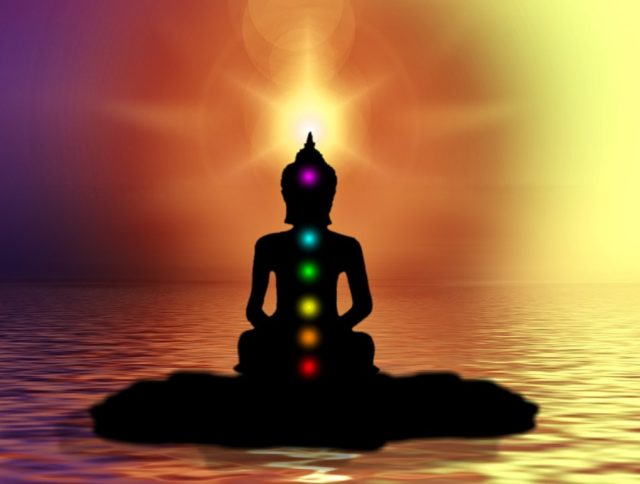
In Yoga, meditation, and Ayurveda, the term chakra refers to the energy centers in the body. The word chakra is Sanskrit for ‘wheel’, and the energy centers are seen as the wheels of spinning energy where matter and consciousness meet in the form of Prana. It is also believed that each chakra is connected to our being on several different levels: physical, emotional, mental and spiritual. By performing a chakra meditation, we can ensure these energy centers stay clear and flowing.
As Energy constantly flows through our bodies, just as it does throughout the universe sometimes due to a variety of reasons it gets blocked. These energy blockages can lead to emotional or physical problems. One way of understanding the flow of our energy is through the chakras. We can clear any blockages using a chakra meditation.
Our life energy or prana runs through our body and keeps us healthy, vital and vibrant. When the prana fails to flow freely, we can begin to experience physical and emotional problems. By understanding the way this energy flows through the body, and the seven energy centers called chakras which enable this flow, we can heal any energy blocks to allow this vital force to flow freely once more.
Throughout our body, we have main energy centers, which are connected to major physical organs or glands. A chakra is a spinning vortex that whirls in a circular motion drawing in everything on its particular vibratory level. There are seven main chakras starting from the base of the spine through to the crown of the head. Since everything is moving, it’s essential that our seven main chakras stay open, aligned, and fluid. If there is a blockage, energy cannot flow. This is why it is so important to periodically clear the chakras with a chakra meditation.
Keeping a chakra open means getting rid of any issues that are blocking that chakra and thus forcing the energy to stagnate, rather than flow freely. When one or more chakras are blocked, the energy system becomes out of balance, which can cause health and well-being problems. Through a series of practices, it is possible to keep the chakras healthy, allowing Prana to flow freely and resulting in health and vitality in both the body and the mind. We can unblock chakras by understanding each one’s characteristics and thereby knowing when we are experiencing a block or imbalance. Armed with this knowledge, we can heal these blocks by meditating on the chakras and visualizing them in a state of healthy flow. At the end of this article is a meditation you can try, but first I will explain the characteristics of each chakra.
The root chakra represents our foundation and feelings of being grounded.
Location: base of the spine.
Emotional Issues: survival issues such as money, shelter, and food.
Physically related to: the gonads, adrenal gland, kidneys and the spinal column.
Color: Red
Affirmation: ‘I have all that I need’.
The sacral chakra represents our fertility and creativity.
Location: Lower abdomen, about two inches below the navel.
Emotional Issues: Sense of abundance, creativity, and sexuality.
Physically related to: the spleen, kidneys, and bladder.
Color: Orange
Affirmation: ‘I live a creative and passionate life’.
The solar plexus chakra represents our ability to function confidently in the world.
Location: Upper abdomen in the stomach area.
Emotional issues: Self-worth, self-confidence and self-esteem.
Physically related to: adrenal glands, pancreas, liver, stomach, bladder and the nervous system.
Color: Yellow
Affirmation: ‘I have the personal power to determine my own future’.
The heart chakra represents our ability to love and be loved.
Location: Center of chest just above the heart.
Emotional issues: Love, joy, and inner peace.
Physically related to: the thymus gland, heart, blood, circulatory system, immune system, and endocrine system.
Color: Green
Affirmation: ‘I give and receive love easily’.
The throat chakra represents our ability to communicate and express ourselves easily.
Location: Throat.
Emotional issues: Communication and self-expression.
Physically related to: the thyroid and parathyroid glands, lungs, vocal cords, and bronchial apparatus.
Color: Blue
Affirmation: ‘I express myself clearly and easily’.
The third eye chakra represents our ability to see the big picture and connect with wisdom.
Location: Forehead between the eyes.
Emotional issues: Intuition, imagination, wisdom and the ability to think and make decisions.
Physically related to: the eyes, the pineal gland, and the body’s circadian rhythms.
Color: Purple
Affirmation: ‘I am in tune with universal wisdom’.
The crown chakra represents our ability to be fully connected spiritually.
Location: The very top of the head.
Emotional issues: Inner and outer beauty, our connection to spirituality and pure bliss.
Physically related to: the brain, nervous system and pituitary gland.
Color: White
Affirmation: ‘I am complete and connected with all that is’.
A chakra meditation can be a wonderfully relaxing and restoring practice. Some people may find this meditation easier than simply trying to still the mind because the mind is required to focus on each chakra, which helps prevent the mind from wandering off into repetitive and negative thoughts.
Start by sitting in an upright position, preferably with bare feet on the floor. Take a few deep breaths. Then, imagine a beam of pure white light entering the body at the crown and flowing down the spine, through the legs and into the earth. Imagine the light coming out of the soles of your feet and reaching into the ground like the roots of a tree and repeat the following affirmation.
‘Feeling safe and grounded now’
Following this, you should work through each chakra in the following way.
Use the table above to locate the position of the chakra and its color, and then imagine a vortex of light in that color in the chakra position. Repeat the appropriate affirmation for that chakra three times, and then imagine breathing in positive energy on the in-breath and releasing negative energy with the out-breath. Work through each chakra. You can also do this meditation lying down with a crystal of the appropriate color placed on each chakra.
If you find it difficult to remember the sequence and affirmations for this chakra meditation, you can either record yourself going through them, or use an audio version to guide you through the process. Audio versions of chakra meditations can be especially helpful as each chakra also has a sound associated with it and listening to the note can help you tune into the chakra. A Chakra Meditation by Glenn Harold is a good meditation to help you work through healing your chakras and is available as an audio download or CD.
Buy here:
Also we can visit
https://www.hypnosisaudio.com/products/chakra-meditation-hypnosis-mp3 for more details.
There are also many helpful books on the chakras that can take you deeper into this fascinating and enlightening subject.

Methika is an herbal plant cultivated in India and South European countries. This plant grows to a length of 30 – 60 cm, has branches and tapering roots. Its leaves are trifoliate and small sized. The flower blooms white in color having solitary axils. Seeds are brown yellowish and have angular or cubic shape up to the size of 3 mm. Many of the Indian kitchens are empty if they don’t have Methika on their shelves. In English, it is termed Fenugreek seeds. It is used in preparing many food items like curries, dal or parathas. Apart from nutrition, there are many medicinal factors also present in Methika. Here are some of the benefits of Methika that cover many diseases:
1. Controls blood cholesterol levels
There has been much research with various products to reduce Low-Density Lipoprotein in the human body. The seeds of Methika have shown great results, as it contains Saponin that helps to prevent and reduce absorption of triglycerides and cholesterol in the human body. It is a natural remedy for reducing the of Cholesterol in the body.
2. Prevents Heart Diseases
Galactomannan is present in Methika that maintains and balances the function of the heart. There is also a high amount of potassium in Methika that reduces sodium and helps in controlling the blood pressure and heart rate. Now many of the medicines use Methika as their base product.
3. Maintains blood sugar levels
Diabetes patients should include Methika leaves or seeds in their daily diet. The presence of Galactomannan is a soluble fiber that decreases the absorption of sugar in the blood. It also contains amino acids that aid in insulin production. Methika laddoo or sweets can also be prepared at home for daily consumption.
4. Gives better Digestion
It contains rich fiber, which easily dissolves in the body and acts as an antioxidant that flushes all the harmful chemicals. With this cleansing, the digestive system functions better. Methika is very good if someone is suffering from frequent stomach pain. In the event of constipation, drinking Methika decoction in the morning brings instant relief.
5. Counters heartburns and acidic reflux
Only one teaspoon of Methika seed in regular diet is enough for reducing heartburns or acid reflux. The seeds coat the stomach lining and intestines for soothing irritated tissues. Just before consuming the seeds soak the seeds in water to make it easy to chew. Seeds can be taken with lunch as well as dinner.
6. Helps reduce weight
Methika weight reduction process involves soaking Methika seeds at night and eating it 30 minutes before Breakfast. The fiber present in the seeds fills the stomach and reduces hunger. The body will absorb extra fat and the weight will go down even without any exercise.
7. Helps in skin problems
Medications for removing blackheads, wrinkles or pimples are expensive and not uniformly effective. Methika helps with that. Put some Methika seeds in boiling water, let it cool and wash the face with it. It will clear the blackheads and make the skin smooth. A stronger treatment is to use a pack of Methika leave and apply it for 20 minutes. Water, boiled with Methika seeds, can also be mixed in bath water for persons having skin problems.
8. Solution for your hair problems
Methika in the diet will help with hair problems also. If one does not like the taste of Methika, then one can soak boiled seeds of Methika in coconut oil at night and then massage hair with it in the morning. It cleans the scalp and strengthens the roots of hair. It is also very suitable for cleaning dandruff from hair and scalp.
9. Treating scars and skin inflammation
Methika has the acting agent of Vitamin C which aids in treating skin problems – eczema, burns and boils. An application of the paste of Methika seeds on the infected area for few weeks gives great results.
10. Fever and Sore throat remedy
Those suffering from fever may take seeds of Methika with a teaspoon of honey and lemon. It works instantly by nourishing the whole system. The presence of mucilage helps to relieve pain due to a cough and sore throats. It may be consumed twice in such condition – once in the morning and the second before sleeping.
11. Increases the production of breast milk
Methika contains Diosgenin which is very helpful in increasing breast milk production for lactating mothers.
12. Helps reduce discomfort during menstrual cycle
Methika is rich in Diosgenin, Oestrogen, and Isoflavones that reduce menstrual cramps. These constituents also help reduce menopause symptoms, mood fluctuations, and hot flashes.

According to the principles of Ayurveda, every individual is made up of a mixture of the three Doshas: Vata, Pitta and Kapha. A healthy balance of these three Doshas is the recipe for good health and well-being, however many of us have imbalances of these Doshas.
Once these imbalances have been understood, they can be rectified with simple changes to diet and lifestyle. But first you must understand your particular Dosha.
Vata
When the Vata Dosha is balanced, an individual is active, creative and gifted with a natural ability to express themselves easily. Vata types will be naturally slim, full of energy and hard working. They are also creative, sensitive, and imaginative and have a strong sense of intuition.
When Vata is in excess, emotional signs may include anxiety, nervousness and tension headaches. Imbalanced Vata may also result in insomnia. Physical signs of an imbalance of Vata Dosha include: poor circulation, dry skin and constipation.
Pitta
When the Pitta Dosha is balanced an individual is joyful, focused, quick-witted and full of enthusiasm. Pitta constitutions are strong with plenty of stamina. Pitta types are goal orientated, entrepreneurial and ambitious.
When Pitta is imbalanced, emotional signs include: stress, irritation and anger. Pitta types may become workaholics and perfectionists. Physical signs of a Pitta imbalance include: infections, rashes, inflammation, fever, indigestion and heartburn.
Kapha
When the Kapha Dosha is in balance, individuals will feel calm and loving. They have moderate amounts of energy and stamina, but prefer to do things at a moderate pace and hate to have to rush. Kapha types often sleep heavily and have trouble waking up in the morning.
When Kapha is imbalanced, emotional signs may include lethargy and depression. Physical symptoms of a Kapha imbalance include: sinus problems, colds and asthma and weight gain.
Dealing with Imbalances
Whichever set of characteristics in the above list you relate to is your Dosha. Identifying with that particular Dosha means you have an excess of that element in your body. Dealing with imbalances can be quite an in-depth science, however, there are a few simple guidelines that can help you to restore balance and feel healthier and happier in a short time.
To balance Vata
The qualities of Vata Dosha are air and ether. To balance Vata, you need to embrace everything nourishing, warm and grounding. So try the following strategies.
• Eat small portions of simple warm foods
• Eat regularly
• Indulge in comforting foods like stews, risottos, soups or rice puddings
• Eat natural foods and avoid processed foods
• Avoid cold, raw and dry foods
• Eat foods which are sweet, sour or salty
• Fresh, sweet fruits are good, but avoid dry fruit and nuts
• Drink warm drinks
• Stick to a regular routine of sleeping, eating and exercising
• Indulge in creative pursuits that you enjoy
• Practice meditation to reduce stress and anxiety
• Stick to a good sleep routine to prevent insomnia or disturbed sleep
• Find ways to calm and ground yourself to prevent stress and anxiety causing health problems
• Wrap up well in cold weather
To balance Pitta
The qualities of Pitta Dosha are mainly fire, with a little water. In order to balance Pitta, it is important to focus on things being cool and calming. So try the following strategies.
• Sit down and eat in a clean environment and focus on your food
• Eat sweet, bitter and astringent foods such as beans, coconut, coriander, fresh sweet fruits and salad
• Avoid salt and acidic foods such as pickles
• Avoid spicy food
• Eat cooling foods such as fruits, salads, raw vegetables
• Avoid heavy foods such as red meat and alcohol. Stick to lighter foods such as beans, white meat or fish
• Eat regular meals and snacks and don’t go too long without food
• Avoid overheating by sitting in the sun too long, excessive strenuous exercise saunas and steam rooms
• Calm your body and mind with meditation or yoga
• Spend time in nature or listen to relaxing music
To balance Kapha
The qualities of Kapha Dosha are earth and water. In order to balance Kapha, you need to stimulate the element of fire and boost the metabolism. So try the following strategies.
• Eat warm foods and avoid raw or cold foods
• Avoid red meat and choose vegetarian proteins as much as possible.
• Reduce your intake of sweet foods
• Eat more spicy food
• Do not overeat
• Avoid too much dairy
• Eat small portions
• Avoid iced or fizzy drinks
• Increase your activity level with cardiovascular workouts or brisk walks
• Avoid naps during the day
• Pranayama (yogic breathing exercises) can help boost metabolism
• Liquid fasts or detox programs can also help boost metabolism
• Take up a stimulating hobby or embark on an adventure to stimulate the fire element in your life
Taking these simple steps to redress any imbalances in your Dosha will help you to feel more healthy and vibrant. Everyone is different but by tuning in to your particular constitution you will see amazing results in your physical, emotional and spiritual life.
Ayurveda is a system of holistic health and well-being, which seeks to ensure good health by promoting balance between the mind, body, spirit and environment.
It was developed more than 5000 years ago when Indian sages went to the Himalayas to meditate on the secrets of health and balance. Ayurveda means ‘knowledge of life’ in Sanskrit.
In Ayurveda, everything is interconnected, both the living and the non-living. In addition, everything is made up of the five elements of earth, fire, water, ether and air. To maintain good health, an individual requires a balance of these elements and a harmony with the rest of the universe.
When the elements within the individual are balanced and the harmony between the individual and the universe is maintained, good health, both physically, emotionally and spiritually will be the result. A disruption in the elements within the body, or in the relationship with the environment can lead to ill health.
How Ayurveda helps achieve balance and harmony?
Because Ayurveda is a holistic practice, it seeks to find the underlying cause of illness rather than treating the symptoms. According to Ayurvedic principles, any health or wellbeing problem, including problems with the environment, relationships or work, will be rooted in an imbalance. By discovering the cause of the disturbance and bringing the elements back to balance, good health and well-being can be restored.
What are the elements we need to balance?
According to Ayurveda, everything in the universe is made up of five elements: earth, fire, water, air and ether (space). Each of the elements relates to certain principles in the universe and governs specific functions within the body.
Within the universe:
• Earth is related to stability
• Water is related to instability and liquidity
• Fire is related to heat and transformation
• Air is related to mobility and lack of form
• Ether is related to expansiveness.
Within the individual body, the elements combine to form Doshas. There are three Doshas: Vata,, Kapha and Pitta.
• Vata Dosha is a combination of air and space and controls the basic body functions such as cell division. Vata is also responsible for emotions, physical activity, understanding and creativity.
• Pitta Dosha is a combination of water and fire. Pitta is responsible for the digestive and metabolic systems. A healthy Pitta manifests in a good appetite and energy levels, and also healthy hair, skin and eyes. It also helps with mental focus and organizational skills.
• Kapha Dosha is a combination of earth and water. Kapha is responsible for muscle growth, stability and strength and a healthy immune system. Kapha qualities also include emotional stability.
Each person has a unique mix of these Doshas as a result of both inheritance and environmental factors. Imbalances in these Doshas are what, according to Ayurveda, cause ill health. Keeping these Doshas in balance leads to health, vitality, energy and harmony.
So the first step to take to improve health with Ayurveda is to discover your Dosha. Once you know your dosha, you can make diet and lifestyle changes to restore your body, mind and spirit to a state of balance and harmony.
To find your dosha read our article Discover Your Dosha

In Ayurveda, good digestion is considered the key to good health. The digestive and metabolic systems in Ayurveda are known as Agni, which translates as ‘fire’. Many things can contribute to an unhealthy digestive Agni including: a poor diet, an accumulation of toxins from environmental chemicals, and unhealthy lifestyle choices.
A weak Agni means we cannot properly digest the food we eat, with the result that we do not get the full benefit of the nutrients it contains. Additionally, undigested food remains in the gut and causes a toxic build up, which in Ayurveda is called Ama. Ama will initially accumulate in the gut, but if not dealt with, this toxic build up it can begin to affect the entire system causing problems in the whole of the body. Ama is considered in Ayurveda to be at the root of all illness.
Symptoms of a build up of ama include:
• A lack of physical energy and motivation
• Depression and lack of focus
• Unpleasant smelling bodily excretions
• A fuzzy or coated tongue, especially on waking
• A sweet or unpleasant taste in the mouth
• Feeling bloated and windy
• Aches and pains, especially in the hips and back
Fortunately, it is relatively easy to perform an Ayurvedic detox to flush away Ama and restore the body to good health. This detox can be done periodically, whenever symptoms occur and will need to be done more or less frequently depending on the quality of diet and lifestyle in between detoxes.
In order to detox, you must give your body a break from hard to digest foods to allow it to deal with the toxic Ama. To do this you should avoid all Ama-increasing foods and choose those that reduce Ama instead. As a general rule, avoid heavy and rich foods that are hard to digest and choose light, simple food instead. Avoid eating large meals and allow food to be properly digested before eating again. Drinking plenty of warm water will also help to flush out toxins.
Ama-producing foods to avoid
Since cleansing is done to clear Ama out of the body, you’ll want to stay away from foods that build more Ama in the body. For this reason, avoid the following types of food
• Processed foods, especially refined sugars, processed meats and fatty foods.
• Conventionally grown foods , which may contain residues of pesticides and chemical fertilizers. Choose organic food where possible instead.
• Other difficult to digest foods, including: hard cheeses, deep fried food, raw foods, yeasted breads, dry foods and sugary foods.
Ama reducing foods to choose
The easiest foods for your body to digest, and those that produce less ama, are those that are in their natural state. So choose fresh organic fruits and vegetables and unprocessed grains. The following foods are particularly good choices for reducing ama.
• Cooked sweet fruits
• Cooked vegetables, especially leafy greens
• Light soups and dhal
• Light grains such as quinoa, amaranth and rice
• Spices such as ginger, turmeric, coriander, mint and fennel, which are good for the digestion
• Hot lemon water and herbal teas
If you feel you need a more intense detox, stick to a diet of simple, vegetarian soups, steamed green leafy veg, and lemon water or herbal teas, for two or three days. This intense detox should rid your body of Ama while still being nourishing and satisfying.
Choosing to eat only life-enhancing foods that are fresh, natural and uncontaminated can drastically improve your health and well-being. After completing a detox, continue to pay attention to your diet and ensure you get the majority of nutrients from these health supporting foods while still enjoying occasional treats.
Dharm (also spelled “Dharma”) has been translated most often as “religion”. Those steeped in Semitic and western thought systems, when they looked at Hindus, tried to find the equivalent of “religion” that they had always practiced. Many Hindu practices, such as worship, yagna etc. used to be labeled by us as “Dharm”, so these foreigners assumed that our religion is being called Dharm.
Over years, as many of us Indians also were cut off from our own Sanskriti and thought systems, we too started thinking of Dharm as religion, and the usage became popular everywhere you look.
Yet, not only does Dharm NOT translate as “religion”, but it is not translatable into other languages. Dharm is one of the core Hindu concepts that expresses our cosmology and value system. Indeed, if you understand the idea of Dharm accurately, you will have acquired a smattering knowledge of Hindu philosophy. I also believe that this understanding has a good chance of improving the way you think and act.
So what is the accurate meaning of Dharm?
If you ask a scholar of Sanskrit and Hindu thought, she will probably tell you this – the word Dharm comes from the root “dhr”, which means “to bear” or “to sustain”. What does Dharm “bear” and “sustain”? Dharm is supposed to sustain the universe. Thus, if a person, indeed any being, acts in accordance with Dharm, the way God has ordered the universe is being sustained. To act in accord with Dharm is to act in line with natural order. Any act not in line with Dharm disturbs this order, which then has to be restored by someone else.
The underlying idea is that all existence, including human beings, is part of a great universal order created by a supreme being. We are all meant to act in certain ways as per that order. When we do act thus, we are following our Dharm. But we sometimes don’t do that, and that is Adharm.
I think two points need to be elaborated before this idea of Dharm will be fully understood:
1. How does one know what his or her Dharm is?
2. Why should any being at all act against Dharm?
The first question: how to know what my Dharm is – there are many inputs that tell you what your Dharm might be. The first is your very nature. So, certain things that must be done by you to sustain yourself are your Dharm. These include eating food, drinking water, sleeping, mating and so on. You share these behaviors with other animals also. You follow your Dharm when you do any of it. I remember a usage of the word by our Hindi teacher – “To eat a rat is a snake’s Dharm”. This kind of usage is very common in Sanskrit.
However, human beings are far more complex than animals. We don’t always act in line with our instincts. In fact, we know instinctively that we are not meant to act only instinctively! Human beings build civilized societies and act in ways that sustain the society. Therefore, our Dharm has to be such that it makes us progressively more civilized. In fact, our sages defined Dharm for human beings as behavior that “bears” or “sustains” (go back to the root of the word above!) a society, or a civilized society.
This is a good starting point to understand Dharm – that behavior which makes human society civilized, and since civilization continually progresses, it also means that behavior which makes us progressively more civilized.
It needs to be remembered that there is still a certain amount of openness in the concept. There are sure to be situations when it will not be very obvious what behavior makes for a more civilized society. What do you do, for instance, when someone abuses you? Do you return the abuse? Do you start a brawl? Slap the person? Kill him? Or do you remain silent? Do you walk away? Do you forgive, or take revenge? Which of these behaviors makes for a better society?
The builders of the Hindu civilization did not lay down all the answers for us. They left it to our free thinking ability to figure out our own Dharm. Of course, based on their life’s experiences, they did leave guidelines. But to follow them is up to us. We do not commit Adharm by not following those guidelines. If we think through and decide, in good faith, that one particular course is our Dharm, then it is likely that we are indeed on a Dharmic path.
I believe the idea of Dharm to be very powerful. Once it is ingrained in all members of a society (and I believe it is still ingrained in our minds across ages and all manners of gigantic changes, though we do not always do Dharmic reasoning consciously), then civilized behavior comes automatically. Laws are laid down, but they are rooted in the society’s sense of Dharm. We do not make and follow the laws in order to behave civilly. Rather, we have a built in sense of civility, and the laws are only reflections of that.
Our ancestors were always looking for ways to figure out their Dharm, and then lay down laws so that the society lived according to it. They always seemed to ask themselves: What does God intend us to do in this or that situation? Actually, Dharm is so widely applicable in its scope that even atheists can also use it. So atheists could also ask themselves: What am I meant to do in this situation? (Notice there is no “God” or “supreme being” here)
The most important aspect of the idea of Dharm is that it does not specify fixed behaviors. As the society evolves, individuals’ Dharm can also change. Dharm is not fixed over time and space. There is a story in Mahabharata: in a time of famine, the great sage Vishwamitra, driven by hunger and having no other option to sustain his life, steals dog’s meat from the cottage of a low caste person and eats it. This is described as apad dharm (Dharm in time of dire emergency). Vishwamitra reasons that he has no other way of sustaining his life. But he is meant to sustain it, if he can. So he commits the dual sin of stealing and eating a forbidden food.
This flexibility has great implications. This is why the Hindus could so quickly and easily come to terms with modernity, and adopt human rights, gender and caste equality etc. Simply contrast the Indian constitution and modern Indian ethos with that of China or any Islamic, African or Latin American country, and it will be obvious that we have shown great adaptability. This is because over centuries, we became conditioned to follow our Dharm.
So next time you have to make important choices in life, simply ask yourself – “what is my Dharm in this situation?” You are sure to get an answer from within. And then simply do that. You will make the society a better place by doing so!
Finally, why do people at all commit “Adharm” when they are supposed to instinctively know what “Dharm” is? The answer is simple – they have not achieved the level of “civilization” that others have. They are less evolved beings. At their level of evolution, what they do might be Dharm. But society has progressed more, and they have not realized it. Or let us say, they are not able to overpower their base instincts to the extent the society at large is able to. Remember that sentence of my Hindi teacher – “To eat a rat is snake’s Dharm”? They are unfortunately somewhere between a snake and a modern day civilized human being.
You will come across that behavior and you will have to figure out what your Dharm is with respect to them. It will not always be obvious, but a little introspection will give you answers. Perhaps if you follow your Dharm with respect to such people also, you will again make the society a still better, more civilized place.