How to Lose Weight Using Meditation – Part One

0

We’ve all seen the advertisements for how to lose weight quickly. Whether it’s a 6-week plan, a 12-week plan, a strict diet or simply slogging it out in a gym every day until you reach a weight that you’re comfortable with.

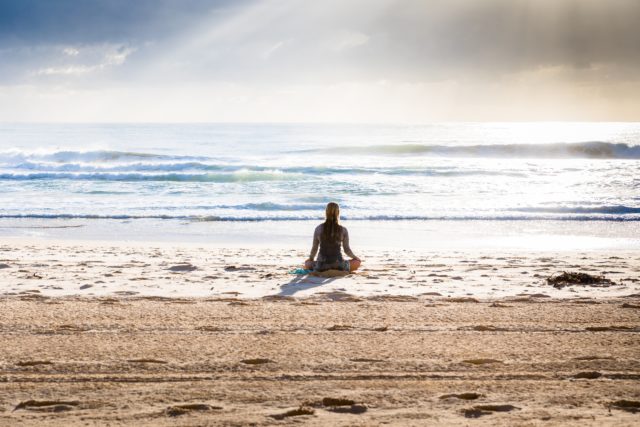
However, have you ever considered that meditation could help you change your mindset and therefore help you lose weight? To some, this may seem too easy but, the proof is in the pudding, as they say.

Today, we’ll explore how meditation and practising can help you to lose weight proactively. You’ll also be able to enjoy the other benefits, such as a calmer state of mind and reduced stress levels.

How Does It Work?

So, you may be thinking, how does sitting there with my legs crossed help me lose weight? Valid question, I’ll explain.

Imagine you’ve started your diet on a Monday morning. A new week, a new start. By Tuesday, you’re already back into the biscuits, and by Wednesday the diet has completely gone.

At its core, this is a basic example where your mind wants something, but your body is telling you otherwise. Your mind and body are in a state of conflict. This is because, in this case, food, the temptation is right in front of you and, whether out of habit or out of impulse, you don’t think before eating it.

Although you may have a brief thought of ‘oh, I shouldn’t be eating this’, or a guilty thought afterwards, you’ve still gone against what you set out to do. For many of us, this leaves us feeling depressed, sad and lowers our self-esteem as well as our confidence in ourselves.

However, with meditation, you’re training your mind to develop a larger length of time between your thought process of eating the food and the action of taking it. This is what mindfulness meditation is. It’s all about becoming aware of your thoughts in a non-judgemental way that gives you time to think before you act.

This means when you see triggers, such as a piece of cake or pizza, or any food that you would normally consume, you dismiss it as you’re thinking about what you truly want and what will make you happy.

In part two of the article, we’ll go through several steps so you can get started with meditation at home. And so beings your journey to a happier, healthier, more confident you!

What Is Pranayama?

0

What Is Pranayama? The State Of Existence

In western society, the expression, pranayama has become synonymous with the breathing exercises taken during the physical practice of yoga. In Indian philosophy, pranayama is the art of breathing and the practice of training the superconscious mind.

According to the yogis of India, by using the exercise of pranayama to train the will, it is possible to connect to higher vibrations of energy and light that appear in the mind as thought. The yogi tells us that we all have this power within us, but because we are not aware of the inherent powers in prana we do not breathe wisely.

The fundamental meaning of pranayama taught by yoga teachers is the control of the breath. The correct meaning of pranayama taught by qualified yogis is the ability to expand your energy and connect with the creative forces of cosmic energy.

The word pranayama derives from the ancient Sanskrit words, Prana, meaning energy, and ayam or ayama, which means expansion. The expansion of the individual into the All. Breath is energy, and so is everything else – including Mind.

Quantum physicists are beginning to understand, Mind has the ability to influence matter. The double-slit experiment determined that wave functions can be altered by thought. The suggestion rocked the scientific community and it remains divided and undecided more than 60 years later.

There are some schools of thought, especially among yogis who have known this secret for thousands of years, that consciousness has an intelligence which interacts with fine energies around it. Prana is composed of the finest energies and essentially our minds creates the experiences we have.

Prana – the creative vibration

Swami Vivekananda wrote: “the name of the energy in the universe is Prana, which is the force residing in these [primal] elements. Mind is the great instrument for using Prana.”

In other words, prana is the energy that creates everything in the Universe. But how does prana know what to create. That says Vivekananda is determined by consciousness. In man, consciousness, or soul, is called the atman and has a limited intelligence to direct prana.

The natural beauty we see all around is energy and consciousness working without limitations. Most things in nature does not have a subconscious mind programmed to distort experiences in the way man does. In nature, beauty ensues.

Man also has the capacity to create beauty when focusing on thoughts and feelings of love. But all too often our destructive tendencies rise to the surface and we feel hate, resentment, jealousy and other fear-based emotions that create destructive forces.

Nature that is simply being is automatically connected to Brahman, considered by ancient Sanskrit writers as the absolute consciousness from which all life is formed. Brahman is the superconscious mind to which the human mind can also be connected with through learning the sacred science of pranayama.

Social psychology tells us that all knowledge is learned from experience. They totally dismiss intuition as a supernatural power and come to the conclusion that whatever is beyond the five senses must also be learned.

But what about the times when you think of someone just before they phone. Or you get a feeling something is going to happen right before it happens. That is an experience that is not learned. That is intuition.

Intuition is a faculty of Mind that works on a higher level and connects the three planes of subconscious, conscious, and superconscious.

The three planes of consciousness

The plane of conscious does not need any explanation. This is the thoughts we have on a daily basis and are (mostly) aware of. The subconscious mind records our experiences and remind us of them from time to time or when we need them. This is as far as social psychology goes.

The superconscious mind is what is known in Hinduism as Akasa. The American “mystic” Edgar Cayce, known as the sleeping prophet, used a similar term which he called the Akashic Library.

The Akasa is essentially the store of energy in the electromagnetic field to which everything is connected. It has been called in various fields of science as the ‘Collective Unconscious’ (Carl G Jung), and the Morphogenetic field (Rupert Sheldrake).

Everything that happens is recorded by the Mind of the Cosmic Intelligence and floats in the ether for anybody to tap into it. But energy works like a radio transmitter or smartphone. You have to be connected to the right frequency to connect to it.

People that vibrant on a low frequency will only connect to energies that were produced by equals throughout time that were also vibrating on low vibrational wavelengths. The same rule applies to higher vibrations.

Thus if you have a philosophical question about life, the answer will come to you automatically as a thought if you are vibrating on the same frequency philosophers from the past. Otherwise you will happen upon it in a book, notice the answer there and comprehend it. This is the slow process of learning.

Conscious control of pranayama is the direct way to transcend the mortal mind and disconnect from the sensory perceptions that bind us to the material plane. The process of breathing correctly, rhythmically, attunes the body to automatically adjust itself to thought; thought is clarified and the ability to concentrate is mastered.

Concentration is another faculty of mind we must master in order to create. Everything we do, including thinking, channels energy. If you are easily distracted and throwing thoughts all over the place, you are spreading jewels without choosing one to cherish and keep.

Where your focus goes, energy flows.

Vivekananda said mental healing is a proof of the superconscious state. Thought which heals is a vibration that can only be learned by practicing pranayama. During meditation, focusing on the breathe is a proven technique for practitioners to focus on the body. But it is the will of conscious thinking that directs prana that is the cure.

Prana is the fabric of creation and breath, awareness and existence are the tools that bind these finest of energies together. When the flow of breath is unimpeded, when your awareness is not distracted and when your existence has an intention, you create whatever the mind can perceive. You can love. You can heal. Pranayama, at its highest state of existence is love.





How Meditation Can Be Used to Maintain Focus and Keep a Younger Brain

0

Studies suggest that meditation is going to be able to reverse time and put the clock back on your brain. But as we get older, our brains are subject to an increased number of mental effects that come with aging. These effects can include a shorter and more quickly diminishing attention span, a longer processing time when it comes to logic and problems and even problems with your memory.

However, a huge study published last month has concluded that through meditation, you have the potential to alter and change the long-term effects of your brain, such as the ones listed above. In laymen’s terms, meditation could prevent and actively reduce the effects of an aging brain.

This study is the first of its kind, known now for being the most extensive longitudinal study that has ever been published, spanning across seven years, as well as being one of the most recent.

Research began back in 2011 at the University of California and included a control group of individuals that ranged between the ages of 22 and 69. Both before and after the study took place; the individuals were taken to a three-month meditation retreat known as the Shambhala Mountain Center, which is based in Colorado.

It was here that the individuals focused on several types of meditation training. These included a substantial focus on certain objects, practicing mindfulness breathing techniques as well as being proactive in feeling compassion, kindness and empathy towards the people around them, and for life itself.

The immediate findings were then published after the final retreat that clearly showed that the training they had received have dramatically enhanced the individual’s emotional well-being and even helped them to perform tasks in their everyday lives more effectively. There was also a huge dramatic increase in the individual’s ability to focus and concentrate.

Seven years later, after the retreats had been and gone, the researchers checked up on the individuals to see how they were doing. It showed that all the participants of the study managed to maintain a certain level of daily meditation practices and that this had an extremely positive effect on their mental health and conditions.

In fact, it was also discovered that the more these individuals had meditated post-retreat, the more noticeable and prominent the benefits from the retreat were and the longer it had stayed with them. This long-lasting effect was far more prominent in the older generations.

What Does This All Mean?

Allow me to summarise. If you practice meditation from a younger age, this study suggests that you’ll be able to enjoy all the benefits that we know mediation to provide. However, if you continue this level of meditation into your everyday life, especially as you’re growing older, these effects will become much more long-lasting and more beneficial to your well-being.


Can Meditation Help You in the Bedroom?

0

We all know that meditation can provide a tonne of benefits to our everyday lives, whether that’s reducing stress, minimising the symptoms of anxiety, helping us improve our emotional intelligence and helping our minds to stay in the present moment.

However, meditation is also renowned for many other little benefits here and there which are continuously being proven as new studies are conducted around the world. However, one of the most recent studies to be released earlier this year has detailed one of the benefits that many people have been waiting to hear.

Of course, I’m talking about having sex better.

At first glance, this seems only natural. Through daily meditation practice, you’re proactively helping your mind and body to connect, allowing you to become more in touch with your mental and physical well-being, in which sex involves both.

However, it hasn’t been until recently that science and studies have been able to prove it.

The Proof

The referred study was published in the Journal of Sex and Marital Therapy and aimed to prove the link between the practice of meditation and the sexual functions of women.

In the study, the researchers asked 450 women that were between the ages of 17 and 70 about their personal experiences of meditation. There were also questions asked relating to their sexual desires, their personal health, their mood and their own awareness of their body and its sensations.

Out of the 450-strong group, 193 claimed to meditate regularly. As a result, it was this group that scored higher on the sexual function questions and their passion and desire. However, there didn’t seem to be any notable differences when it came to how long they meditated, or for how long they’ve been practising, or how often they practised.

Of course, accompany this with all the other studies that have been published with the information of how meditation can benefit your life, it’s only natural that it can be used to benefit all areas of your well-being. If you’re able to focus and stay synchronised with your emotions, when you’re with your partner, you’ll be able to enjoy a much more in-touch and enhanced experience.


The Best Yoga Pose to Fully Energise Yourself

0

Do you ever find towards the end of the week that you start to get more and more drowsy, unmotivated and as though you just want to curl up in front of Netflix and fall asleep? Don’t worry; you’re not alone. However, while most of us spending the majority of our weekends lazing around and recovering a week of work, this means we’re missing out on some serious opportunities to live our lives.

Fortunately, yoga has the answer. Today, I’m going to teach you a yoga pose that’s a sure-fire way to boost your energy levels and wake you up, all in under ten minutes. Feel free to practice this any time of day, any time of the week. Basically anytime that you feel like you need a little pick me up to keep you going.

Ustrasana

Ustrasana is the name of the pose that we’re going to learn today. This is more commonly referred to as the ‘Camel pose’. While this isn’t the easiest pose to perform, it’s not the most strenuous, but it is sure to get the blood pumping around your body which is exactly what you need to get the oxygen to your muscles, giving you an instant boost in your energy levels.

The Pose

To practice the pose, all you need to do is start by standing on your yoga mat on your knees. Free feel to adopt a Baby Pose, or half baby pose, to warm up your muscles. This is highly recommended to warm yourself up, especially if you’ve been in a chair at the office all day.

Make sure you have your feet facing the ground while pointing your toes at the floor. If you want a little bit extra, you can flex your feet by pushing away the floor with your toes. This provides you with a little bit more height when you lean back and touch your angles with your fingertips.

Once you’re in this position, you’re there! All you need to do now is take 5-8 deep breaths, making sure that you’re listening to your body and you’re nice and comfortable before holding it. Remember, yoga is not about forcing yourself into a certain position; it’s all about making sure that you’re comfortable and not putting your body in danger or risk harming yourself.

The trick here for a successful pose is to make sure that you’re pushing your sternum up and holding it as high as you can for the maximum benefits.

https://www.youtube.com/watch?v=SHi7k92QJlg

As you’re pushing your sternum up, make sure that you’re pressing up and outwards with your hips. It’s essential that you keep your core muscles engage during this process, so you’re actively protecting your lower back.

Allowing your upper body to flex backwards with your hands by your ankles. Of course, some of you may not be flexible enough to achieve this position, which is fine, it will come in time and with regular practice. If this is the case, make sure that you’re placing your hands on your bottom or on your lower back.

And that’s all there is to it! Once you’ve started to build a habit of practising this regularly, you’ll get more and more competent at it, as well as an increased level of flexibility, which is a sure-fire way to raise your heartbeat, keeping that blood pumping and energising your entire body!

Number of Yoga-Related Hospital Visits Increasing

0

The number of individuals in the US who have contracted a serious injury that was critical enough for them to be sent to the hospital (or their local emergency department and facilities) has increased by over 80% over the last seven years; a new study finds.

Of course, this is an incredibly alarming figure and one that we should all be thinking about the consequences of. The study referenced took place between the years of 2009 and 2016 in Victoria and was carried out by Betul Sekendiz, of the Central Queensland University.

The Causes

Now, my personal opinion of this study leads me to believe that a shift in modern-day culture clearly describes why this increase has taken place. Of course, since 2009, yoga has rapidly taken off in popularity around the world, especially in Europe and the US.

With an increase so sharp, so quickly, now exceeding the two billion people estimate, it seems only natural that the risk of injury is going to increase, especially when you have people practicing at home on their own without qualified supervision or attending classes by people who don’t know the full safety aspects of yoga.

However, there may be a lot more factors than first meet the eye.

One of the biggest suggested contributors of this sharp increase in hospital admissions is the fact that there are so many social media influencers out there, especially on websites such as Facebook, Pinterest and Instagram.

Dr Sekendiz describes the fact that a lot of people on these channels believe that they know what they are doing and that they can achieve a certain pose properly. However, many influencers are eager to push themselves and make be attempting poses and positions that they simply aren’t ready for.

This is especially the case when they see flexible instructors and influencers on social media and they are trying to replicate what they see. The doctor describes how one study into yoga on social media found that the most commonly found yoga image on social media was the headstand, a pose commonly related to a serious injury.

A poorly executed headstand can result in so many injuries, including head, neck, knee, shoulder, lower back and spine issues. In a worst-case scenario, these could even prove fatal given the right circumstances.

During the study, it was discovered that 118 recorded cases of yoga injuries, ten percent of these were serious enough for full hospital admission, resulting in further treatment. The most common age bracket for these injuries to occur is 20 and 39.

Of course, Dr Sekendiz suggests that these figures mean we should stop doing yoga, far from it, but it does mean that we need to start paying more attention to how we’re performing and executed our poses and how we should be looking after our bodies and doing more to protect our own well-being.

Consider how you would approach a new sport of your choosing, whether that was running, throwing, swimming or any sport you care to name. You would always approach it with care while making sure that you’re not anything out-of-the-ordinary that could damage yourself. The same concept needs to be applied to yoga.

Although this study has not yet been published, it has been cited at a number of conferences around the world.

Minimising the Risks

Of course, as an avid yoga enthusiast, you’ll want to do everything you can to make sure that you’re minimising your own risk of injury. However, this can be achieved in a number of different ways.

Firstly, when you’re practising at home on your own, it’s vital that you’re listening to your body to make sure that you’re not pushing it was or directions that it doesn’t want to go. However, it’s also so important to remember that everybody has a different body, so what rules apply to one person, won’t necessarily apply to the next.

You need to take into account who are you, how old you are, what sort of position you are in life and what sort of yoga skill level you know you are. Of course, this is why many of us choose to attend yoga classes in the hope of sharing the knowledge of the instructor. However, attending a class doesn’t necessarily mean that you’re completely safe.

Since the boom of yoga onto modern society, there are many individuals who have taken upon themselves to teach yoga, and while they may have been practising their entire lives, there’s a huge difference between someone being able to practice yoga and someone being able to teach it in a safe way.

When you’re attending classes, make sure that you’re asking to see your teacher’s certificate or qualification to ensure they are legitimate and are able to look out to make sure that you’re practising safely.


The Best Way to Energize Your Mind and Body with Just Your Breathing

0

Do you ever feel like the week is getting you down? Perhaps you’ve been spending all day at work, getting home and running your daily errands and you’ve barely found time to sit down. Of course, this is only going to wear you out, which means you’ll have very little energy to use for yourself and living the more enjoyable part of life.

For most of us, we just end up sitting in front of our TVs or computers and wasting the hours, simply because we don’t have enough energy or motivation to be doing the things we want to do. However, times are changing, and there’s a simple way that you can energise both your mind and body, boosting your productivity levels, so you have more than enough drive to get up and live life.

No, this doesn’t involve yoga, performance-enhancing drugs or even energy drinks! In fact, all you need is your lungs and control of your breathing! Let’s get started.

Shining Skull Breath

Don’t let the powerful name of this breathing exercise scare you. This practice is incredibly simple and something you can practice anywhere at any time when you need an energy boost. It’s also more commonly referred to as the ‘breath of fire’ for the same reasons.

This method works because you’re breathing using the technique for about a minute or two which dramatically increases the amount of oxygen your body is dealing with. Of course, the more oxygen-rich your blood is, the more oxygen your muscles and brain will have to use. Some say it’s like drinking a high caffeine drink, or even an espresso shot!

Anyway, let’s get right into it!

Firstly, you’re going to want to find a quiet and secluded space where you can concentrate. You can do it anywhere you want, even if that’s just walking down the road for five minutes to catch a break, but you’ll feel the effects far more if you’re able to concentrate.

Next, make sure you’re sitting nice and however you feel comfortable. You could be on the floor cross-legged or even sitting in a chair. Now take a deep breath in. Start breathing into the core of your body, around your stomach area. You should feel your stomach expand and then the air filling up your lungs and rising up towards your throat.

Now exhale rapidly. Of course, you’re not going to be able to get it all out in one go, so you can do short but defined breaths out of your nose. As you progress into the practice, try to aim to make your inhales just as long as your exhales.

Because you’re not giving your body much of a chance to hold onto any carbon dioxide you have in your body, this means your body will solely be dealing with oxygen, ensuring your blood is oxygen-rich.

When you come towards the end of your practice, inhale deeply through your nose and hold your breath for just a moment, about ten seconds at most. Now let out strong exhale to clear your body, and you might even feel like saying a small affirmation to really get your mind into a motivated mindset.

Of course, this might sound like a very strange technique, and you’ll certainly look strange while you’re doing it, but the results are out of this world, and you’re sure to feel the benefits immediately after the practice.

https://www.youtube.com/watch?v=X2oZX1s6nuM


2018 Vaaradhi Ugadi Sambaralu Pictures

0

2018 Vaaradhi Ugadi Sambaralu Pictures

5 Ways Meditation Actually Changes Your Brain

0

Although the human brain isn’t actually known for being a muscle but is, in fact, a collection of white and grey matter, that doesn’t mean that it has different properties to a muscle. We all know that the less you use your brain, the weaker it will get. Likewise, the more you implement your brain, the stronger and more versatile it can become.

However, using the ‘growth mindset’ term, it’s important to realise that we can physically take control of how our minds work, and the pathways that our brains use to do the things we do every day. For example, if you’re developing a habit of going having breakfast at 7am every day, this forms new neural pathways that will hardwire this into your system, hence why it can become a habit.

Like forming a habit, there are many other ways you can influence and change the core structure of your mind, one of the most notable of which is meditation.

Today, we’re going to explore five was meditation can proactively change your brain, bringing so many positive benefits into your everyday life, all of which are backed up science.

#1 – Controlling Your Focus Levels

There are so many studies out there that describe the benefits that meditation can bring to your levels of productivity and focus. By meditating every day, especially at the beginning of the day, you can help yourself to clear your mind of distracting thoughts, allowing you to stay focused throughout the day, helping you to achieve more.

However, one study went further and proved that these effects aren’t just short-term after completing your practice, perhaps lasting until the end of the day. These events can slowly become hardwired into your brain over time, resulting in your levels of focus lasting years, perhaps even decades.

#2- Increase Information Processing Speeds

Our brains are a little bit like computers in the fact that they can process information, but this ability to process can differ from person to person. Of course, the common misconception that humans only use 10% of their brains is a complete myth, but the percentage of our conscious and subconscious mind couldn’t be truer.

A 2014 study, conducted in Norway, found that the brain’s processing speeds and ability dramatically increased in individuals who were meditating, rather than decreasing, or ‘slowing down’ as most people believe.

#3 – Reduce Levels of Anxiety

Perhaps one of the most common benefits that meditation provides is the reduction in symptoms of anxiety and even depression. Anxiety stems from our evolved genetic response to fight or flight in potentially dangerous situations. Of course, for many people around the world, this response can become uncontrollable.

However, one 2017 study found that meditating just 10 minutes a day can actively change your brain structure in a way that helps your levels of anxiety become less intense and disruptive in their every day lives.

#4 – Actively Reduces Pain Signals

There are so many links and connections that have been associated with mediation and pain relief that it’s hard to know where to begin. In 2017, one study found that as little as ten minutes of meditation can actively increase your tolerance to pain.

Although this particular study focused primarily on young people, so this doesn’t directly relate to people suffering from chronic pain, the individuals who were exposed to sources to pain had dramatically increased tolerance towards it than those who didn’t practice meditation.

#5 – Increases the Mass of Your Brain

That’s right; you read that correctly; meditation can actually increase the volume and physical size of your brain. A human brain is made from grey matter, the foundations of neural cells which connect different areas of our minds.

In 2009, one study found that people who have meditated daily for a long-term period, over the course of several years, discovered that people could ‘grow’ their brains by through intense concentration. While this doesn’t necessarily make you smarter, it is suggested that this can help you to handle your emotions more effectively, and can help improve yo