













What is Aum? Beyond The Symbol
Hinduism is rich in symbolism which has deeply significant meaning – and none more so than the Aum. The word comes from Sanskrit which means the beginning and ending of everything – or absolute infinity.
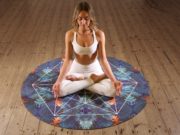
It represents life, death and rebirth and is often used during chanting meditations to send vibrations throughout the body to help lift practitioners to a higher state of consciousness.
The Aum, sometimes spelt “Om” to reflect the sound of the word in English, is the symbol of creation and used as the signature symbol to represent Hinduism. In a sense, it is the equivalent of the cross, the Star of David and the Sun and the Crescent Moon in other world religions.
Needless to say, Aum is the most sacred symbol and characteristic of Hinduism. It represents all life and existence – a concept Hindus also refer to as “Brahman”; “the All”, “absolute reality”, “Truth.” Aum goes beyond all Hindu Gods to the very beginning of creation, to the end of dissolution and returns as reincarnated energy.
The ancient Sanskrit writers seem to have had a profound understanding of life, death and reincarnation. Nothing exists forever, but is transformed by the energy put into it. And this includes our lives whilst we are alive. Every seven years we grow a new coat of skin.
The Aum is also connected to our thoughts. We have a germ of an idea that fires as an electrical neuron in the brain and becomes part of our consciousness. Thoughts can be killed off by not acting on them, or they can be fueled with energy and manifest into reality.
Aum and the Hindu Trimurti
Ancient civilizations believed in a divine wisdom and that belief still holds true today in the form of God. In Hinduism, there are many Gods, although Hindus still believe in the one true god – the Supreme Self.
In actual fact, other religious texts say the same thing, even though they are not always explained in the right context. 1 Corinthians 3:16 of the New American Standard Bible says:
Do you not know that you are a temple of God and that the Spirit of God dwells in you?
But what is God? Religious texts tell us he is everywhere and in all things. Like atoms. Energy and matter. We are essentially energy and matter – and so is everything else in the Universe. Hindus believe we are all one, all connected from the same source and will return to the same source. This is Aum.
If God is within us and we are all one, it stands to reason that as God created the Earth, we are also creators. And modern thinking declares that we create our own reality just like the ancient writers explain.
Aum is broken down into three parts. A = creation; U = preservation; M = destruction. The creator, preserver and destroyer. These are the principal characteristics of the three Supreme Gods of the Hindu Trimurti.
Brahma is the creator God and has a direct correlation with how we think and behave. It is through thought, emotion and action – the triangle of manifestation – that we create our reality.
Once we have find a course of action that provides stability and purpose in our life, we need to call on the power of Lord Vishnu, the preserver who keeps the cosmic order of the Universe together.
The preservation of the cosmic order depends on how well we balance energies, and when we have an imbalance, our lives swerve off track. This is when we have to call on Lord Shiva the destroyer, to dissolve ego and rid us of limiting beliefs, attitudes and perceptions that are self-damaging.
Manifesting Aum
Whatever happens in your life is a result of what you manifest. Your experiences are a manifestation of cosmic energy in accordance with the cosmic laws determined by your thoughts, emotions and actions.
This is why most people keep encountering the same problems in life. Experiences run in cycles and when you keep doing the same things you have always done, you keep getting more of what you already have.
Life could be so much more simple if we understood ourselves, but as we pass through life, our perception of the world is shaped by our parents, peers, teachers and established institutions such as the media, religion and politics.
We are therefore pulled in all directions and do not understand our true self. We lose contact with the Supreme Self – the internal God that guides us through life. Essentially, we are not conscious of ourselves and live in a world of illusion that has been created for us.
Yet, we are told, we create our own reality. But not when we listen to outside influences. We are absolute consciousness and have to find our way back to the source to rediscover our Supreme Self. This is Aum.
For thousands of years, enlightened men have practiced meditation. This is the route back to the source. This is how we rediscover Aum. We know this from ancient writing, but none are so clear as Siddhartha Gautama, the historical Buddha.
Gautama was heavily influenced by Hinduism and understood Aum. Buddha labeled his discovery as “The Middle Way”, returning consciousness to center and finding balance. Which brings us back to the power of three we find in Aum: A-U-M.
The mind has three parts; reptilian, limbic and neo-cortex. The reptilian brain is our animal instincts, our basic need for survival and reproduction. The limbic system regulates our body and emotions and the most evolved part, the neo-cortex gives us the ability to analyze and calculate etc.
Consciousness works in the same way. At base consciousness we have desires, cravings which stem from the reptilian brain. Our ability to find solutions comes from the higher conscious mind which in religions is described as “the heavens” – where the Gods live.
The third aspect of consciousness is the conscious mind, or the habitual mind. This is the ego which either acts as auto-pilot or makes a decision based on information from our base conscious animal, or our higher conscious God.
We often swing towards base consciousness because our desires pull on emotions which are stronger than thoughts. As a result, we propel ourselves into action which generates the energy we manifest in our lives. This is Aum. The cycle of life. Creation. Death. Rebirth.