












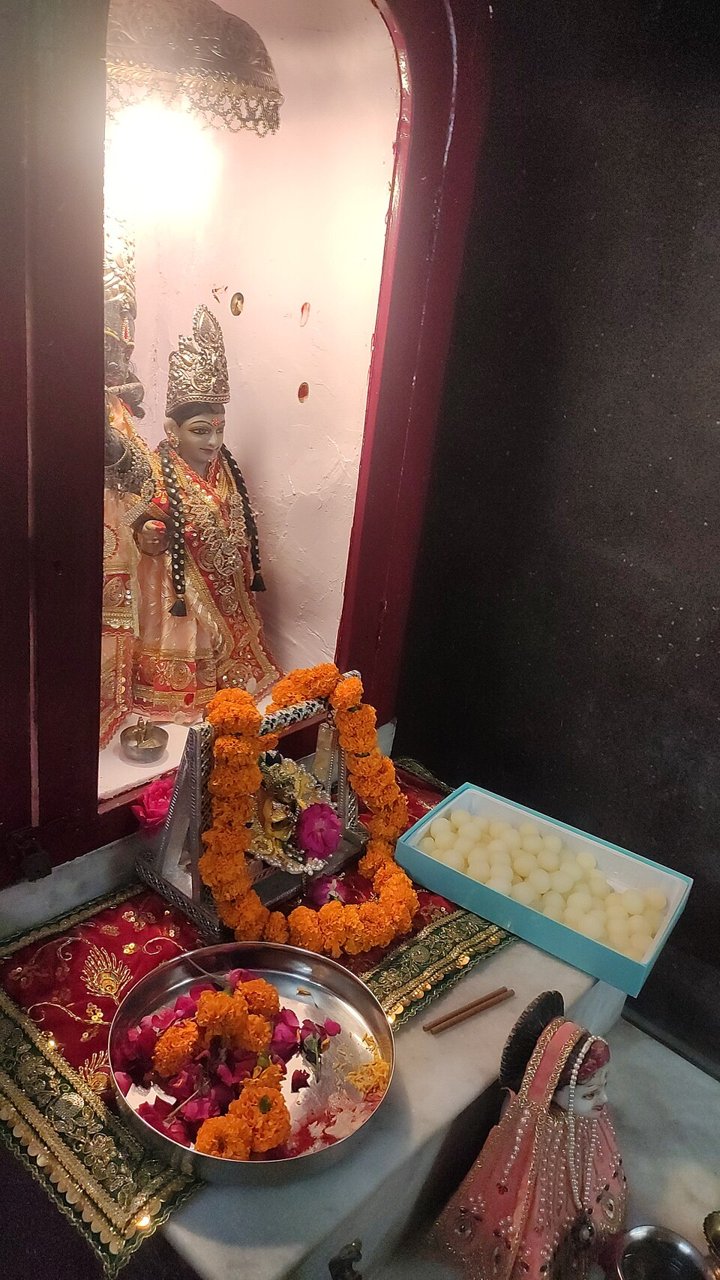
Walk into a temple on Annakut and you may lose your sense of proportion. There are tables, then more tables. Sweets are stacked into towers. There are trays of rice, dal, vegetables and fried things, and at some temples the offerings run into the hundreds of dishes, set out in tiers before the deity.
Anna means food. Kut means a mountain, or a heap. It’s exactly what it says.
In 2026, most calendars place the day just after Diwali, on November 9 or 10, and many US temples hold their celebration on the closest weekend instead. Check your temple’s website or call before you drive.
Why a mountain?
The story comes from Krishna’s childhood in Vraja.
The cowherds there used to make a yearly offering to Indra, king of the gods and bringer of rain. Young Krishna asked a child’s question: why him? Our cattle graze on Govardhan Hill. It’s the hill that feeds us. Why not honor that?
So they did. They cooked a huge feast for the hill instead.
Indra took it badly. He sent a storm of terrible force to flood the village. And Krishna, a small boy, lifted the entire hill and held it up on one finger like an umbrella. Everyone sheltered under it, with all their cows, for seven days, until Indra gave up.
That’s why you’ll see Krishna painted with one arm raised and a mountain balanced on his fingertip. And that’s why the food comes in a heap. It’s a hill that people cooked.
What to expect
Crowds, for one thing, so go early if you can, and be ready to wait.
Usually a long period of preparation is followed by an aarti, when the display is revealed to everyone. People then file past for darshan. At many temples the food is later distributed to the community as prasad. Procedures differ, so just follow the people in front of you.
If you’ve never been to a temple, this is a generous day to start. It’s festive, nobody will quiz you, and you’re likely to leave with something to eat. Shoes come off at the door, and modest clothing is the safe choice.
Many temples accept food offerings, but they may have strict rules: often vegetarian, sometimes with no onion or garlic, and frequently prepared in a particular way. Ask before you bring anything, as a store-bought box might not be accepted.
At home
You don’t need a temple to mark the day. Some families make a small mound of food at home, or shape a little Govardhan from cow dung or clay in the courtyard, as is done in parts of North India. An apartment version can simply be this: cook more than you need, and give some away.
I think that’s the real teaching in the heap. The story isn’t only about a boy with a mountain on his finger. It’s about noticing what actually feeds you, the ground and the rain and the people who cooked, and saying so out loud.
Then you eat. That’s the good part.
Find more videos on our YouTube channel: Subscribe to Antaryami