
Home › Hinduism › How to Keep Your Tulsi Alive Through an American Winter
HinduismHow to Keep Your Tulsi Alive Through an American Winter
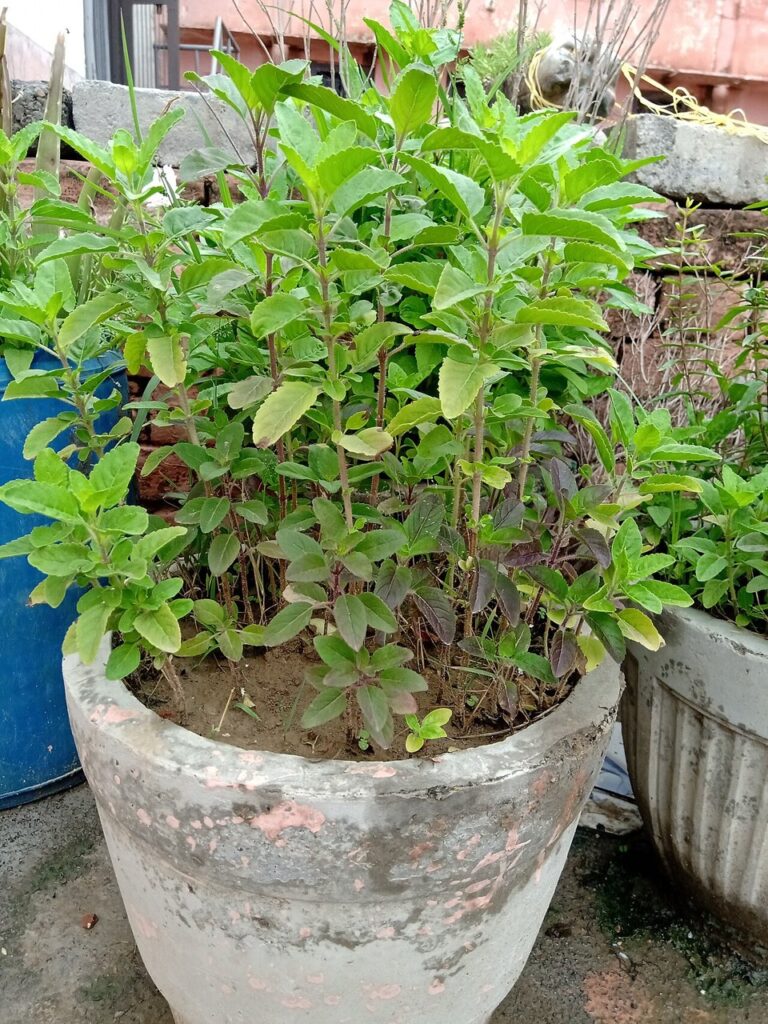
Somewhere in a cold-climate suburb right now, a tulsi plant is sitting by a drafty door, losing leaves, and its owner is feeling terrible about it.
If that’s you, you’re not alone. Tulsi, holy basil, is honored in many Hindu homes as a form of the goddess, and it’s grown in the courtyard back in India, where it gets sun all year and never sees frost. Bringing that plant through a Chicago or Boston winter is a real challenge. But it can be done.
The basic rule: tulsi hates the cold
Tulsi is a tropical plant. It’s generally happiest above about 60°F and starts to struggle below 50°F. Frost will kill it outright.
So the first step is simple: if your tulsi is outdoors, bring it in before nights get cold. If it’s already inside, move it away from doors, drafty windows and heat vents, which dry it out.
Light: the hardest part
In winter, tulsi’s biggest problem isn’t cold. It’s darkness.
- Find your sunniest window, usually south-facing. Put the plant as close to the glass as you can without the leaves touching cold panes.
- Consider a grow light. An inexpensive LED grow light on a timer for 12 to 14 hours a day can make the difference between a plant that survives and one that thrives. Many tulsi keepers in cold states swear by them.
- Turn the pot every few days so the plant doesn’t lean.
Water: less than you think
More indoor tulsi plants die from too much water than too little. In winter the plant grows slowly and drinks less.
- Water when the top inch of soil feels dry, then water thoroughly.
- Make sure the pot drains. Empty the saucer after watering.
- Dry indoor heating is hard on it. Setting the pot on a tray of pebbles with a little water can help.
Pinch the flowers
Tulsi wants to make flower spikes, called manjari. Once it does, it puts its energy into seeds and the leaves start to thin. Pinching the spikes off as they form keeps the plant bushy and alive longer.
Many families offer the manjari at the home shrine rather than throwing them away.
If it doesn’t make it
Sometimes, despite everything, a tulsi dies. It happens. Many people return the plant and its soil to the earth respectfully, in the garden or under a tree, rather than throwing it out. Then they start again in spring, from seed or a new plant.
You haven’t failed the goddess. You’ve had a hard winter, like everyone else in Ohio.
Tulsi Vivah: November 21
This month, tulsi gets a wedding. Tulsi Vivah, the marriage of the tulsi plant to Vishnu, usually in the form of a shaligram stone or an image of Krishna, falls in 2026 on Saturday, November 21, the day after Dev Uthani Ekadashi. Some families hold it on the Ekadashi itself.
Families decorate the tulsi pot as a bride, with a small red cloth or sari, bangles and a mangalsutra. A sugarcane mandap goes up. There’s a short ceremony with songs and mantras, and then sweets. For many families, Tulsi Vivah opens the wedding season, which is why your calendar is about to fill up with sangeets.
If your tulsi is small and a bit tired after the move indoors, it can still be a bride. Nobody is checking her height.
Find more videos on our YouTube channel: Subscribe to Antaryami
Find more videos on our YouTube channel
Subscribe to Antaryami