
Home › Hinduism › A Two-Line Thank You Before the Turkey
HinduismA Two-Line Thank You Before the Turkey
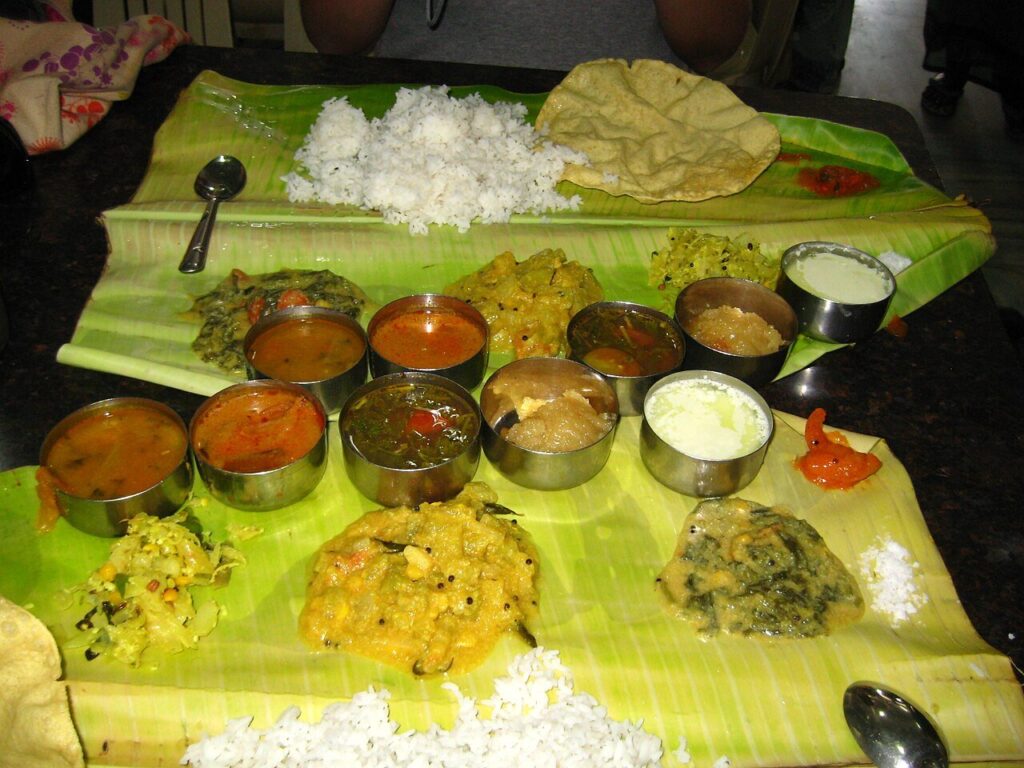
Every Thanksgiving, somewhere in America, a Hindu family sits down at a table with a turkey on it, or a tofurky, or a tray of paneer tikka that someone insisted on bringing, and an uncle clears his throat and says, “Should we say something first?”
And everyone looks at each other.
Here’s the good news: you already have something to say. Hindu homes have been saying thank you before meals for a very long time. The verse many families use is two lines long, and it fits a Thanksgiving table perfectly.
The verse
It comes from the Bhagavad Gita, chapter 4, verse 24:
brahmārpaṇaṁ brahma havir brahmāgnau brahmaṇā hutam
brahmaiva tena gantavyaṁ brahma-karma-samādhinā
Roughly: The offering is Brahman, the food offered is Brahman, it is offered by Brahman into the fire that is Brahman. Whoever sees Brahman in every action reaches Brahman.
Brahman is the word the Upanishads use for the one reality behind everything. So the verse is saying something simple and big at once: the food, the person eating it, the hunger, the cooking, the act of eating itself, all of it is part of the same sacred whole. Nothing on the plate is just “stuff.”
Many families follow it with a second verse, from chapter 15 of the Gita, where Krishna says that he lives inside every creature as the fire of digestion (ahaṁ vaiśvānaro bhūtvā). The meal is offered, and then it is received, by the same divine presence. You are not only grateful for the food. You are taking part in something.
Why it fits Thanksgiving
The American holiday asks you to stop and notice how much you have. The Gita verse asks you to stop and notice where it came from: the farmer, the rain, the soil, the person who stood over the stove since 6 AM, and behind all of that, the larger order of things that made any of it possible.
That’s not a different idea. It’s the same idea, said in an older language.
How to say it at a mixed table
Not everyone at your table will know Sanskrit, and that’s fine. A few gentle ways to share it:
- Say it, then translate it. Chant the two lines slowly, then give the one-sentence meaning in English. People tend to like hearing the original.
- Let a child say it. Kids who learned it at a temple class or from a grandparent are usually delighted to be asked. Grandparents are usually even more delighted.
- Keep it short. Two lines, a pause, and then pass the stuffing. Gratitude doesn’t need a sermon.
- Invite others in. Ask friends from other traditions if they’d like to share their own blessing too. A table that hears two or three prayers is a richer table, not a confused one.
A small practice for the rest of the year
The idea behind this verse isn’t meant for one Thursday in November. Traditionally, food is offered before it’s eaten: at the home altar, or simply with a quiet moment and a few words. Some families set aside a small portion for the birds or for anyone who might need it.
If that feels like a lot, try this: before your first bite, at any meal, stop for one breath. Look at the plate. Think of one person whose work is on it. That’s it. Do it for a week and you’ll notice you eat a little slower, and probably enjoy it more.
One honest note
Thanksgiving also comes with a complicated history, and many families talk about that too. Gratitude isn’t the same as ignoring things. The Gita’s whole point is to see clearly, the whole picture, and act well inside it.
So this year, when the uncle clears his throat, you’ll be ready. Two lines. A breath. Then the food.
And if someone asks whether the verse covers the fourth helping of pie, the scriptures are, unfortunately, silent on that. You’re on your own.
Find more videos on our YouTube channel: Subscribe to Antaryami
Find more videos on our YouTube channel
Subscribe to Antaryami