
Home › Ayurveda › The Day After the Feast
AyurvedaThe Day After the Feast
It’s Friday morning. The house is quiet. There are three containers of leftover stuffing in the fridge, a pie with one sad slice missing, and you are standing in the kitchen feeling about as light as a sack of sweet potatoes.
Some part of you wants to punish yourself: skip food all day, run five miles, swear off carbs forever. Ayurveda would gently suggest you don’t. The traditional approach to the day after a feast is much kinder than that, and much easier to actually do.
Agni, the kitchen fire inside
Ayurveda describes digestion as agni, a kind of inner fire. A good fire cooks food well. A fire that has been piled high with heavy, rich, sweet, oily food, all at once, tends to smoke and sulk instead of burning bright.
The day-after idea is simple: don’t throw more logs on a smothered fire, and don’t put it out either. Give it a little air and let it come back.
That’s how tradition frames it. It isn’t medical advice, and if you have diabetes, a digestive condition, are pregnant, or take regular medication, check with your doctor before changing how you eat, even for a day.
Start with warm water
Before coffee, before the leftovers, have a cup of warm water. Plain is fine. Many families add a slice of fresh ginger or a squeeze of lemon. Sip it slowly, standing at the window, watching the neighbor take down their inflatable turkey.
In Ayurvedic tradition warm water is preferred to ice-cold drinks generally, and especially when digestion feels slow.
Wait until you’re actually hungry
This is the hardest part and the most traditional one. Ayurveda puts a lot of weight on eating when you’re genuinely hungry, not just because it’s 8 AM. After a big meal, true hunger may come later than usual. Let it.
If you’re used to breakfast, keep it small and warm: a bowl of thin oatmeal with a pinch of cinnamon, a piece of toast, or some stewed apple. Not a slab of leftover pie eaten cold over the sink. (We’ve all done it.)
Lunch: simple, warm, and soupy
When hunger shows up, think warm and simple. A few ideas:
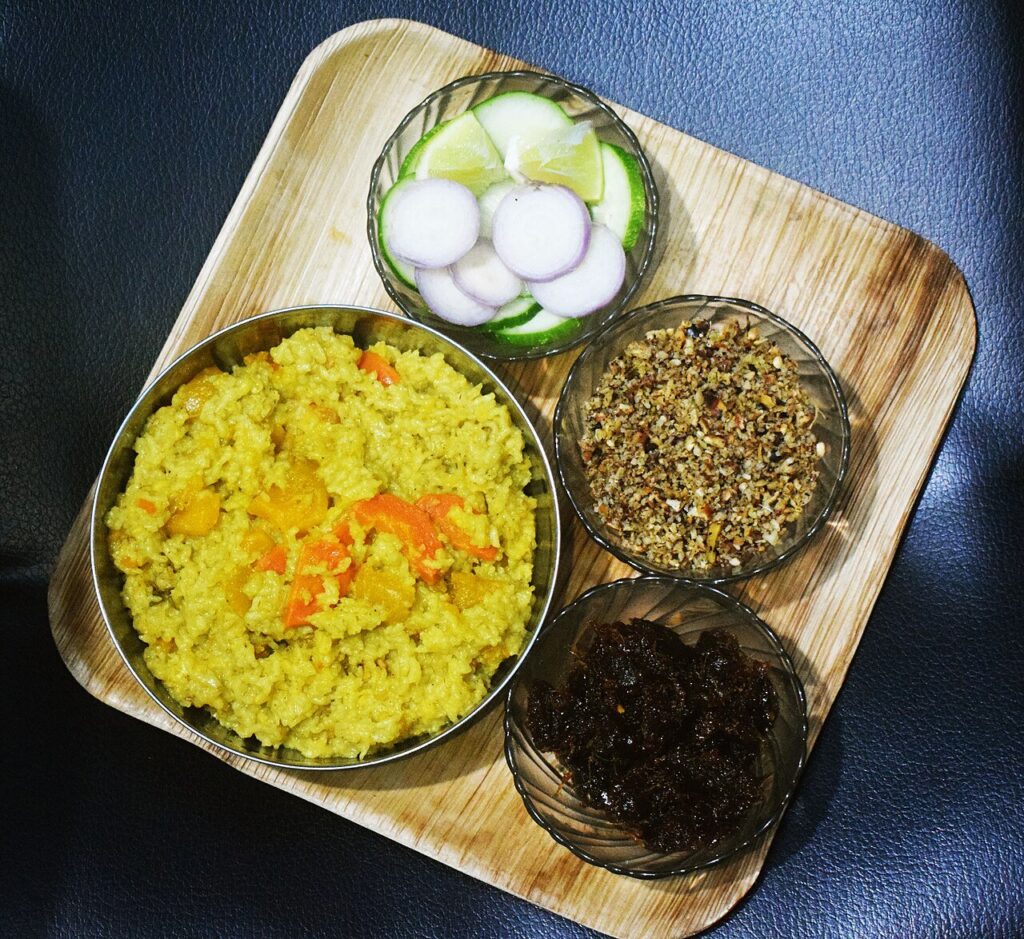
- Kitchari. Rice and split moong dal cooked soft with cumin, ginger and turmeric. It’s the classic Ayurvedic reset meal, and we have a one-pot recipe on the site.
- A thin dal or vegetable soup. Moong dal, a carrot, some spinach, a little ghee and cumin.
- Turkey or vegetable broth with rice. If you have a carcass from yesterday, you already have the start of a good soup.
Ayurveda generally prefers cooked food to raw on a day like this, so the giant cold salad can wait.
Spices that tradition reaches for
A few spices come up again and again in Ayurvedic cooking when digestion feels heavy:
- Ginger, fresh in tea or grated into food.
- Cumin, coriander and fennel, often brewed together into a simple tea: a half-teaspoon of each seed in a few cups of water, simmered for a few minutes and strained.
- Ajwain, a pinch in cooking, the way many grandmothers do.
- Fennel seeds after a meal, which you’ve probably seen in a bowl by the door of an Indian restaurant.
These are traditional kitchen habits, not cures. They’re also delicious.
Go for a walk
After lunch, take a slow walk. Fifteen or twenty minutes around the block is plenty. Many Indian families have a habit of strolling after meals, and it’s a good one to borrow. You get daylight, fresh air, and a chance to look at everyone else’s leftover decorations.
Dinner: early and light
Ayurveda generally recommends a lighter, earlier dinner. On the day after a feast that’s even more true. A small bowl of soup, or a little more kitchari. Then go to bed at a reasonable hour. Sleep, tradition holds, is part of digestion too.
The leftovers aren’t going anywhere
Here’s the gentle truth: one feast doesn’t undo anything, and one light day doesn’t need to fix anything. You’re just giving your body a pause before going back to normal.
By Saturday you’ll probably be hungry again, the fire will be crackling, and the leftovers will still be there. Turkey sandwiches, after all, have a half-life longer than most elements on the periodic table.
Find more videos on our YouTube channel: Subscribe to Antaryami
Find more videos on our YouTube channel
Subscribe to Antaryami