
Home › Meditation › Meditation You Can Do in Your Winter Boots
MeditationMeditation You Can Do in Your Winter Boots
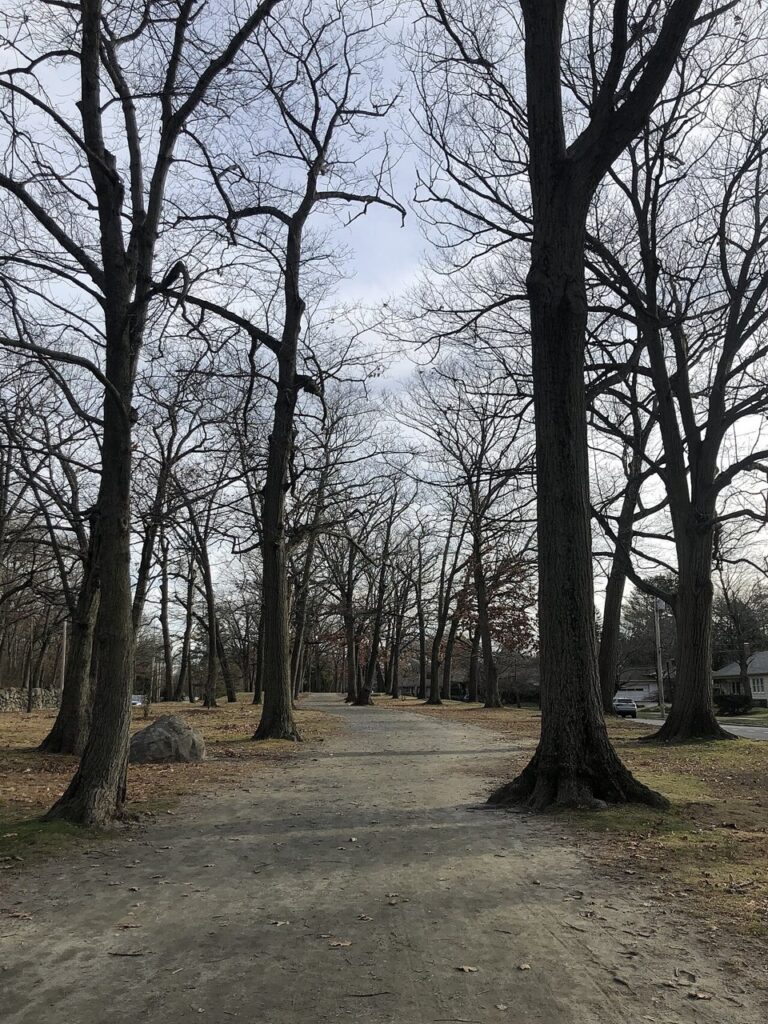
It’s 4:45 in the afternoon and already getting dark. You meant to meditate this morning but didn’t. Now you’re tired, a little restless, and the idea of sitting on a cushion with your eyes closed sounds like a direct route to a nap.
So don’t sit. Walk.
Walking meditation is one of the simplest practices there is, and it’s perfect for winter, when daylight is short, energy dips, and the body wants to move even when the mind wants to hibernate.
You’ve probably done it already
If you’ve ever been to a Hindu temple and walked slowly around the inner shrine, clockwise, palms together, you’ve done a form of walking meditation. It’s called pradakṣiṇa, circling the deity, keeping the sacred at your center as you move. Many people walk around a tulsi plant at home the same way.
Walking meditation is also a central practice in Buddhist traditions, often done between periods of sitting. The details differ, but the core idea is shared: let each step become the thing you pay attention to.
The basic practice
You need a path of about ten to twenty steps. A hallway works. So does a quiet stretch of sidewalk, a backyard, or the loop around a parking lot.
1. Stand still first. Feel your feet on the ground. Let your arms hang or fold your hands loosely in front of you. Take three slow breaths.
2. Walk slower than usual. Not dramatically slow, just slower than your “late for something” pace.
3. Feel each step. Notice the heel touching down, the weight rolling forward, the toes pushing off. Some people silently say “lifting, moving, placing” with each part of the step.
4. When you reach the end, pause. Stand for a breath. Turn around slowly. Walk back.
5. When your mind wanders, and it will, notice where it went, and bring it back to the next step. Not the last one. The next one.
Ten minutes is a good start. Five is fine too.
Winter version, outdoors
If you can get outside during the short daylight, even better. The cold has a way of waking you up.
- Dress warm, including your hands and ears. It’s hard to be mindful while your fingers are going numb.
- Watch your footing. On ice or snow, walk at a normal careful pace and give attention to balance instead of slowing to a crawl. Safety first, mindfulness second.
- Use your senses. The crunch of snow or frozen leaves. The sharp air in your nose. The way the low winter sun makes long shadows. Let these become part of the practice instead of distractions from it.
- Try breath counting. Many people like syncing steps to breath outdoors: three or four steps breathing in, three or four breathing out. Find your own rhythm.
Indoor version, after dark
When it’s dark by dinnertime, indoors works perfectly well.
Clear a short path in a hallway or living room. Dim the lights or light a lamp at your home mandir. Walk slowly back and forth. If you have a small altar, you can walk a slow circle in front of it, a simple home pradakshina, with a short mantra or simply your breath.
Bare feet or socks on a rug make it easier to feel each step. Watch out for the Lego.
Why it helps on low-energy days
Sitting meditation asks the body to be still while the mind settles. On a tired winter afternoon that can feel like a losing battle. Walking gives the body something gentle to do, which often makes it easier for the mind to follow along. Many people who find sitting difficult discover that walking is their way in.
It’s also a quiet way to get a little movement and daylight on days when both are in short supply.
If you have balance problems, joint pain, or a health condition that affects walking, check with your doctor about what’s safe for you, and stay near a wall or rail indoors if that helps.
A small daily habit
Try this for a week: one ten-minute walk, at the same time each day, where your only job is feeling your feet. No podcast. No phone call. Just the steps.
You may find the short days feel a little longer, or at least a little less rushed.
And if your neighbors see you walking very slowly back and forth across your driveway in the dusk, staring at your boots, just wave. They’ll assume you lost your keys. In a sense, you’re looking for something much harder to find.
Find more videos on our YouTube channel: Subscribe to Antaryami
Find more videos on our YouTube channel
Subscribe to Antaryami